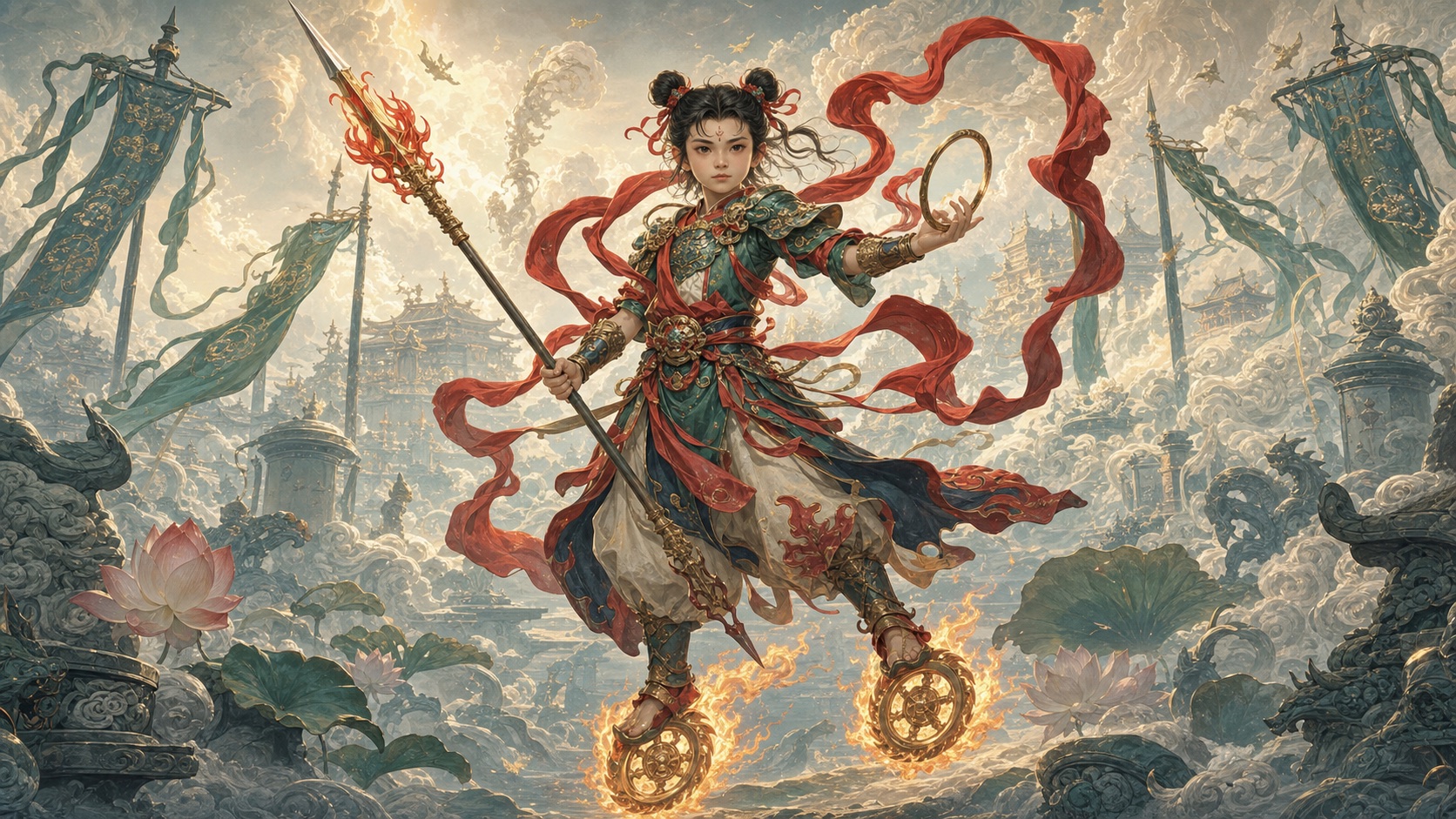
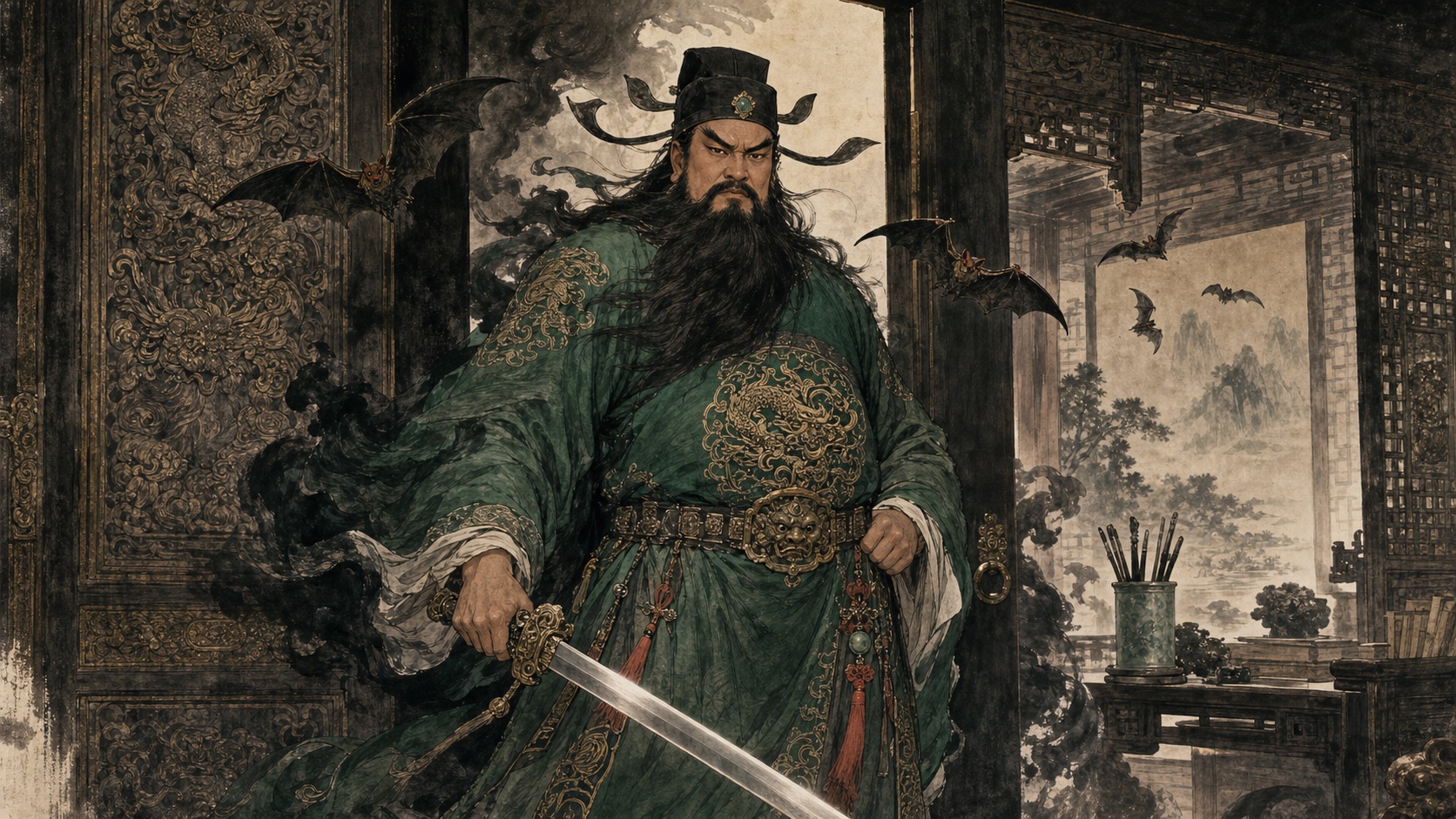
Meet major figures such as Sun Wukong, Tang Sanzang, Zhu Bajie, Erlang Shen, the Jade Emperor, Guanyin, Nezha, the Eight Immortals, Yanluo Wang, Fu Lu Shou, Caishen, Yue Lao, Chang'e, Hou Yi, and Zhong Kui, with clear notes on what they do, their artifacts, and where they appear.
Where these figures appear
Journey to the West
The best-known story world for Sun Wukong, the pilgrimage team, major heavenly-court figures, and several famous demon-episode characters in this collection.
Sun Wukong / The Monkey King, Tang Sanzang / Xuanzang, Zhu Bajie / Pigsy, Sha Wujing / Sha Monk, White Dragon Horse, Guanyin / Avalokitesvara, The Jade Emperor, Erlang Shen / Yang Jian, Li Jing, the Pagoda-Bearing Heavenly King, Nezha, Taishang Laojun, Bull Demon King, Princess Iron Fan, Lady White Bone / Baigujing
Investiture of the Gods
A major Ming-dynasty gods-and-demons novel for Nezha, Yang Jian, Li Jing, and many Daoist-heavenly figures. Its version often shapes modern animation and game imagery.
Nezha, Erlang Shen / Yang Jian, Li Jing, the Pagoda-Bearing Heavenly King, Taishang Laojun
Daoist, Buddhist, and Folk Traditions
Some figures are not just novel characters. Guanyin belongs to Chinese Buddhist devotion; the Jade Emperor and Taishang Laojun belong to layered Daoist and folk systems; the Eight Immortals and Zhong Kui are widely seen in art and folk culture.
Guanyin / Avalokitesvara, The Jade Emperor, Taishang Laojun, The Eight Immortals, Zhong Kui
Folk Deities, Underworld, and Auspicious Stars
A practical source grouping for Yanluo Wang, Fu Lu Shou, Caishen, and Yue Lao. These figures are widely recognized through folk religion, temple images, prints, and popular culture rather than one single novel.
Yanluo Wang / King Yama, Fu Xing / Star of Fortune, Lu Xing / Star of Rank, Shou Xing / Star of Longevity, Caishen / God of Wealth, Yue Lao / Old Man Under the Moon
The Eight Immortals as named individuals
The Eight Immortals are not one character. The usual group includes Li Tieguai, Zhongli Quan, Zhang Guolao, Lan Caihe, He Xiangu, Lu Dongbin, Han Xiangzi, and Cao Guojiu, each recognized by different attributes.
Li Tieguai / Iron-Crutch Li, Zhongli Quan / Han Zhongli, Zhang Guolao, Lan Caihe, He Xiangu, Lu Dongbin, Han Xiangzi, Cao Guojiu
Ancient Myth and Moon Stories
Chang'e and Hou Yi belong to older myth cycles and later festival memory. Their stories have many variants, and no single simplified plot covers every tradition.
Chang'e, Hou Yi
Journey to the West and the Heavenly Court
Characters most foreign readers will meet through Journey to the West, heavenly-court stories, or related retellings.
Sun Wukong / The Monkey King / 孙悟空
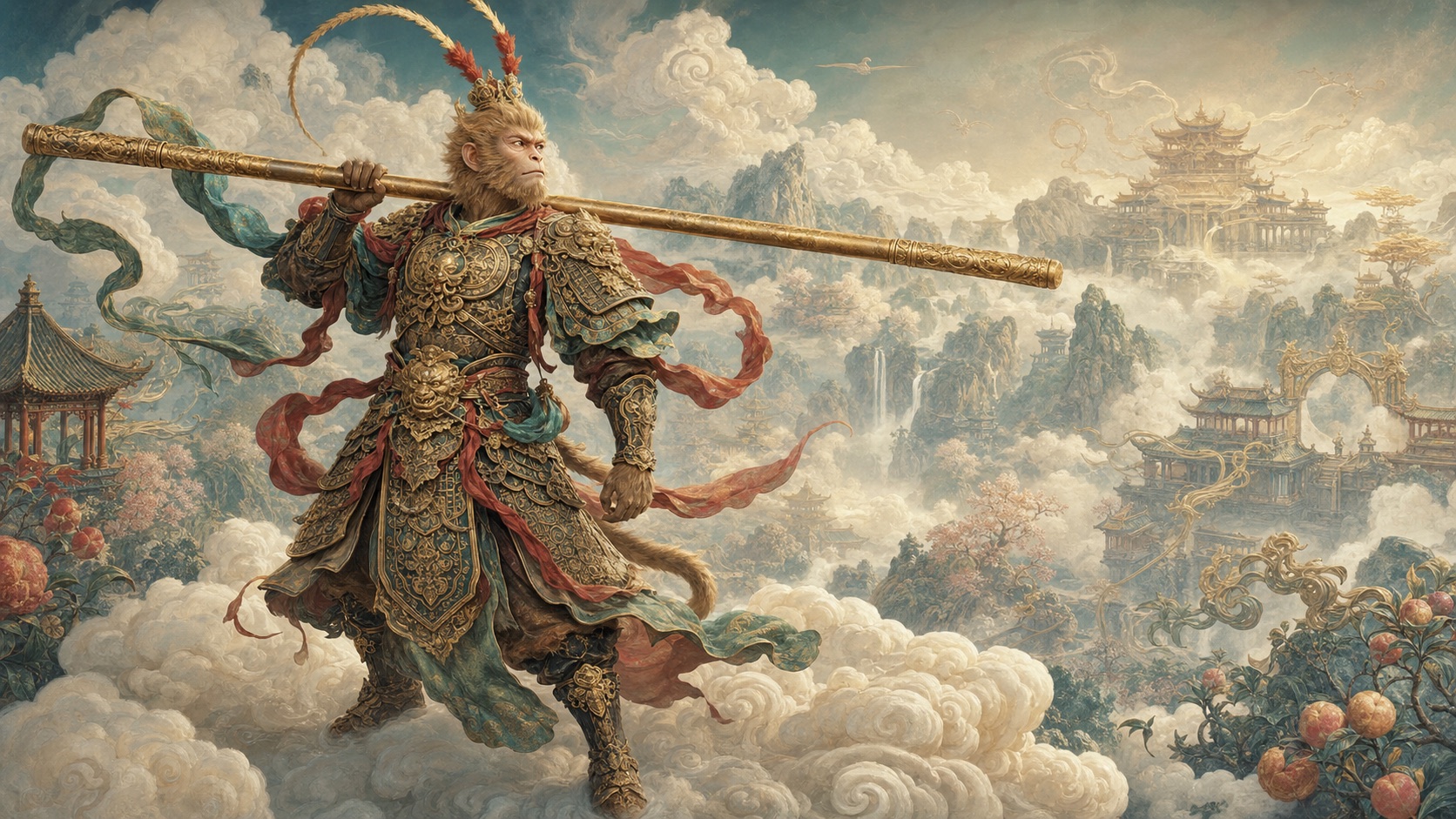
Who they are: A literary-mythological figure and the most famous hero of Journey to the West.
What they do: He first rebels against Heaven, then becomes Tang Sanzang's first disciple and protector on the pilgrimage for Buddhist scriptures.
Artifacts or symbols: Ruyi Jingu Bang (如意金箍棒) - A size-changing golden-hooped staff associated with the Dragon King's treasury in the novel.
Appears in: Journey to the West, Chinese opera, animation, television, film, games, and global retellings
Version context: Sun Wukong is primarily a literary and mythological figure rather than a verified historical person.
Read the full Sun Wukong / The Monkey King guide
References: Journey to the West, Sun Wukong, Ruyi Jingu Bang
Erlang Shen / Yang Jian / 杨戬 / 二郎神
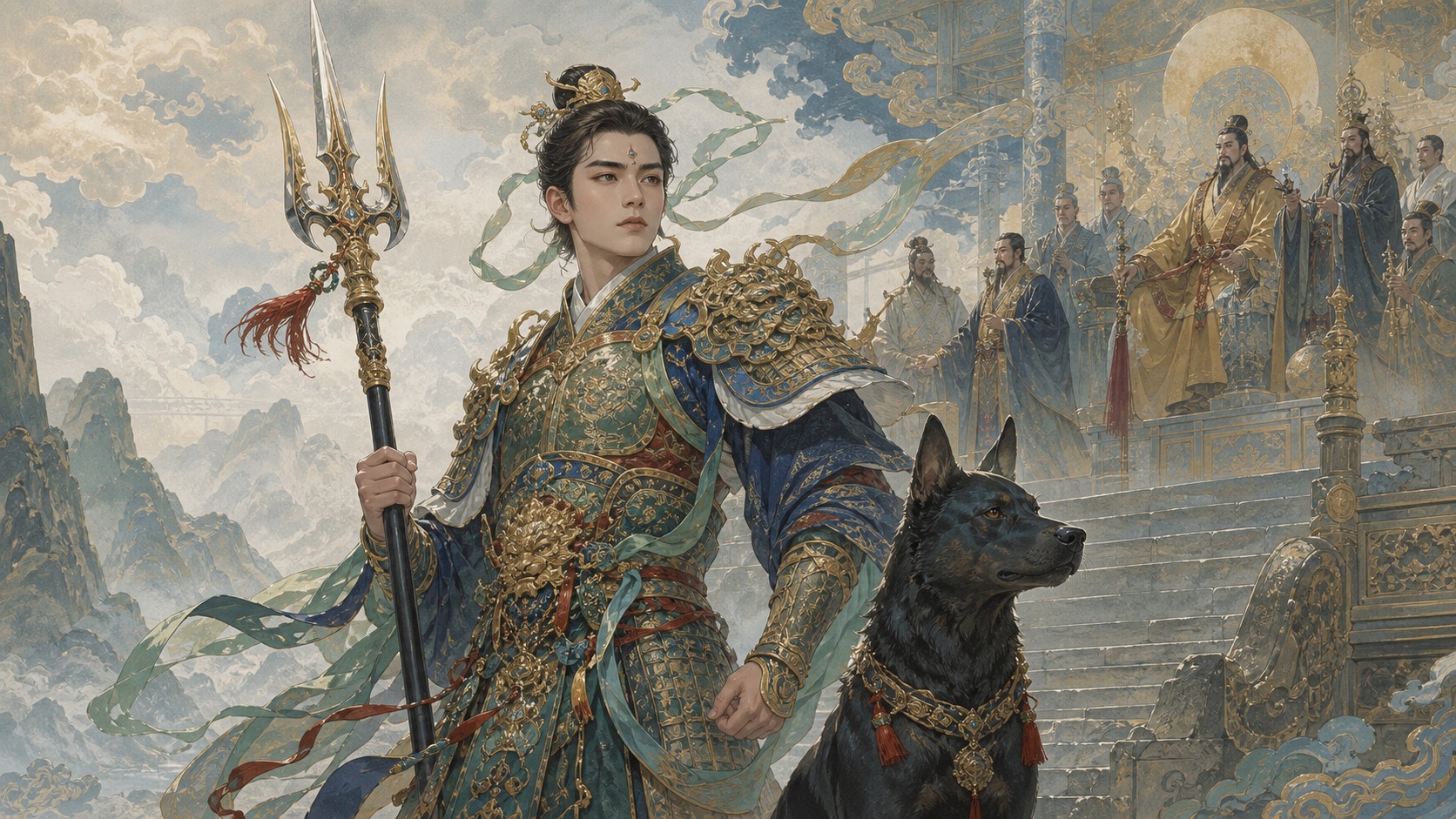
Who they are: A warrior deity in folk and Daoist-related traditions, often identified with Yang Jian in later literature.
What they do: In Journey to the West, he is sent by the Jade Emperor to fight Sun Wukong. In Investiture of the Gods, Yang Jian appears as an important warrior.
Artifacts or symbols: Three-pointed double-edged weapon (三尖两刃刀) - His most recognizable weapon in popular iconography.; Xiaotian Quan (哮天犬) - The celestial hound is a companion and fighting helper, not a handheld object.
Appears in: Journey to the West, Investiture of the Gods, folk religion and opera
Version context: Erlang Shen has multiple regional and textual origin traditions, so no single fixed biography covers every version.
Read the full Erlang Shen / Yang Jian guide
References: Erlang Shen, Journey to the West, Chinese Text Project: Investiture of the Gods
The Jade Emperor / 玉皇大帝
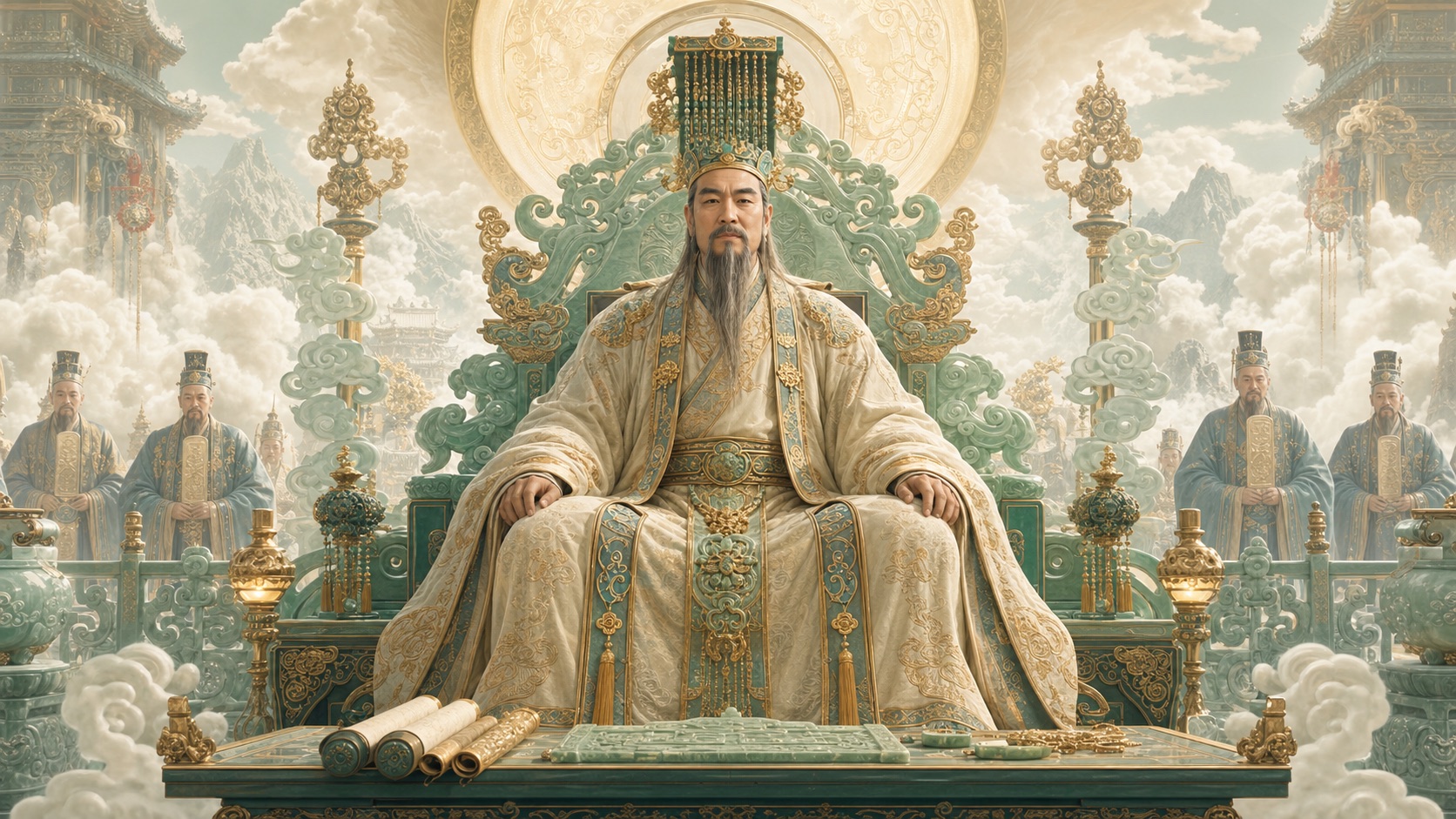
Who they are: A ruler of the celestial court in many Chinese folk and literary traditions.
What they do: He presides over a heavenly bureaucracy and issues commands in many stories, including Journey to the West.
Artifacts or symbols: Imperial regalia and heavenly decrees (帝王礼服与天庭诏令) - These are symbols of office. He does not have one fixed combat magic weapon in the way Sun Wukong does.
Appears in: Chinese folk religion, Daoist-related traditions, Journey to the West
Version context: Some sources call him a supreme deity, while Daoist theology can be layered across different systems.
Read the full The Jade Emperor guide
References: Jade Emperor, World History Encyclopedia: Jade Emperor, Journey to the West
Guanyin / Avalokitesvara / 观音
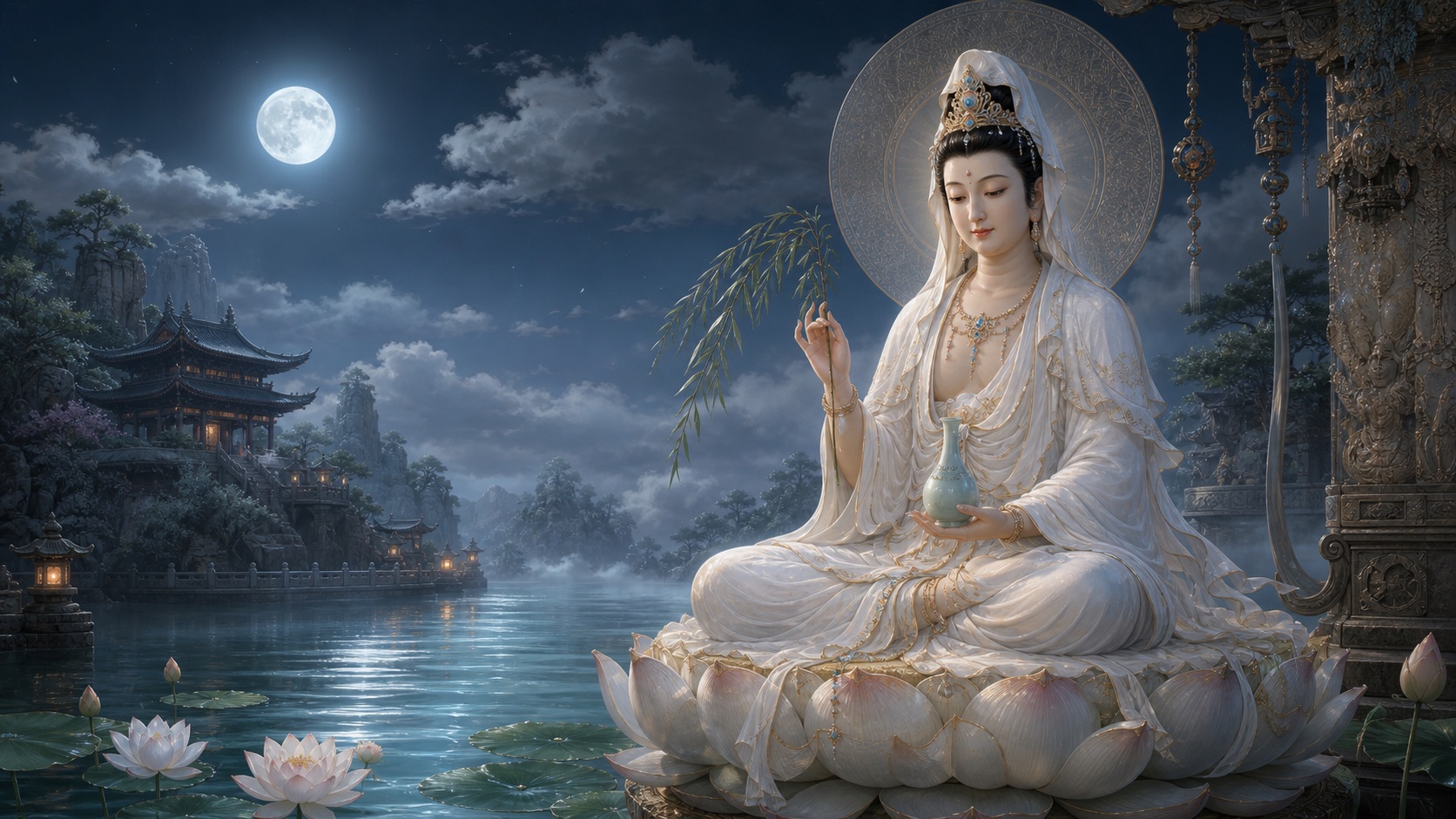
Who they are: The Chinese form of Avalokitesvara, the bodhisattva associated with compassion.
What they do: Guanyin responds to suffering in Buddhist devotion and plays a guiding role in the formation of the pilgrimage in Journey to the West.
Artifacts or symbols: Willow branch and purification vase (杨柳枝与净瓶) - Museum records and iconography often show these as compassionate and purifying attributes, not weapons.
Appears in: Chinese Buddhist iconography, Lotus Sutra traditions, Journey to the West
Version context: Guanyin's gendered representation changes across periods and regions; the figure is broader than a simple goddess label.
Read the full Guanyin / Avalokitesvara guide
References: UMMA: Avalokitesvara / Guanyin with willow branch and vase, Tsz Shan Museum: Standing Willow Guanyin, Journey to the West
Li Jing, the Pagoda-Bearing Heavenly King / 托塔李天王
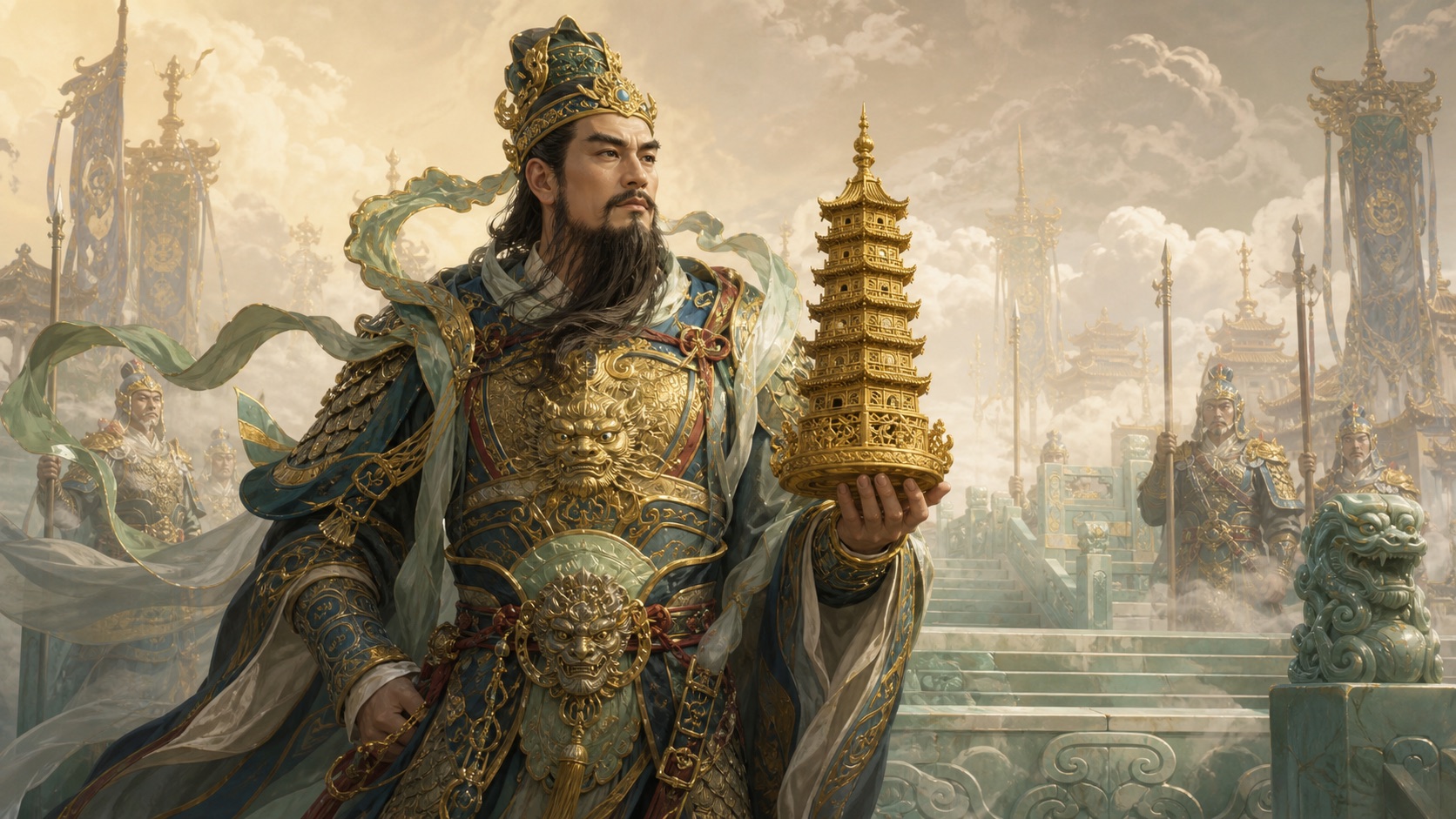
Who they are: A heavenly guardian and military figure, commonly known in later literature as Nezha's father.
What they do: He commands heavenly forces and is recognized by the pagoda he carries.
Artifacts or symbols: Pagoda (宝塔) - In literary tradition, the pagoda can capture or contain powerful beings.
Appears in: Journey to the West, Investiture of the Gods, Buddhist-influenced guardian traditions
Version context: The figure combines Buddhist guardian influence and Chinese literary development, so one simple origin story is not enough.
References: Li Jing, deity, Journey to the West, Chinese Text Project: Investiture of the Gods
Taishang Laojun / 太上老君
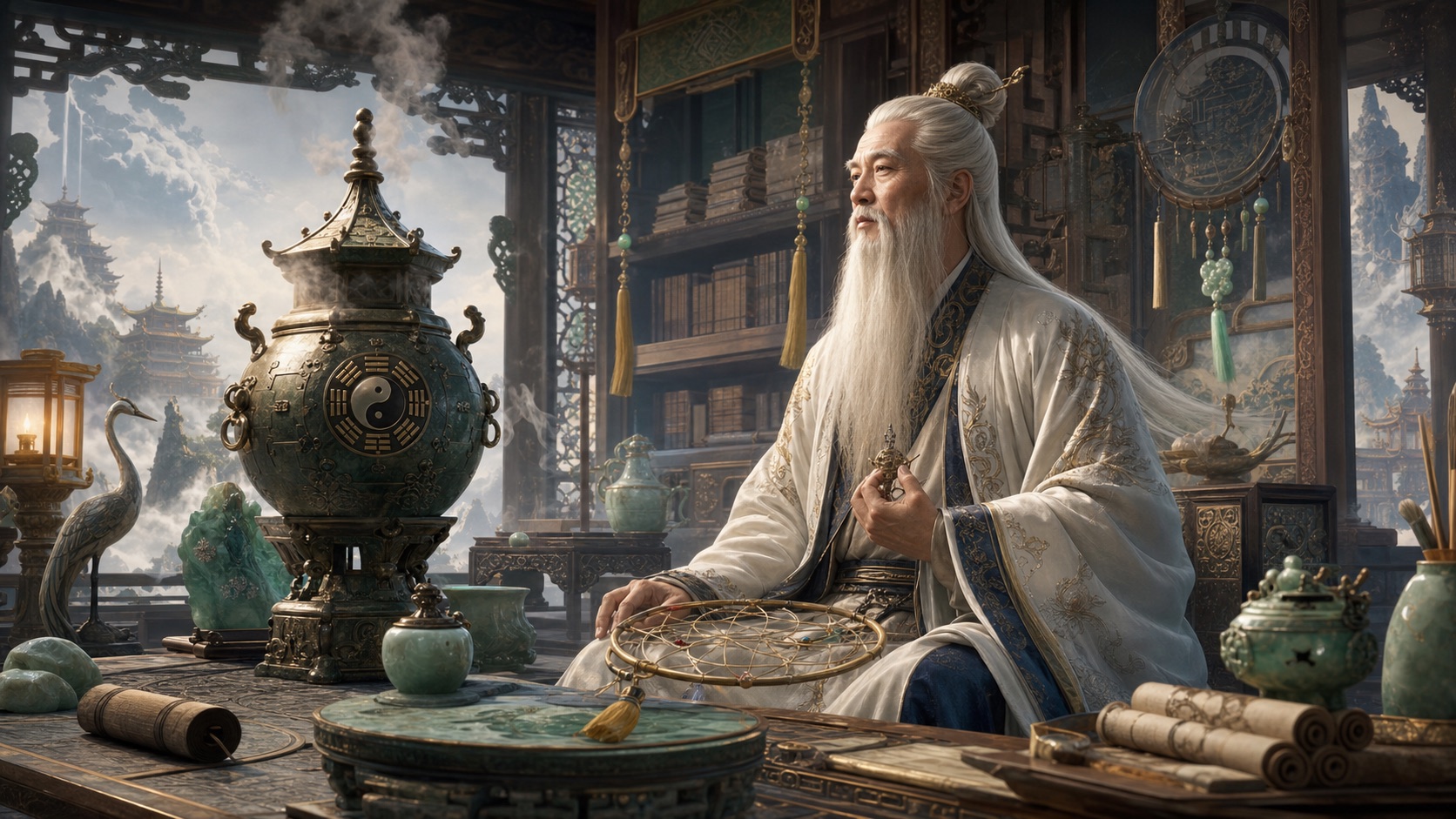
Who they are: A deified form of Laozi in Daoist tradition and a major literary heavenly figure.
What they do: Associated with Daoist authority, alchemy, elixirs, furnaces, and powerful treasures in literary retellings.
Artifacts or symbols: Eight Trigrams Furnace (八卦炉) - A major alchemical setting in Journey to the West episodes involving Sun Wukong.; Diamond snare / diamond cutter (金刚琢) - English renderings vary, and the Chinese name remains the clearest source-specific label.
Appears in: Daoist tradition, Journey to the West, Investiture of the Gods
Version context: Laozi the philosophical figure and Taishang Laojun as a later religious and literary deity are related but distinct.
Read the full Taishang Laojun guide
References: Encyclopedia.com: Laozi / Taishang Laojun, Google Arts & Culture: Taishang Laojun mask, Journey to the West, Chinese Text Project: Investiture of the Gods
Journey to the West Pilgrimage and Demon Episodes
The requested second-batch Journey to the West additions: the pilgrimage team and a limited set of famous demon-episode figures. This group intentionally stops here for now.
Tang Sanzang / Xuanzang / 唐三藏
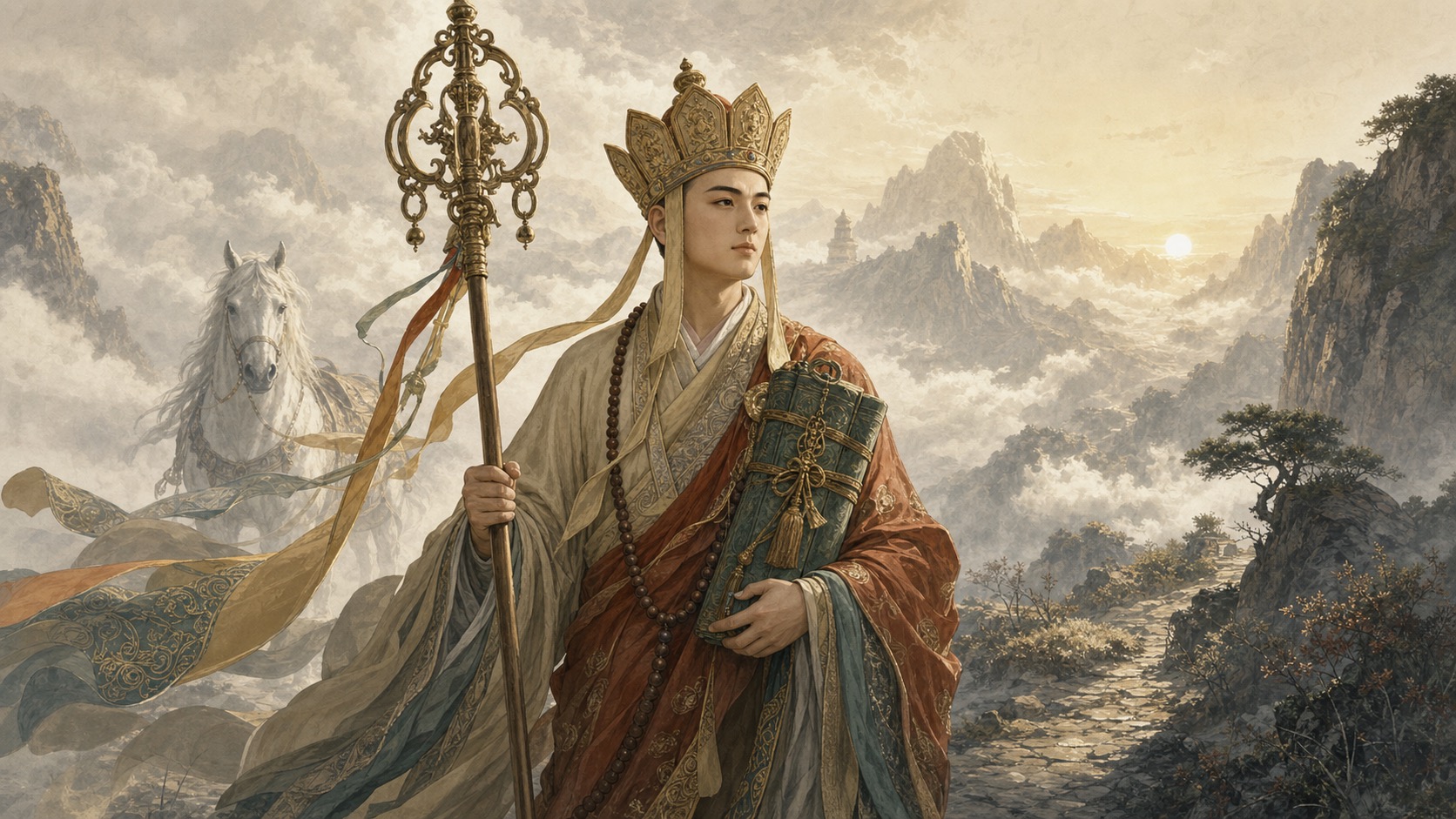
Who they are: The central monk-pilgrim of Journey to the West. This entry focuses on the literary Tang Sanzang and notes his loose connection with the historical monk Xuanzang.
What they do: He leads the pilgrimage to retrieve Buddhist scriptures and provides the moral and narrative purpose that brings the disciples together.
Artifacts or symbols: Pilgrim staff and scriptures (锡杖与经卷) - These are religious and narrative attributes rather than combat weapons.
Appears in: Journey to the West, Buddhist pilgrimage retellings, opera, television, animation, and film
Version context: The novel character Tang Sanzang and the verified historical Buddhist monk Xuanzang are related but distinct.
References: Journey to the West, Tang Sanzang
Zhu Bajie / Pigsy / 猪八戒
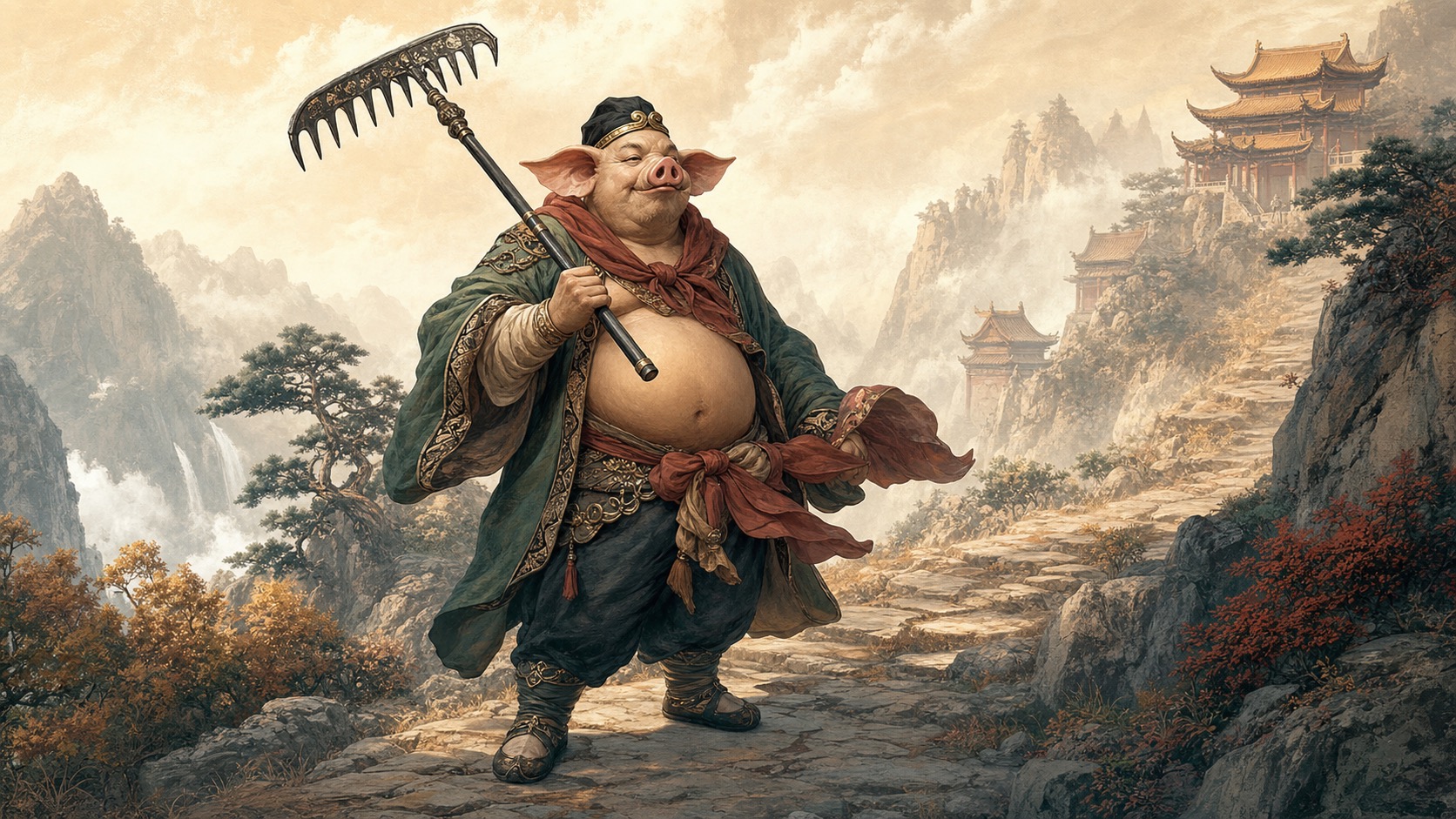
Who they are: One of Tang Sanzang's disciples in Journey to the West, recognizable by pig-like features and comic but capable behavior.
What they do: He joins the pilgrimage after being subdued by Sun Wukong and becomes one of the team's main fighters and comic voices.
Artifacts or symbols: Nine-toothed rake (九齿钉耙) - His most recognizable weapon in the novel and later visual adaptations.
Appears in: Journey to the West, Chinese opera, television, animation, film, and games
Version context: His comic image is only one side of the character; he is also part of the pilgrimage's protection system.
References: Journey to the West, Zhu Bajie
Sha Wujing / Sha Monk / 沙悟净
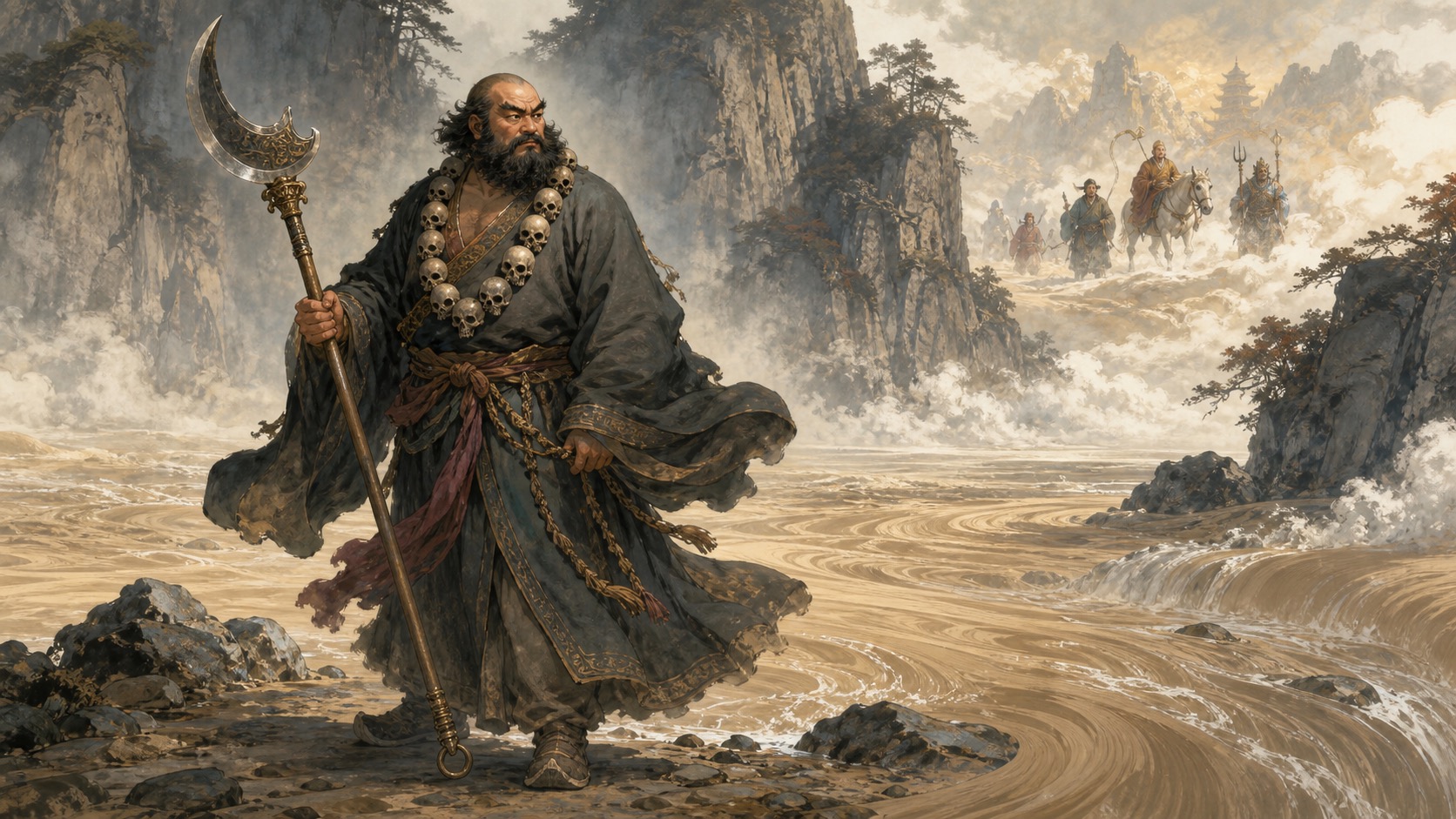
Who they are: One of Tang Sanzang's disciples, often remembered as the steady and dutiful member of the pilgrimage group.
What they do: After the Flowing Sands River episode, he becomes a disciple and helps carry the practical burden of the pilgrimage.
Artifacts or symbols: Crescent staff / monk's spade (月牙铲式兵器 / 降妖宝杖) - English renderings vary. The guide keeps both the visual weapon type and the Chinese literary name.
Appears in: Journey to the West, opera, television, animation, and film retellings
Version context: English weapon names vary across translations.
References: Journey to the West, Sha Wujing
White Dragon Horse / 白龙马
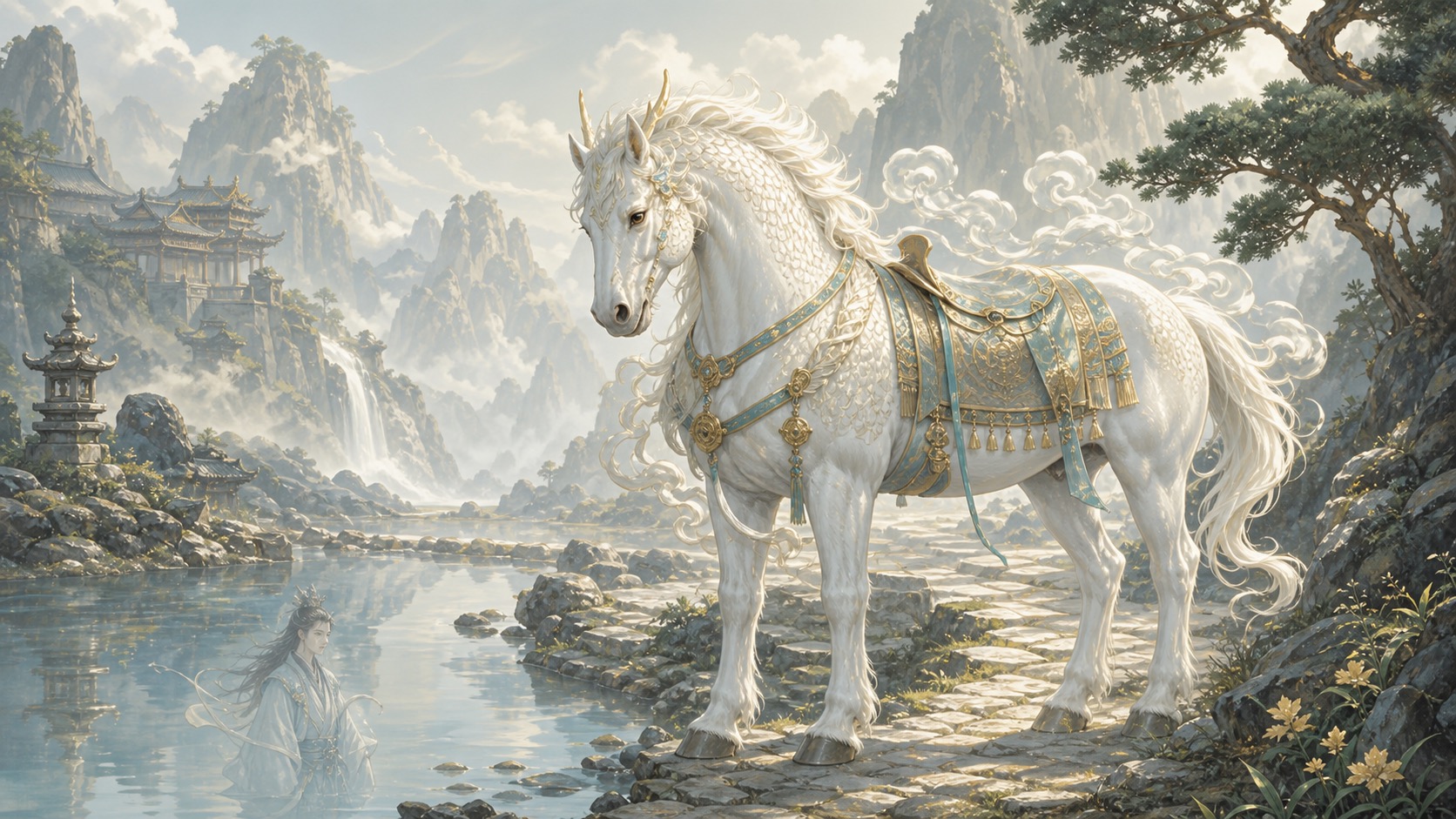
Who they are: A dragon prince transformed into Tang Sanzang's horse in Journey to the West.
What they do: He carries Tang Sanzang through the journey and represents the dragon-world element inside the pilgrimage team.
Artifacts or symbols: Dragon-horse transformation (龙马形态) - This is an identity and transformation motif rather than a handheld magic weapon.
Appears in: Journey to the West, television, animation, film, and illustrated editions
Version context: He is often simplified in adaptations, but the original role is tied to a dragon-prince background.
References: Journey to the West, White Dragon Horse
Bull Demon King / 牛魔王
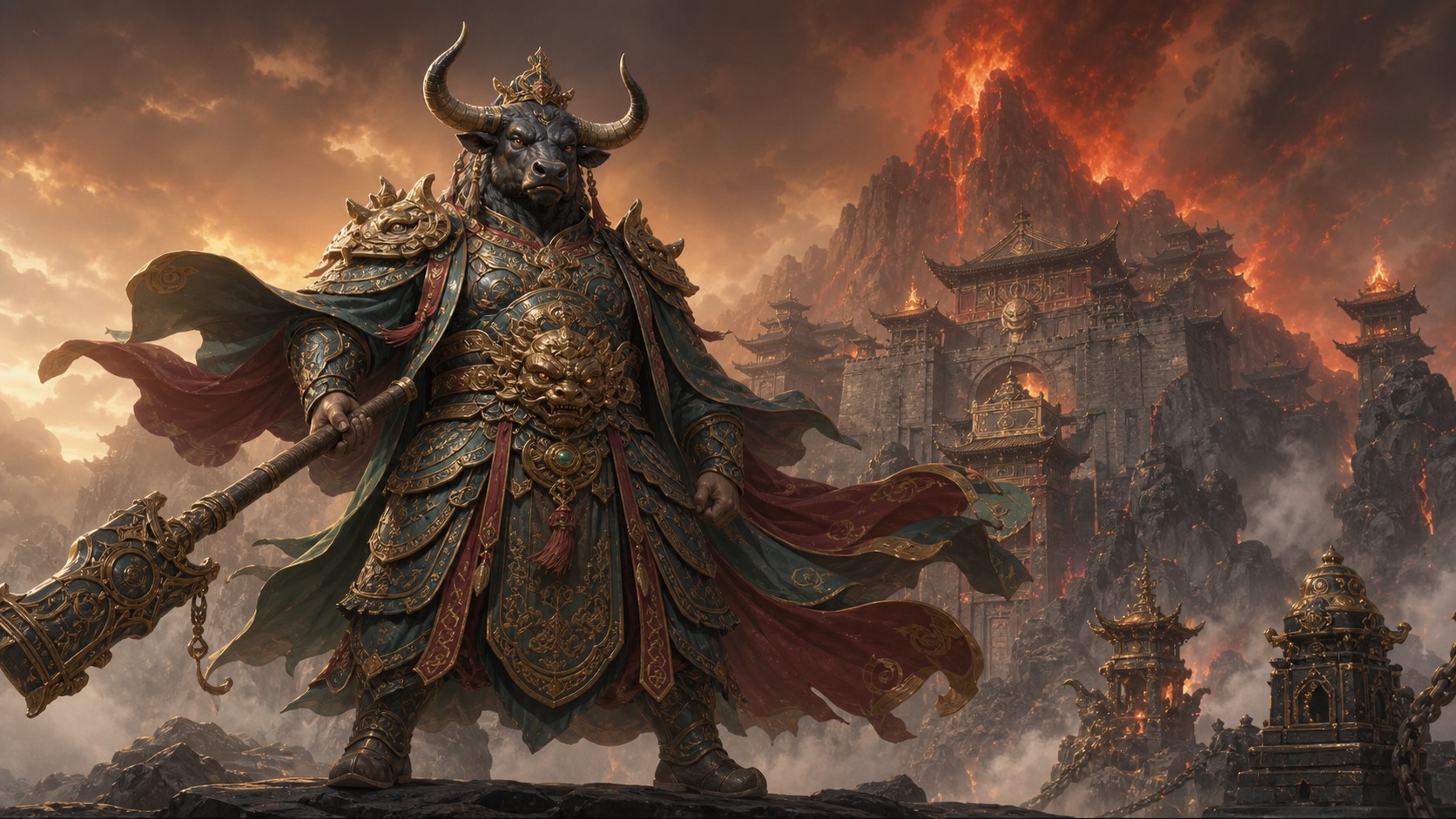
Who they are: A powerful demon king in Journey to the West, closely tied to the Flame Mountain and Iron Fan episode cycle.
What they do: He functions as a major obstacle in the pilgrimage narrative and as part of Sun Wukong's earlier sworn-brother network.
Artifacts or symbols: Bull demon form and heavy weapon (牛魔王形象与长兵器) - Later images often arm him dramatically, but no universally fixed named magic weapon is shared across all versions.
Appears in: Journey to the West, opera, film, animation, games, and popular retellings
Version context: Modern weapon designs often add details beyond the classical text.
References: Journey to the West, Bull Demon King
Princess Iron Fan / 铁扇公主
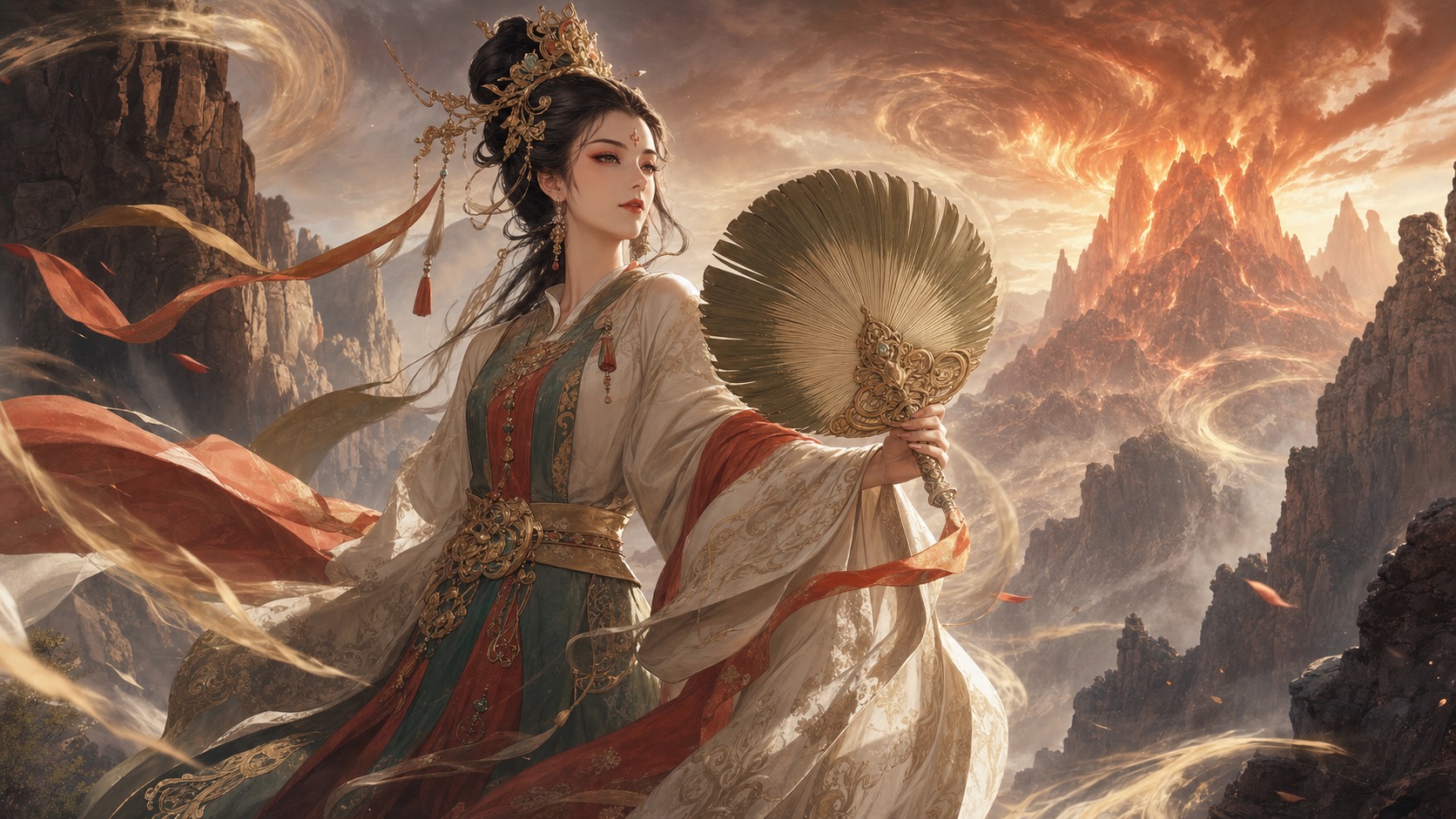
Who they are: A key female figure in the Flame Mountain episode and wife of the Bull Demon King in the novel system.
What they do: Her plantain fan becomes essential because the pilgrimage team needs wind to cross the Flame Mountain region.
Artifacts or symbols: Plantain fan (芭蕉扇) - The fan can create powerful wind in the novel's Flame Mountain episode.
Appears in: Journey to the West, opera, animation, film, and popular illustrations
Version context: Princess Iron Fan is central to the Flame Mountain episode because the fan controls the story's main obstacle.
References: Journey to the West, Princess Iron Fan
Lady White Bone / Baigujing / 白骨精
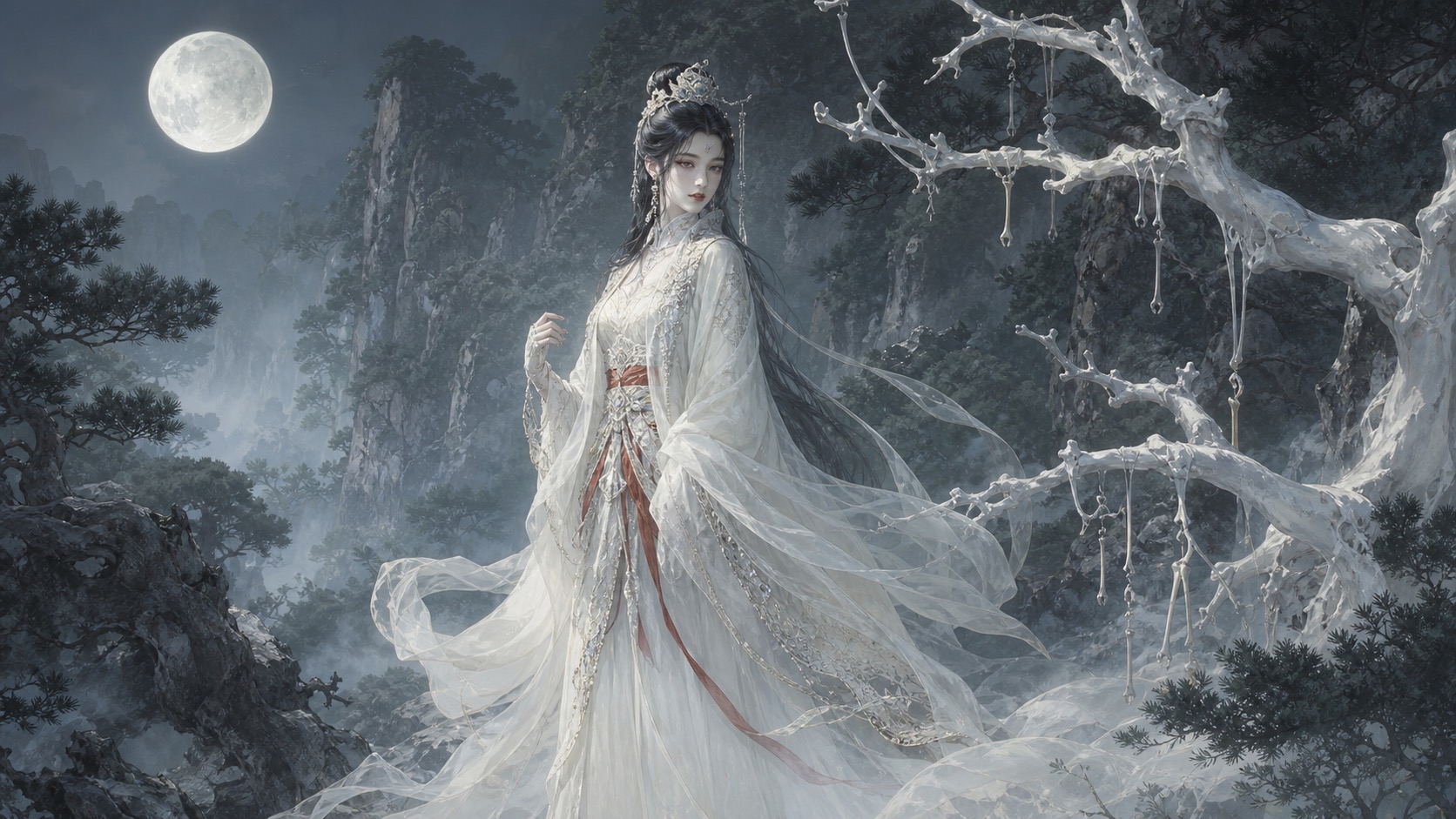
Who they are: A demon-episode figure in Journey to the West, famous for deceptive transformations.
What they do: Her episode tests the group's trust and becomes one of the most familiar conflict stories between Sun Wukong and Tang Sanzang.
Artifacts or symbols: Transformations and deceptive appearances (变化术与伪装) - Her defining feature is transformation, not a fixed handheld weapon.
Appears in: Journey to the West, opera, television, animation, film, and children's editions
Version context: She is a literary demon figure rather than a historical person or mainstream deity.
References: Journey to the West, Baigujing
The Eight Immortals overview
A group-level entry for the Eight Immortals, paired with individual entries for each member.
The Eight Immortals / 八仙
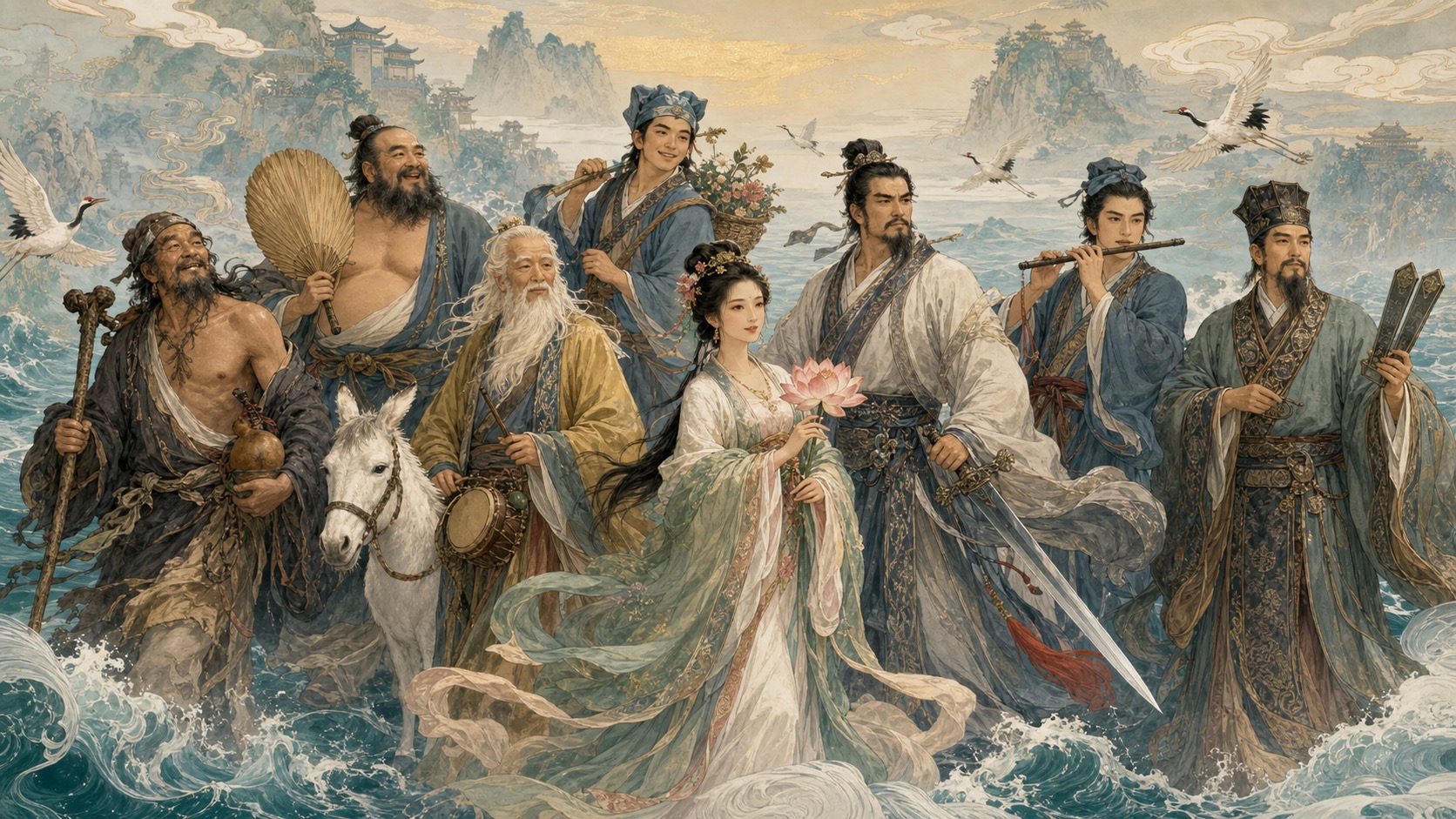
Who they are: A group of eight legendary immortals widely represented in Chinese art, drama, and decorative objects.
What they do: They are often used to represent immortality, transcendence, longevity, prosperity, and the crossing between human and divine worlds.
Artifacts or symbols: Fan, sword, lotus, flute, flower basket, gourd, castanets, bamboo tube or drum-like instrument (扇、剑、莲花、笛、花篮、葫芦、拍板、竹筒或鼓类器物) - Museum records identify the immortals by carried attributes, but exact forms can vary by artwork.
Appears in: Daoist and folk traditions, paintings, ceramics, theater, decorative arts
Version context: The attributes are iconographic identifiers, not always fixed magic weapons in every source.
Read the full The Eight Immortals guide
References: Eight Immortals, The Met: Cup with Eight Daoist Immortals, The Walters Art Museum: The Eight Immortals, Animation World Network: All Wishes Come True! release, China Daily: Eight Immortals get freshly animated origins
The eight individual immortals
Each immortal has a different identity, role, and iconographic attribute. The attributes help readers identify them in paintings, opera, ceramics, and later adaptations.
Li Tieguai / Iron-Crutch Li / 铁拐李
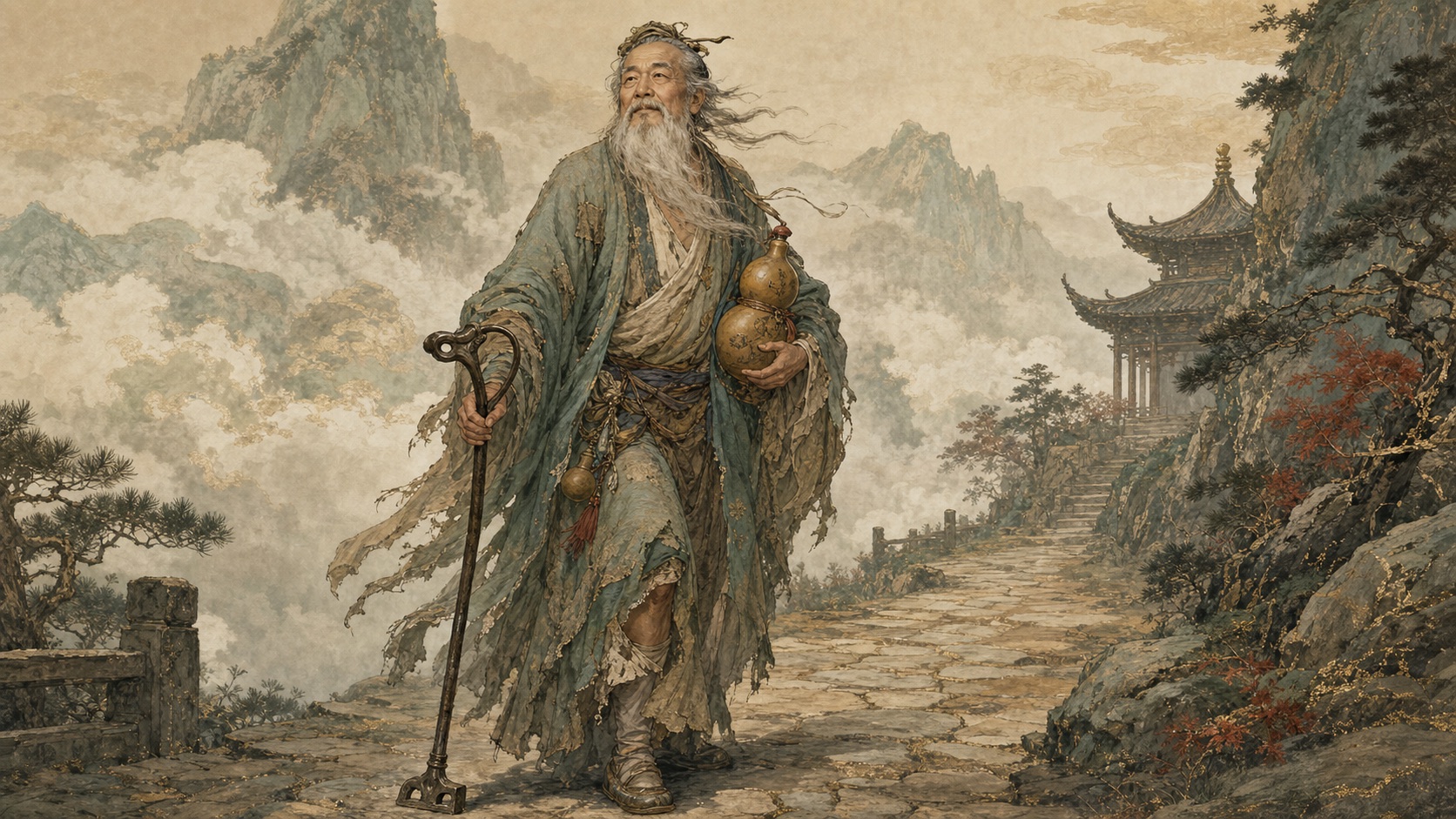
Who they are: One of the Eight Immortals, usually recognized as a wandering immortal with an iron crutch.
What they do: In stories and images, he is associated with healing, medicine, and transcendence beyond ordinary appearance.
Artifacts or symbols: Iron crutch (铁拐) - His most direct visual identifier and the source of the name Iron-Crutch Li.; Gourd (葫芦) - Often linked with medicine, elixirs, or spiritual power in immortal iconography.
Appears in: Eight Immortals legends, Daoist and folk art, opera and decorative arts
Version context: His rough appearance is an iconographic feature, not a joke or a moral flaw.
Read the full Li Tieguai / Iron-Crutch Li guide
References: Eight Immortals, Li Tieguai, The Met: Cup with Eight Daoist Immortals, The Walters Art Museum: The Eight Immortals
Zhongli Quan / Han Zhongli / 汉钟离 / 钟离权
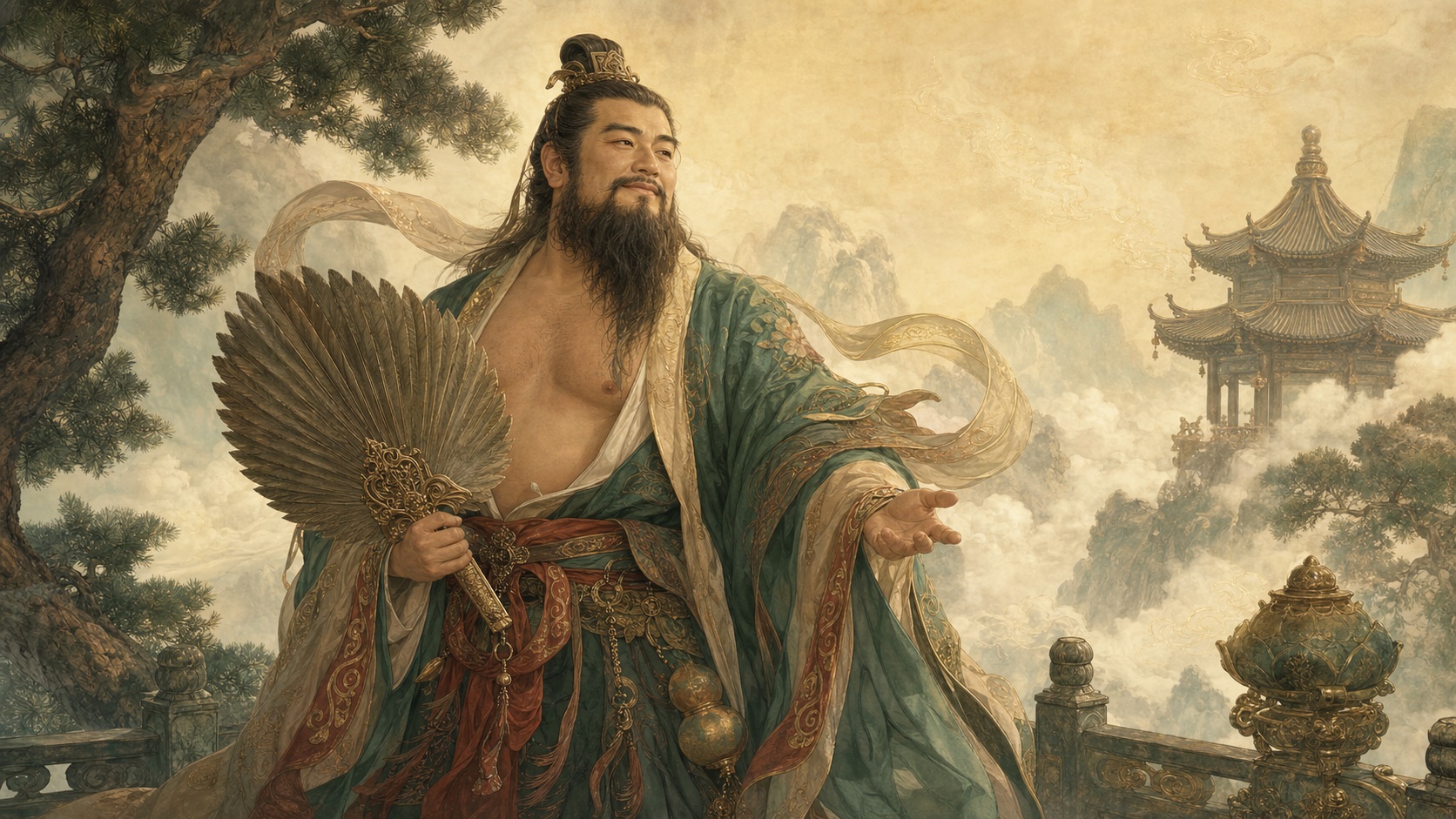
Who they are: One of the Eight Immortals, commonly shown as a relaxed, bearded immortal with a large fan.
What they do: He is often presented as an elder immortal connected with transformation, revival, and Daoist instruction in later stories.
Artifacts or symbols: Fan (扇) - A major iconographic attribute; specific powers vary by story and artwork.
Appears in: Eight Immortals legends, Daoist hagiography, paintings and theater
Version context: Zhongli Quan is the personal name; Han Zhongli is a common title-style name in popular tradition.
Read the full Zhongli Quan / Han Zhongli guide
References: Eight Immortals, Zhongli Quan, The Met: Cup with Eight Daoist Immortals, The Walters Art Museum: The Eight Immortals
Zhang Guolao / 张果老
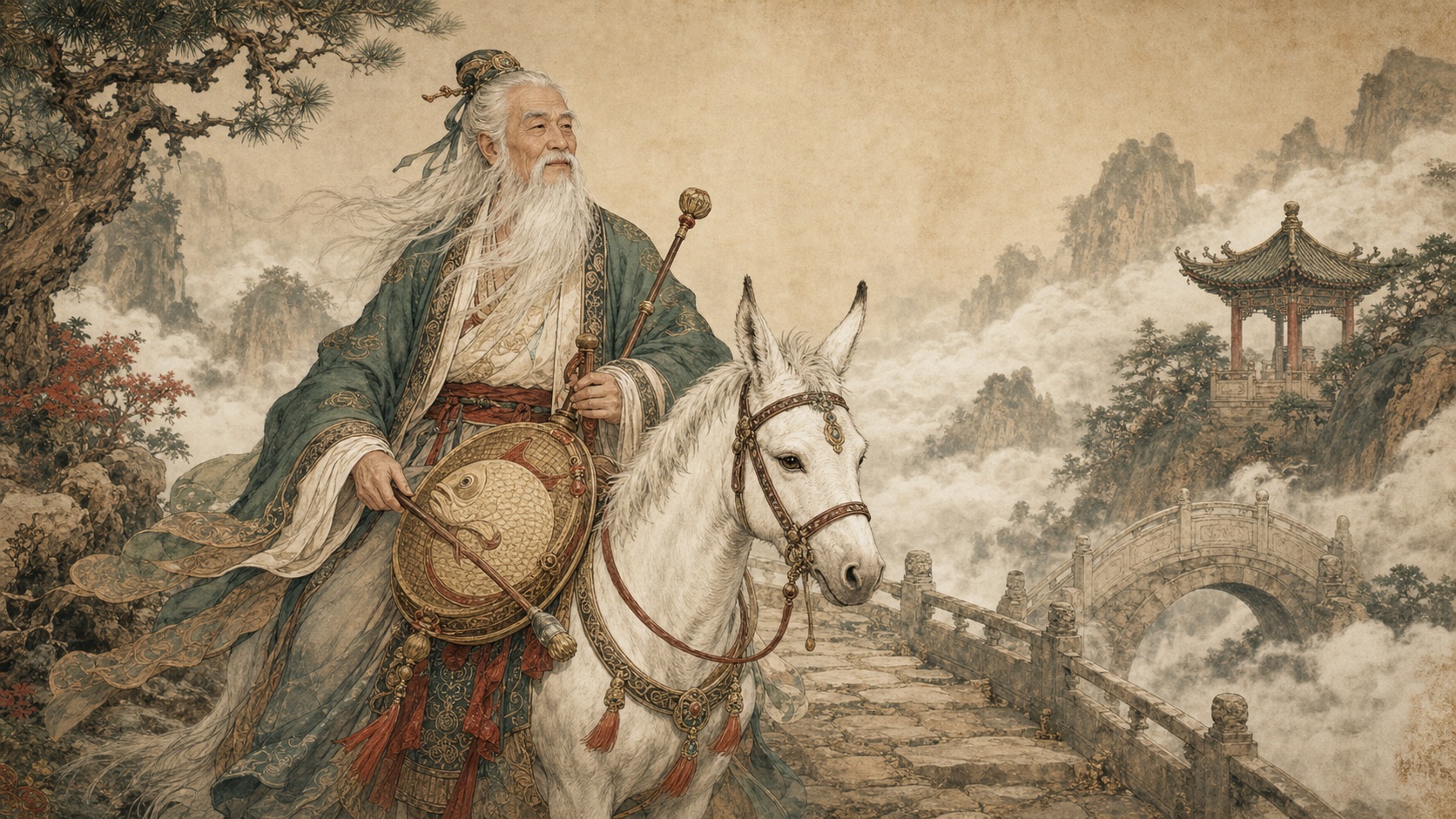
Who they are: One of the Eight Immortals, usually represented as an elderly immortal associated with a donkey.
What they do: He appears in legends as a reclusive immortal whose strange travel habits signal supernatural status.
Artifacts or symbols: Fish drum / bamboo drum (鱼鼓 / 竹鼓) - A common attribute used to identify him in Eight Immortals imagery.; White donkey (白驴) - Usually treated as an iconographic companion rather than a handheld magic weapon.
Appears in: Eight Immortals legends, folk tales, paintings and theater
Version context: His donkey-riding stories are legendary motifs rather than historical biography.
Read the full Zhang Guolao guide
References: Eight Immortals, Zhang Guolao, The Met: Cup with Eight Daoist Immortals, The Walters Art Museum: The Eight Immortals
Lan Caihe / 蓝采和
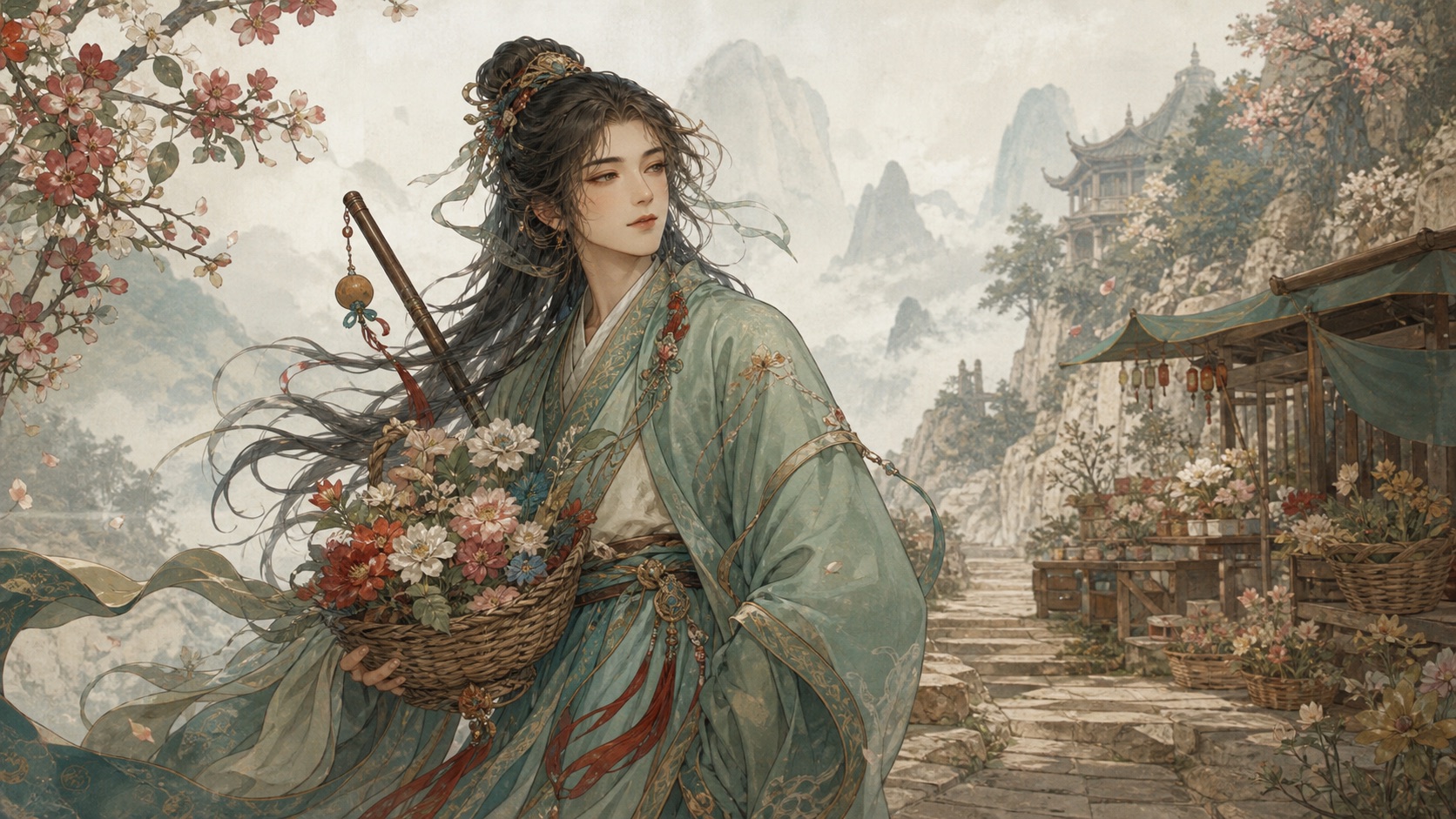
Who they are: One of the Eight Immortals, often represented as a free-spirited wandering figure with a flower basket.
What they do: The figure often represents unconventional freedom, transience, and the boundary between ordinary life and immortal wandering.
Artifacts or symbols: Flower basket (花篮) - The clearest visual marker in many Eight Immortals images.
Appears in: Eight Immortals legends, opera, paintings and decorative arts
Version context: Lan Caihe's gender presentation varies by source and artwork, so one fixed reading does not cover the tradition.
Read the full Lan Caihe guide
References: Eight Immortals, Lan Caihe, The Met: Cup with Eight Daoist Immortals, The Walters Art Museum: The Eight Immortals
He Xiangu / 何仙姑
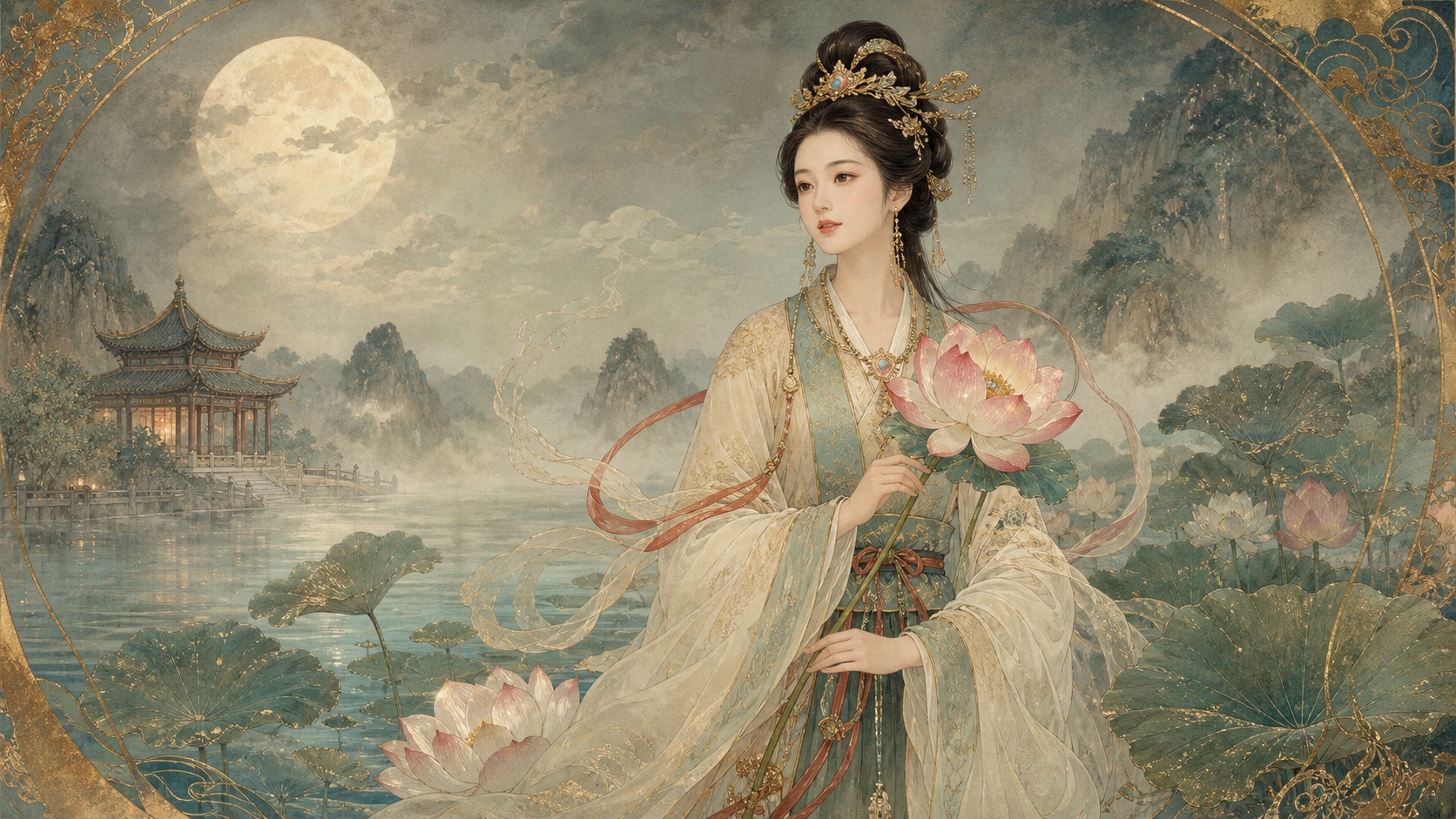
Who they are: One of the Eight Immortals and the only woman in the usual eight-member list.
What they do: She is commonly associated with purity, spiritual refinement, and graceful immortal imagery.
Artifacts or symbols: Lotus (莲花) - A common attribute identifying He Xiangu in paintings and decorative arts.
Appears in: Eight Immortals legends, paintings, theater and decorative arts
Version context: Origin stories for He Xiangu vary; stable iconographic features are the clearest anchor.
Read the full He Xiangu guide
References: Eight Immortals, He Xiangu, The Met: Cup with Eight Daoist Immortals, The Walters Art Museum: The Eight Immortals
Lu Dongbin / 吕洞宾
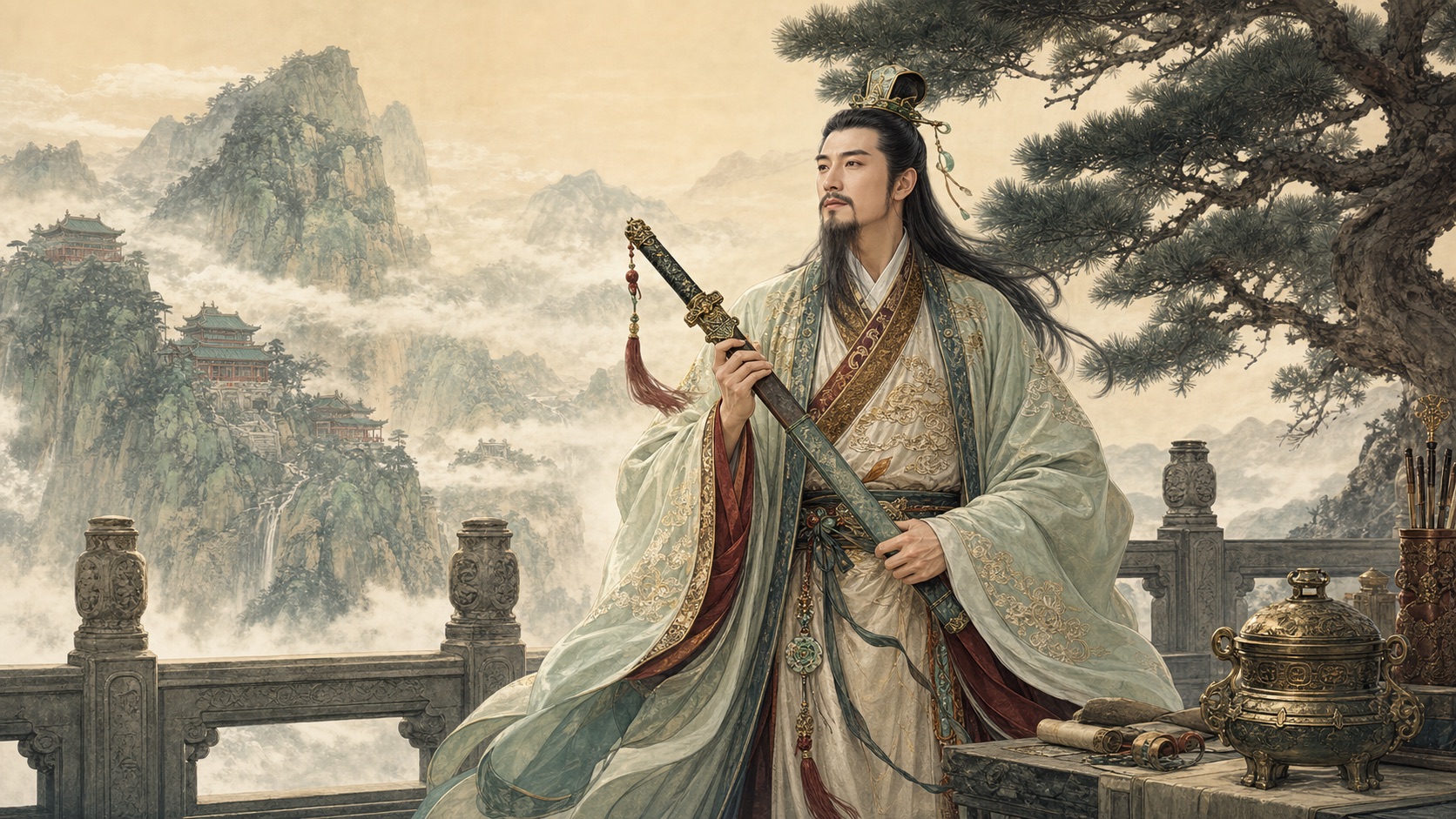
Who they are: One of the Eight Immortals, widely known as a scholar-swordsman immortal.
What they do: He is often connected with Daoist instruction, moral testing, demon-quelling, and later devotional traditions.
Artifacts or symbols: Sword (剑) - A key attribute, often tied to dispelling demons or cutting through illusion in later stories.
Appears in: Eight Immortals legends, Daoist traditions, opera, novels, and paintings
Version context: Lu Dongbin has rich religious and literary traditions; one simplified biography cannot cover all versions.
Read the full Lu Dongbin guide
References: Eight Immortals, Lu Dongbin, The Met: Cup with Eight Daoist Immortals, The Walters Art Museum: The Eight Immortals
Han Xiangzi / 韩湘子
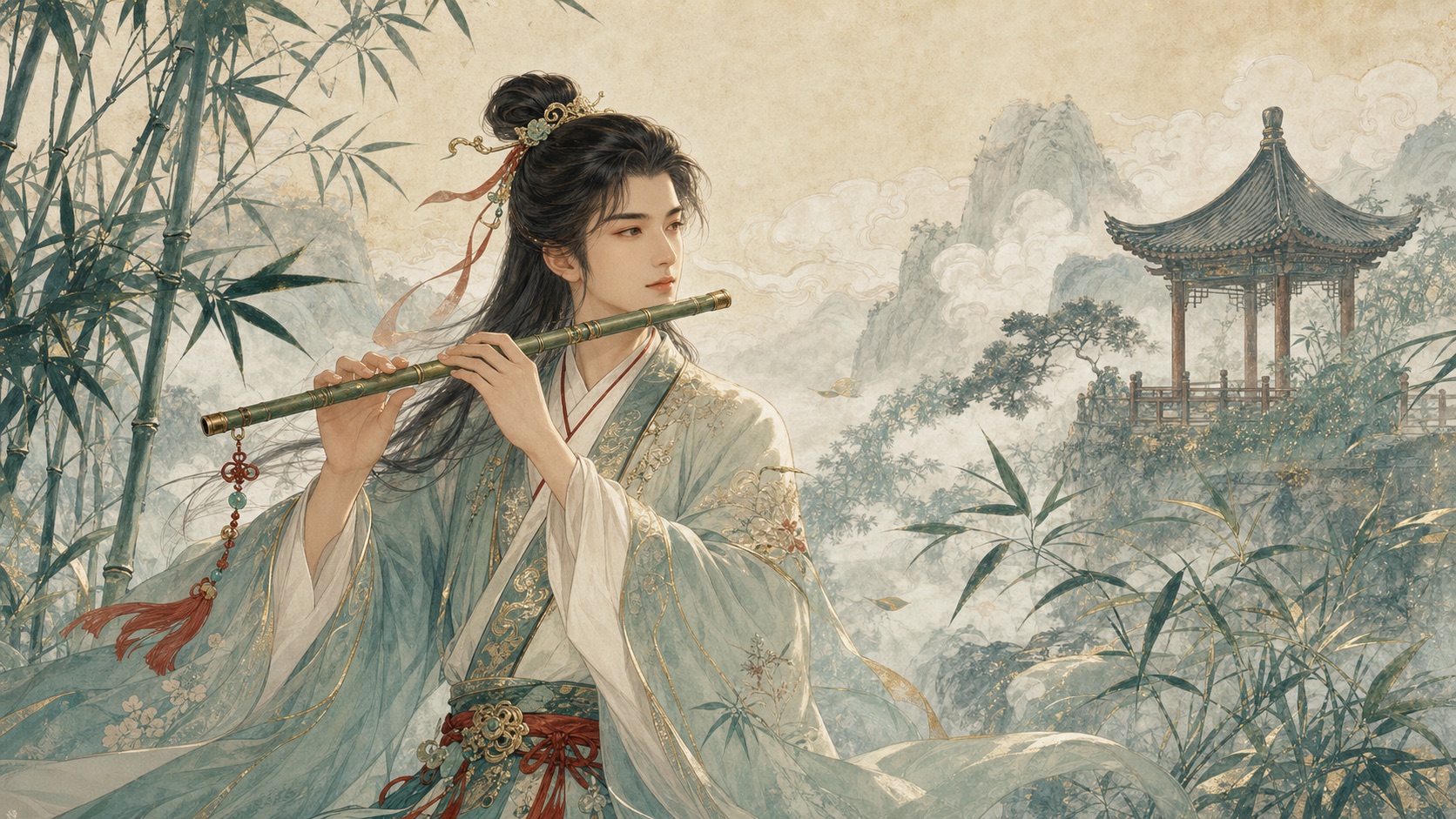
Who they are: One of the Eight Immortals, usually recognized by the flute.
What they do: He is associated with music, poetic refinement, and transformation in Eight Immortals storytelling.
Artifacts or symbols: Flute (笛) - The flute is his most common visual attribute in Eight Immortals iconography.
Appears in: Eight Immortals legends, opera and paintings, folk retellings
Version context: The connection with the Tang writer Han Yu belongs to legendary tradition rather than verified biography.
Read the full Han Xiangzi guide
References: Eight Immortals, Han Xiangzi, The Met: Cup with Eight Daoist Immortals, The Walters Art Museum: The Eight Immortals
Cao Guojiu / 曹国舅
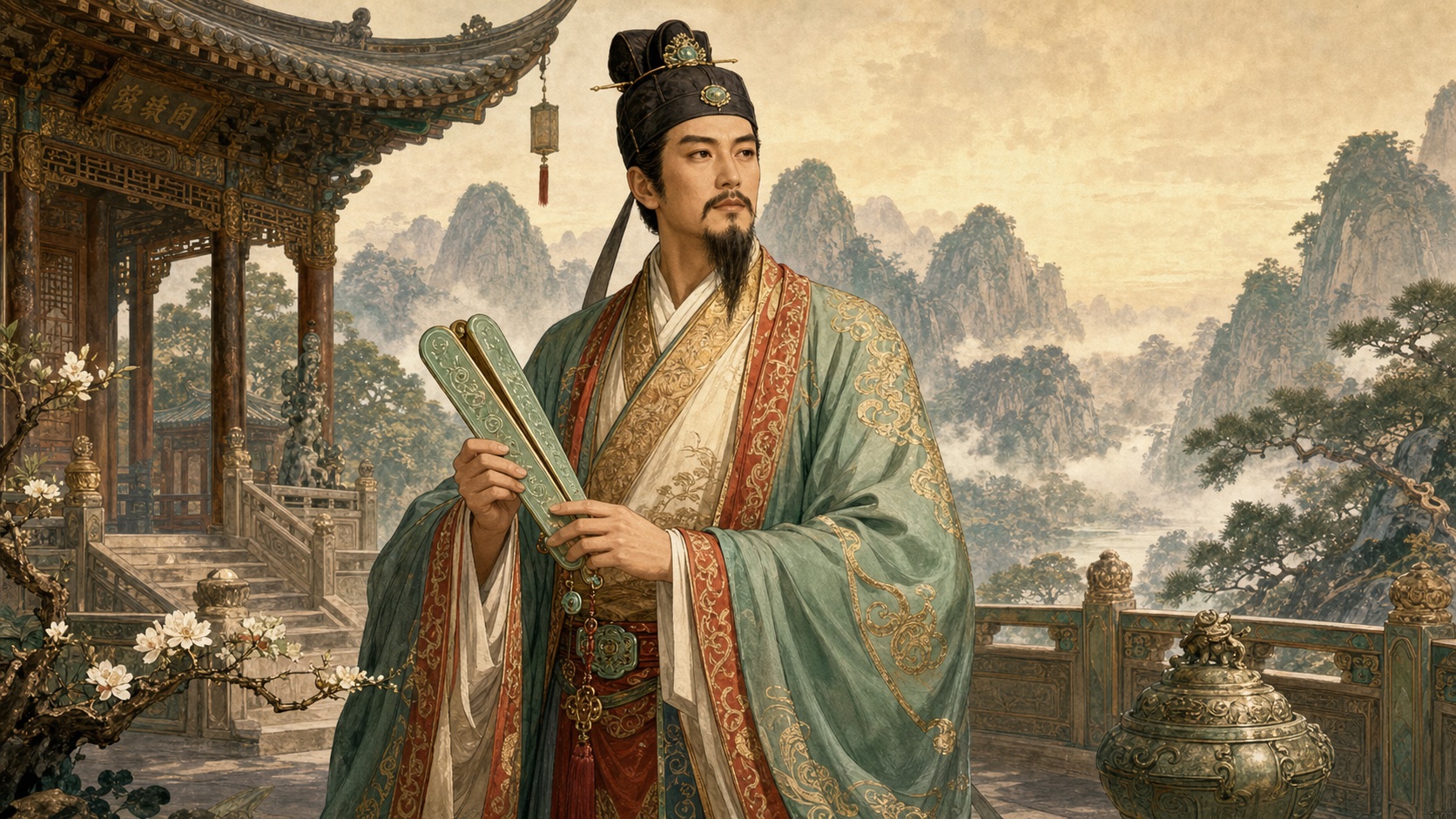
Who they are: One of the Eight Immortals, commonly portrayed as a noble or courtly official figure.
What they do: His stories often involve leaving worldly rank behind and entering immortal practice.
Artifacts or symbols: Jade tablet / court clappers (玉板 / 拍板) - A ceremonial identifier linked to official status; exact object forms vary in art.
Appears in: Eight Immortals legends, paintings, theater and decorative arts
Version context: 'Guojiu' is a title-like term meaning an imperial relative; the stories still belong to legendary tradition.
Read the full Cao Guojiu guide
References: Eight Immortals, Cao Guojiu, The Met: Cup with Eight Daoist Immortals, The Walters Art Museum: The Eight Immortals
Underworld, Fortune, and Marriage Deities
Folk-religion figures connected with underworld judgment, auspicious blessings, wealth, longevity, official rank, and marriage ties.
Yanluo Wang / King Yama / 阎王爷 / 阎罗王
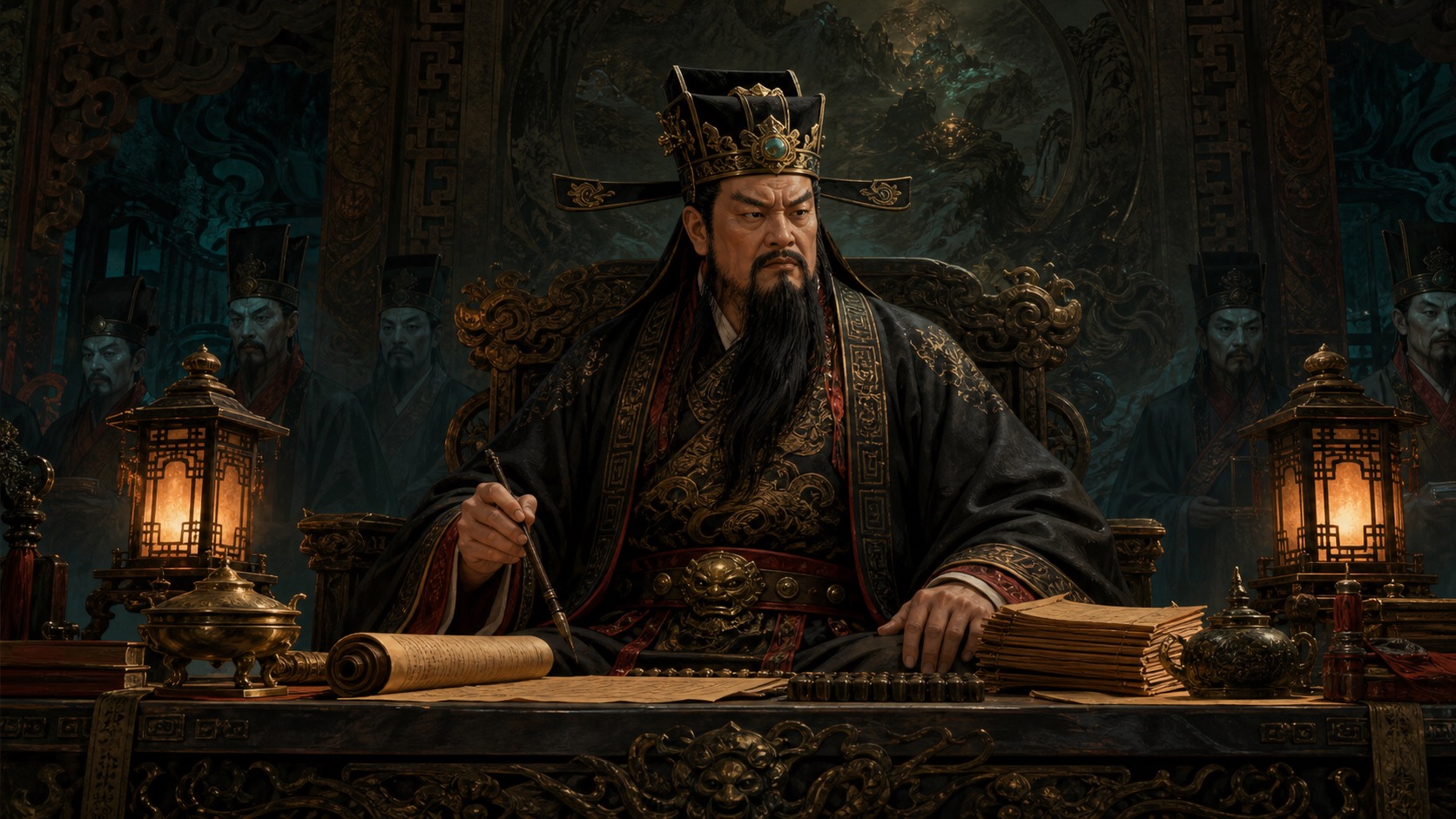
Who they are: A judge-ruler figure of the underworld in Chinese Buddhist-influenced and folk traditions.
What they do: He presides over judgment scenes, records, and afterlife bureaucracy in many stories and images. Journey to the West also uses underworld court scenes in famous episodes.
Artifacts or symbols: Judgment ledger and court brush (生死簿与判笔) - These are symbols of judicial authority in underworld stories, not ordinary weapons.
Appears in: Chinese Buddhist and folk underworld traditions, Journey to the West, temple imagery and popular prints
Version context: Underworld hierarchies vary across traditions; no single layout is universal.
Read the full Yanluo Wang / King Yama guide
References: Yama / Yanluo Wang, Journey to the West
Fu Xing / Star of Fortune / 福星
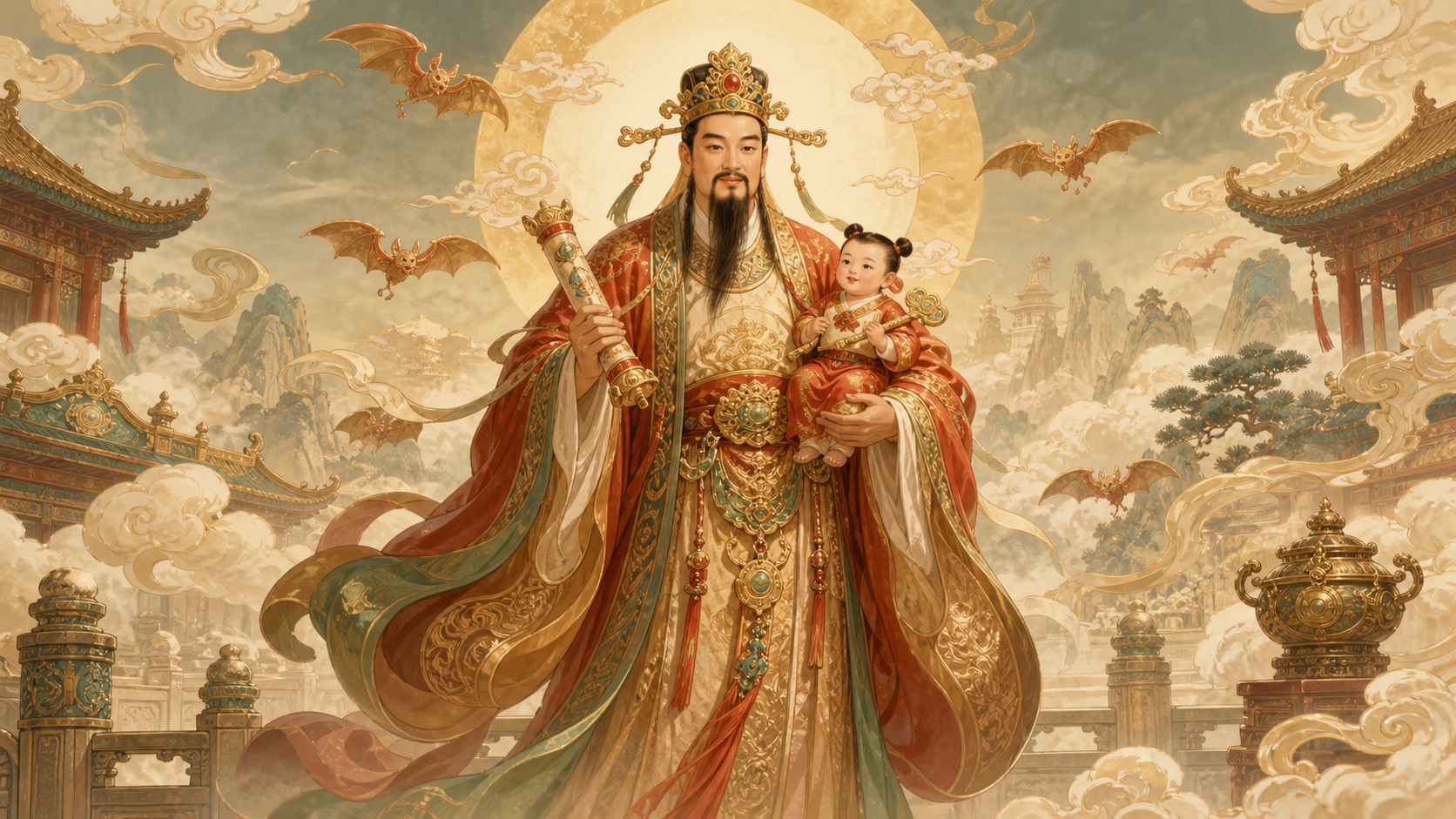
Who they are: One of the Sanxing, the three auspicious star deities Fu, Lu, and Shou. Fu is associated with blessing and good fortune as a cultural symbol.
What they do: Fu Xing commonly appears with Lu Xing and Shou Xing in prints, decorative objects, temple imagery, and popular auspicious art.
Artifacts or symbols: Blessing scroll, bats, and auspicious child imagery (福字卷轴、蝙蝠与童子意象) - These visual symbols commonly express blessing, good wishes, and festive auspiciousness in Chinese art.
Appears in: Sanxing folk iconography, New Year prints, decorative arts and popular culture
Version context: Fu Xing is an auspicious cultural image with multiple folk-art variations.
Read the full Fu Xing / Star of Fortune guide
References: Sanxing: Fu, Lu, and Shou
Lu Xing / Star of Rank / 禄星
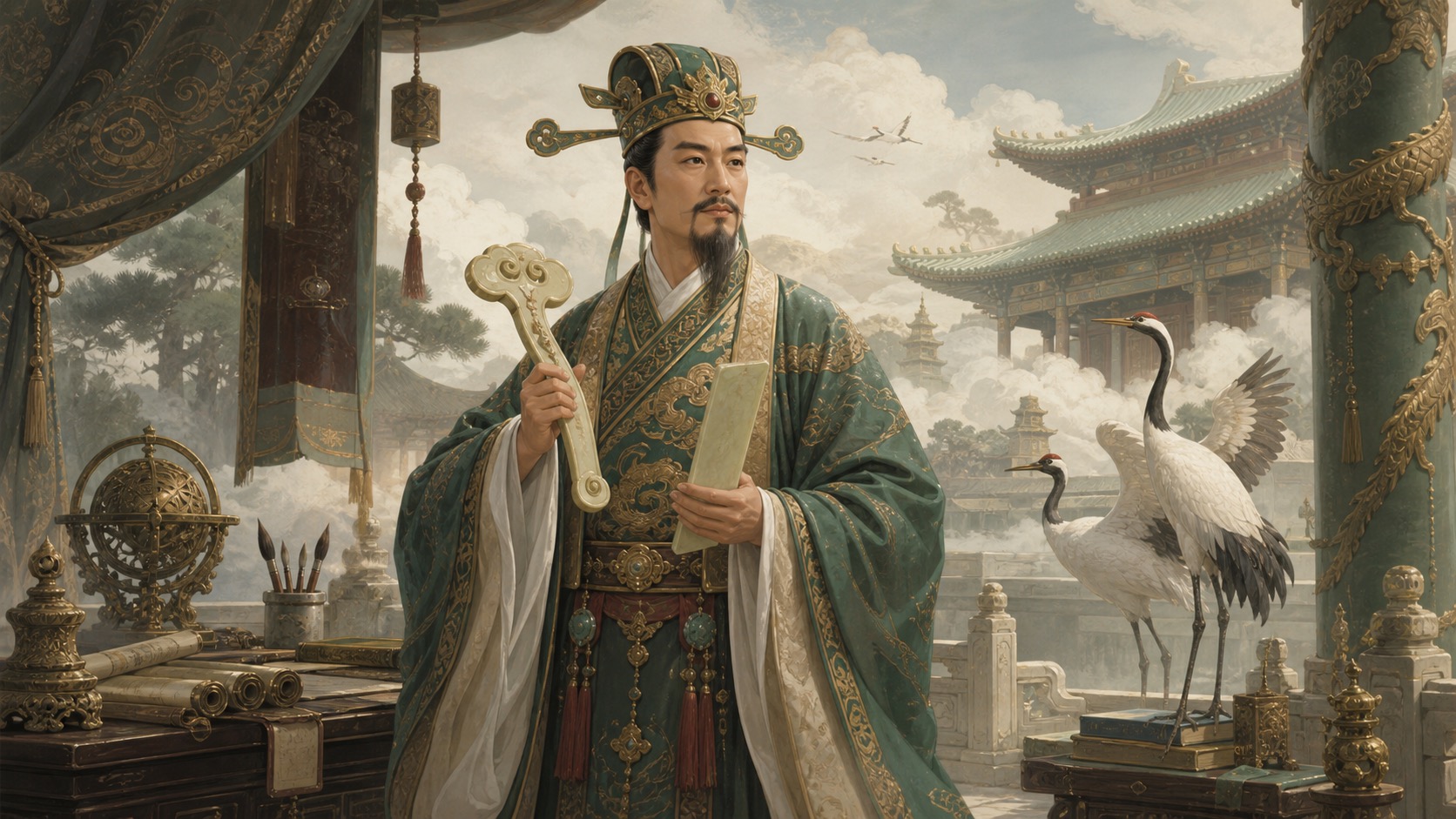
Who they are: One of the Sanxing. Lu is linked with rank, salary, office, and status in traditional auspicious imagery.
What they do: Lu Xing is usually shown in official robes, helping viewers identify the social-rank aspect of the Fu-Lu-Shou trio.
Artifacts or symbols: Court tablet and ruyi (朝笏与如意) - These are official and auspicious attributes rather than fixed combat weapons.
Appears in: Sanxing folk iconography, prints, ceramics, temple images, and popular art
Version context: Lu Xing represents the cultural symbolism of rank and official status in traditional imagery.
Read the full Lu Xing / Star of Rank guide
References: Sanxing: Fu, Lu, and Shou
Shou Xing / Star of Longevity / 寿星
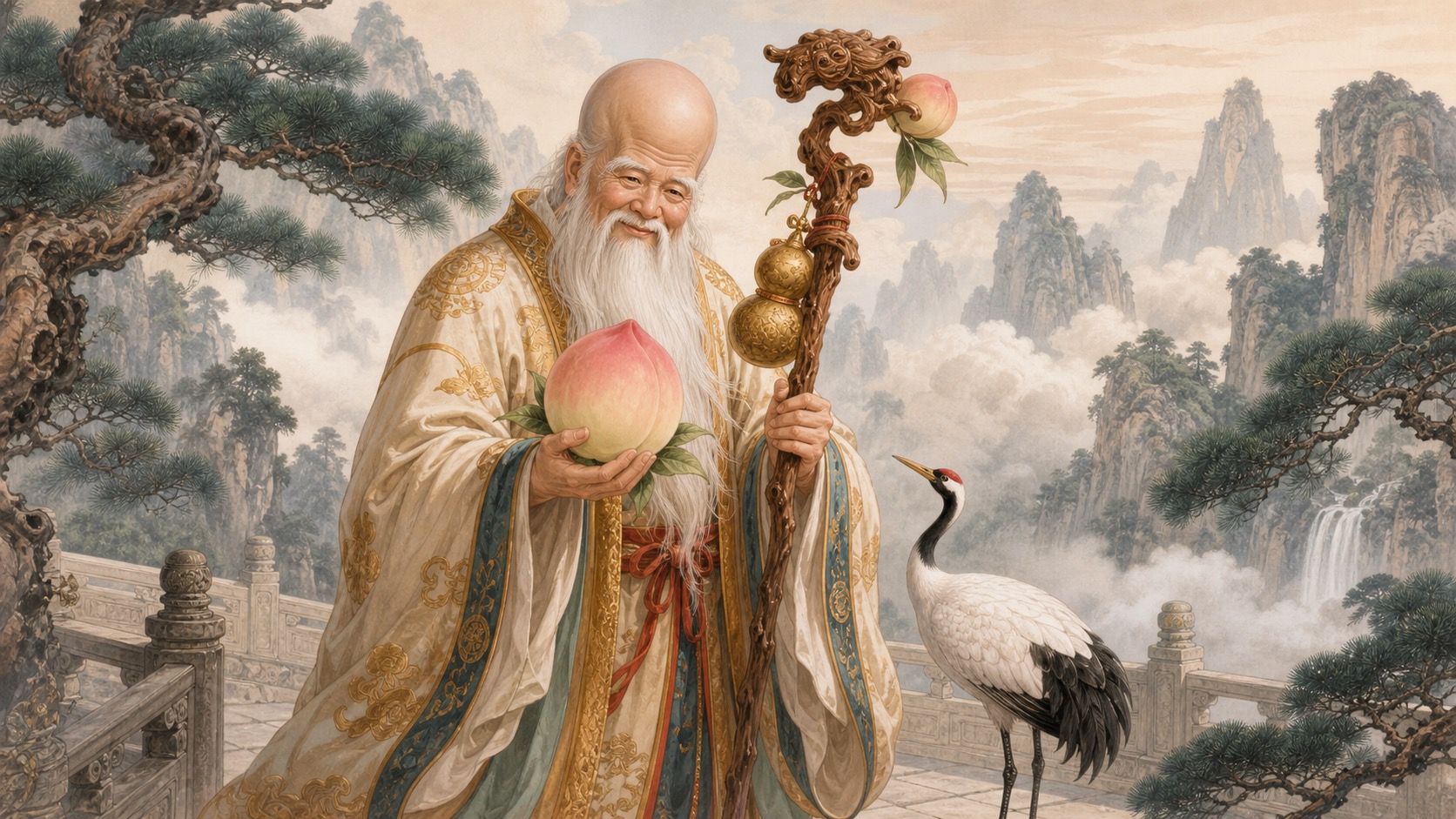
Who they are: One of the Sanxing and the longevity figure in the Fu-Lu-Shou trio.
What they do: Shou Xing appears in birthday art, temple imagery, and decorative objects as a symbol of longevity and respectful blessing.
Artifacts or symbols: Peach, staff, crane, and pine (寿桃、手杖、仙鹤与松) - These are classic longevity symbols in birthday art, decorative objects, and auspicious paintings.
Appears in: Sanxing folk iconography, birthday paintings, decorative arts and popular culture
Version context: Shou Xing appears in many regional and artistic variations of longevity imagery.
Read the full Shou Xing / Star of Longevity guide
References: Sanxing: Fu, Lu, and Shou
Caishen / God of Wealth / 财神
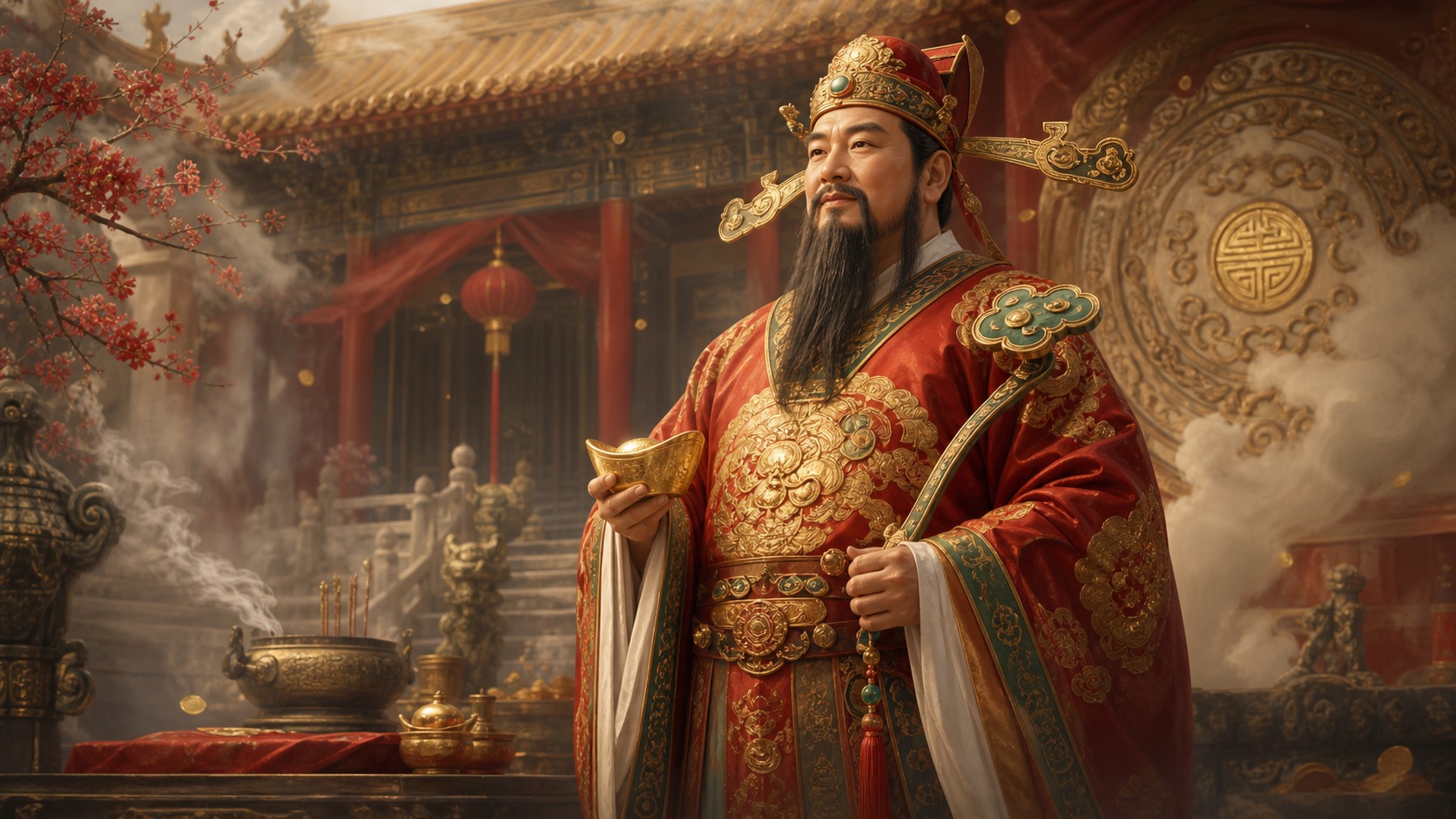
Who they are: A general wealth-deity category in Chinese folk religion. Different traditions identify Caishen with different figures.
What they do: Caishen appears in New Year prints, shop imagery, household decorations, and temple worship as an auspicious wealth figure.
Artifacts or symbols: Gold ingot and ruyi (元宝与如意) - These are auspicious wealth symbols often used in New Year prints, shop imagery, and household decoration.
Appears in: Chinese folk religion, New Year prints, temple imagery and popular culture
Version context: There are multiple Caishen traditions, so no single figure is the only correct Caishen.
Read the full Caishen / God of Wealth guide
References: Caishen
Yue Lao / Old Man Under the Moon / 月老
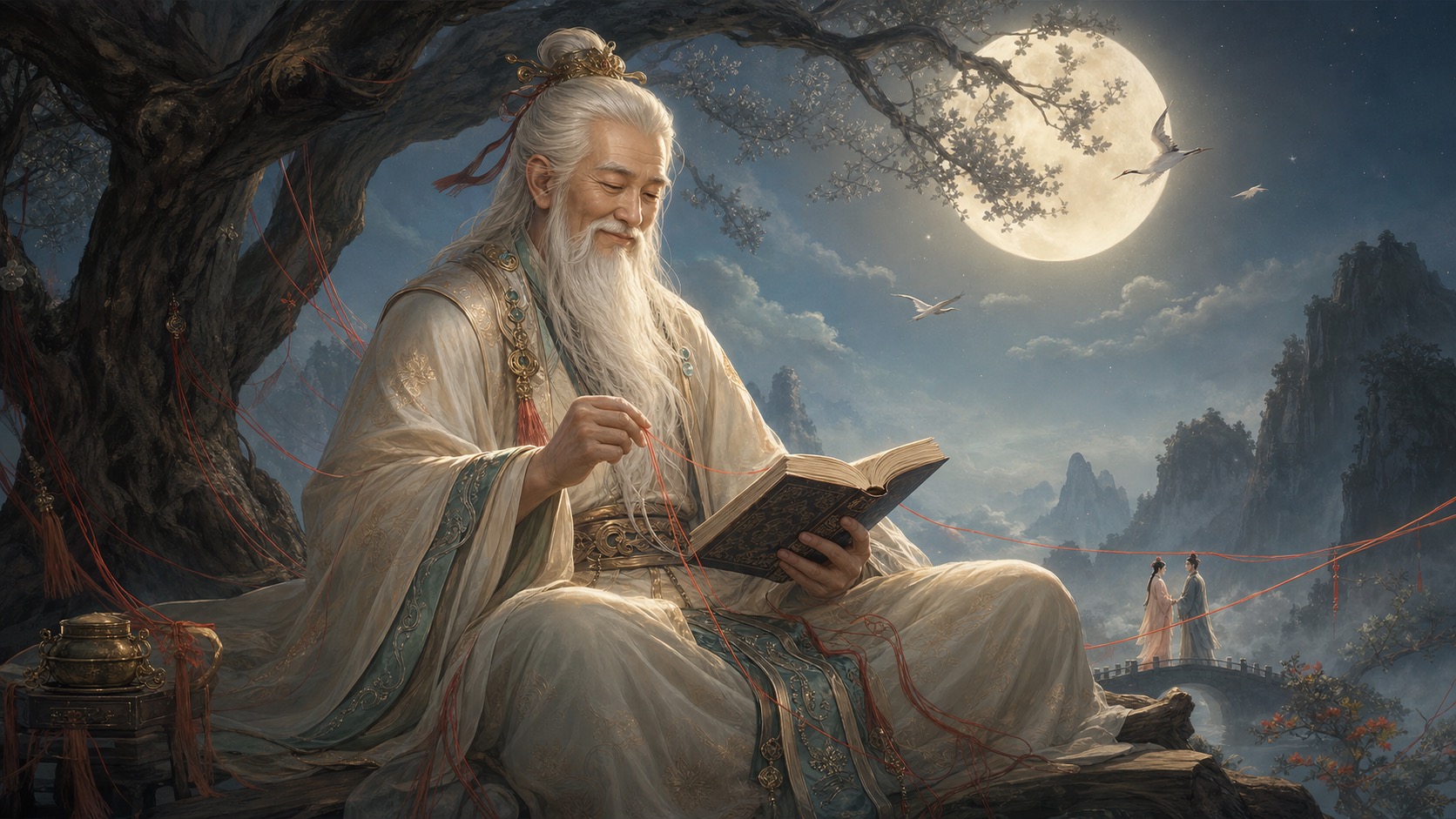
Who they are: A marriage-deity figure known as the Old Man Under the Moon, associated with red threads of affinity in legend.
What they do: In legend and popular culture, Yue Lao ties or records destined relationships through red threads and a marriage ledger.
Artifacts or symbols: Red thread and marriage ledger (红线与姻缘簿) - These literary and folk symbols make Yue Lao easy to identify in stories, temple images, and popular culture.
Appears in: Yue Lao legends, folk worship, literature, film, television, and popular culture
Version context: Yue Lao stories vary across folk tradition, literature, film, television, and popular culture.
Read the full Yue Lao / Old Man Under the Moon guide
References: Yue Lao
Ancient Myth and Moon Memory
Older mythic figures connected with the moon, cosmic order, and later festival storytelling.
Chang'e / 嫦娥
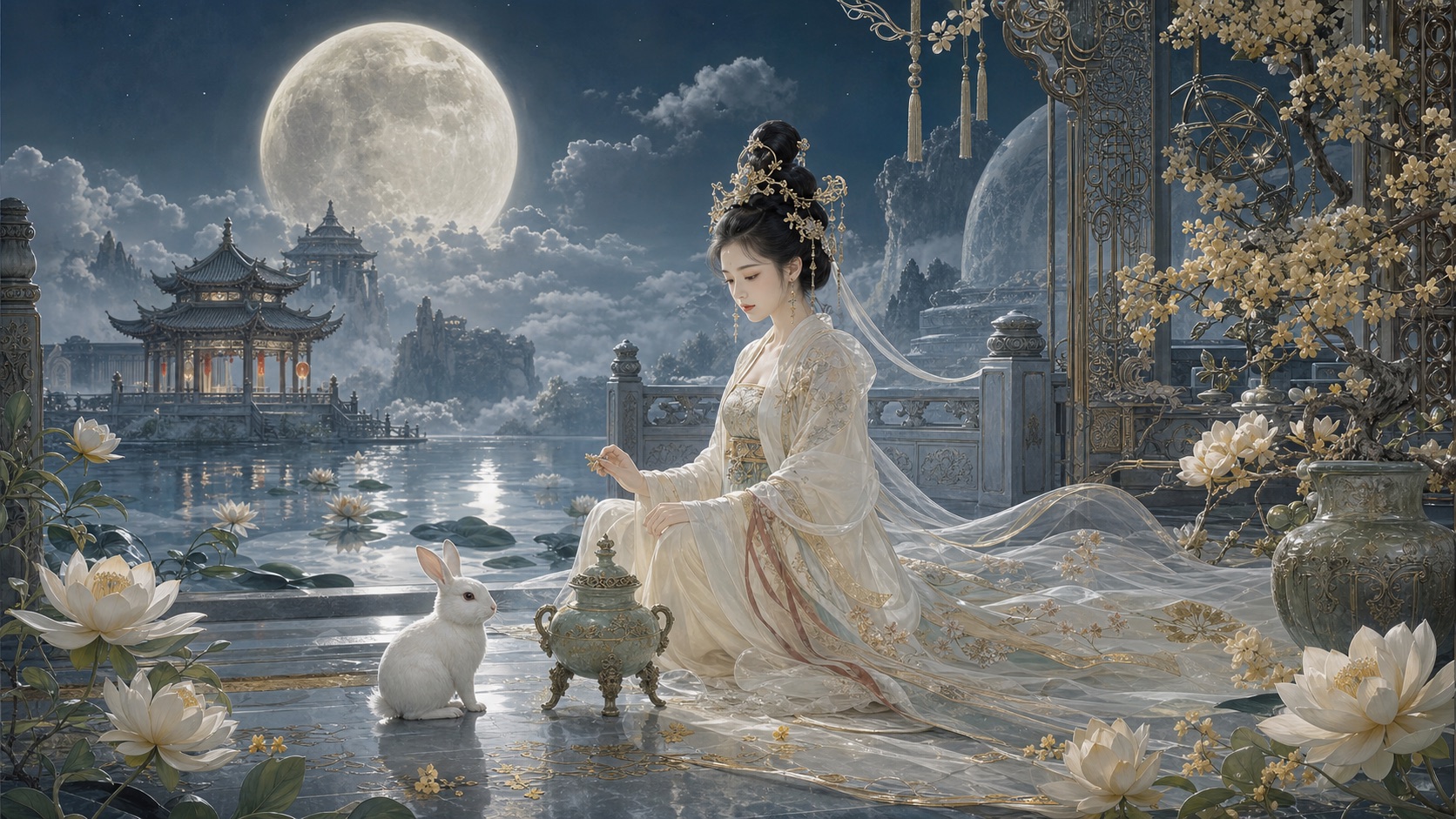
Who they are: A moon figure best known through stories involving Hou Yi and the elixir of immortality.
What they do: She ascends to or lives on the Moon in major story variants and is closely tied to later Mid-Autumn imagery.
Artifacts or symbols: Elixir, Moon Palace, Jade Rabbit (不死药、月宫、玉兔) - These are story motifs and symbols rather than combat weapons.
Appears in: ancient myth traditions, later literature, Mid-Autumn festival culture
Version context: Chang'e stories have many variants, and no single simplified plot is the only version.
References: Chang'e
Hou Yi / 后羿
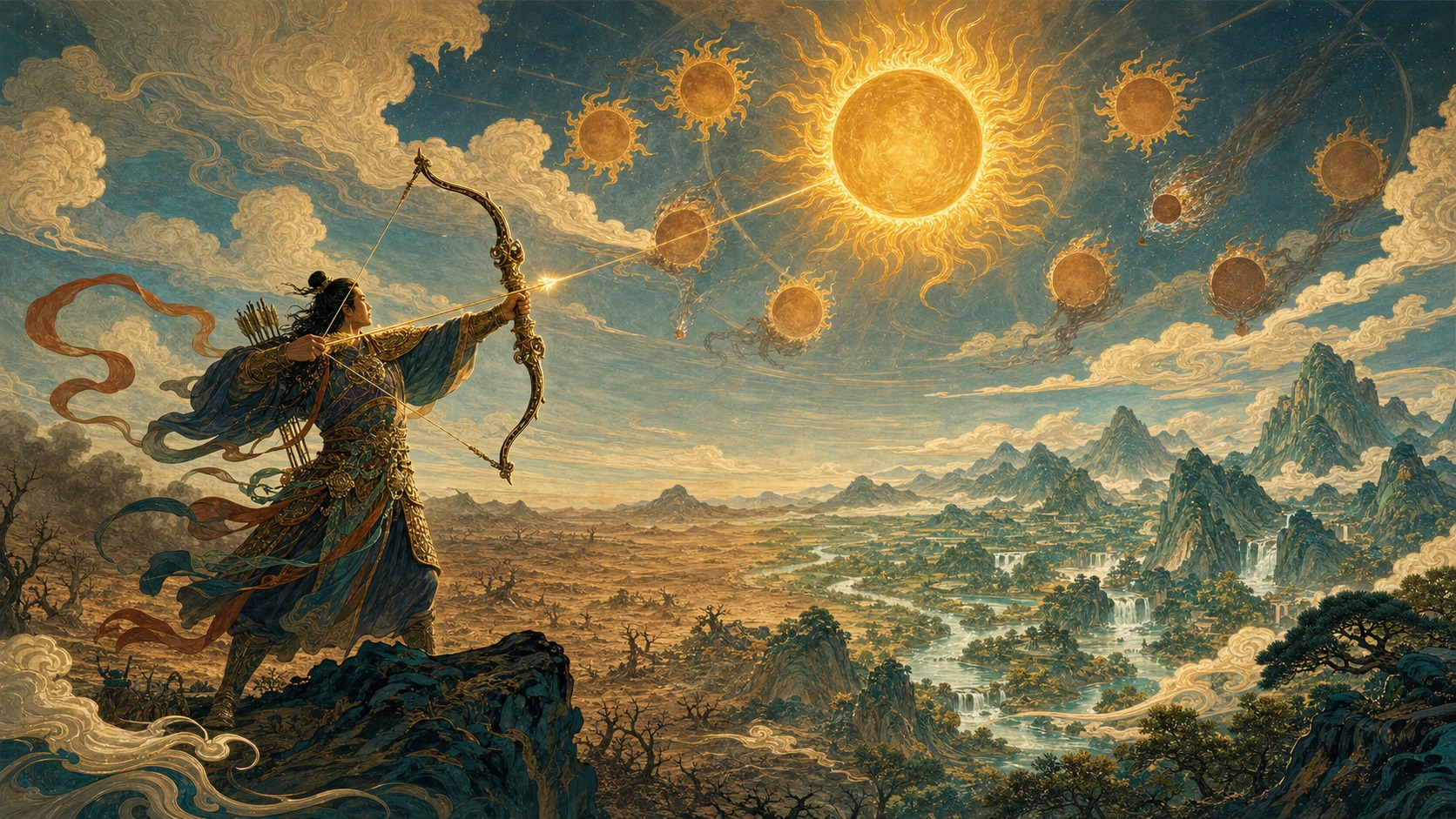
Who they are: A legendary archer best known for the myth of shooting down the extra suns.
What they do: In the best-known myth, he shoots down nine of ten suns to restore balance to the world.
Artifacts or symbols: Bow and arrows (弓箭) - The guide does not invent a fixed named magic bow unless a source specifically states one.
Appears in: ancient myth traditions, later folklore, children's books and animation
Version context: Ancient myth references are fragmentary and variant-rich, so details remain conservative.
References: Hou Yi