Divine family background / 神圣家族背景
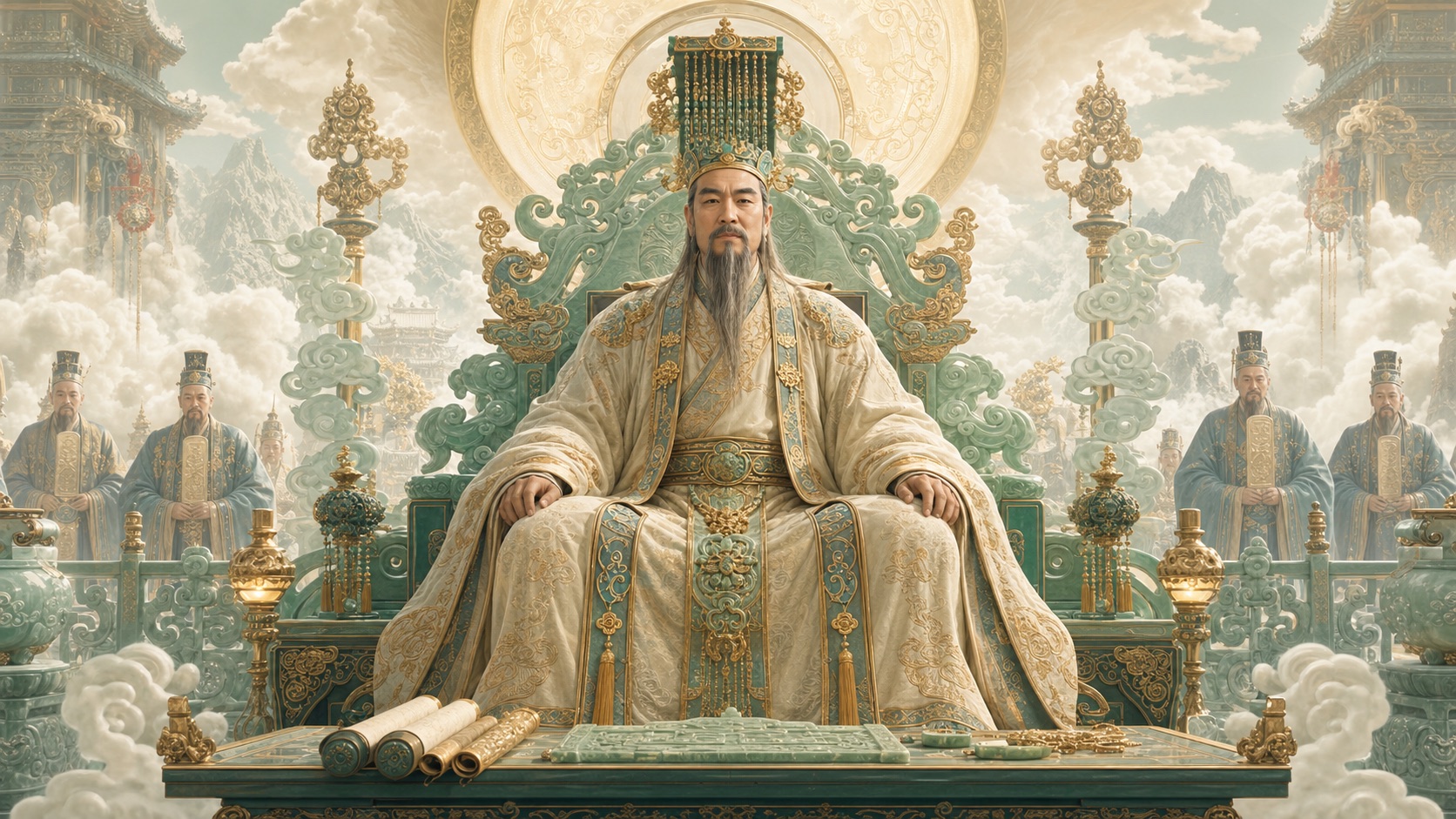
Many later versions describe him as connected to the Jade Emperor's family line, though details vary by source.
Erlang Shen and Yang Jian explained through his third eye, three-pointed weapon, Xiaotian Quan, Journey to the West, and Investiture of the Gods.
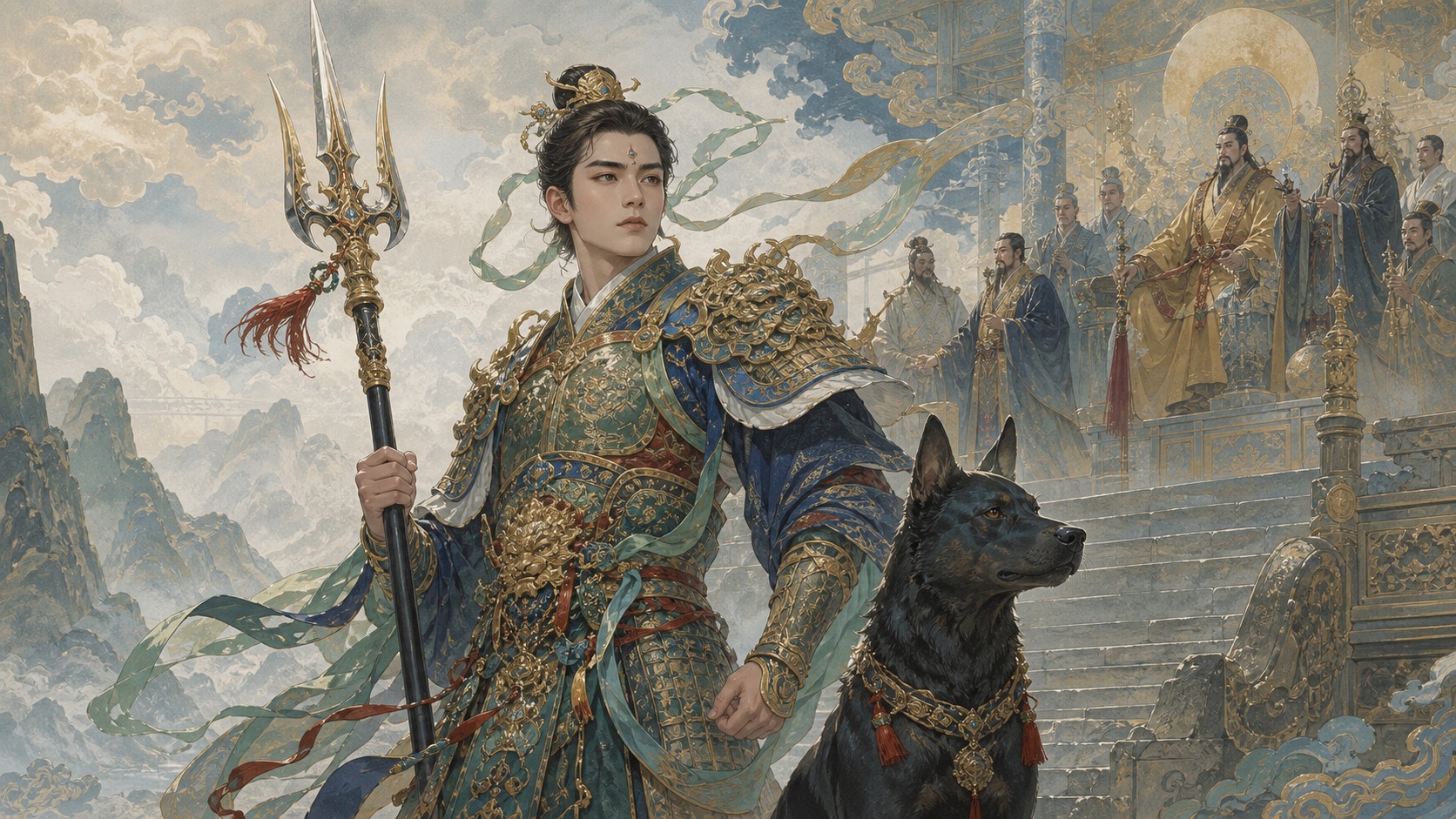
Chinese name: 杨戬 / 二郎神 - Yang Jian / Erlang Shen
Aliases: Erlang, Yang Jian
Main source: Journey to the West and Investiture of the Gods
Key symbols: Three-pointed double-edged weapon (三尖两刃刀) - His most recognizable weapon in popular iconography.; Xiaotian Quan (哮天犬) - The celestial hound is a companion and fighting helper, not a handheld object.
Core IdentityA Taoist and folk warrior deity known for his third eye, Guanjiangkou tradition, Xiaotian Quan, and role as a powerful heavenly general.
He is usually read as a righteous but independent divine warrior: close to the heavenly order, yet not simply a passive official inside it.
For international readers, the important point is that Erlang Shen appears across several traditions, including Journey to the West, Investiture of the Gods, temple worship, opera, television, animation, and games.
Names and titles often mark a story stage, social position, divine office, religious role, or visual tradition. For Erlang Shen / Yang Jian, the table separates the most common labels by meaning and context.
| Title | Meaning | Context |
|---|---|---|
| Yang Jian / 杨戬 | Personal name / 人物本名 | Often used when the figure is treated through literary or heroic narrative. / 在文学叙事或英雄故事中常用的姓名。 |
| Erlang Shen / 二郎神 | Second Son God / 二郎之神 | The most common popular title, especially in folk and temple contexts. / 最常见的民间称号,尤其常见于信仰和庙宇语境。 |
| Xiansheng Zhenjun / 显圣真君 | Manifest Sage True Lord / 显现神圣的真君 | A formal Taoist-style divine title associated with his sacred status. / 偏正式的道教神号,强调其神圣身份。 |
| God of Guanjiangkou / 灌江口二郎 | Local patron of Guanjiangkou / 灌江口地方神 | Connects him with the Guanjiangkou place tradition and local worship. / 把他和灌江口传说、地方信仰联系起来。 |
Many later versions describe him as connected to the Jade Emperor's family line, though details vary by source.
The mountain-splitting rescue story is one of the best-known Erlang Shen legends, expressing filial duty and heroic force.
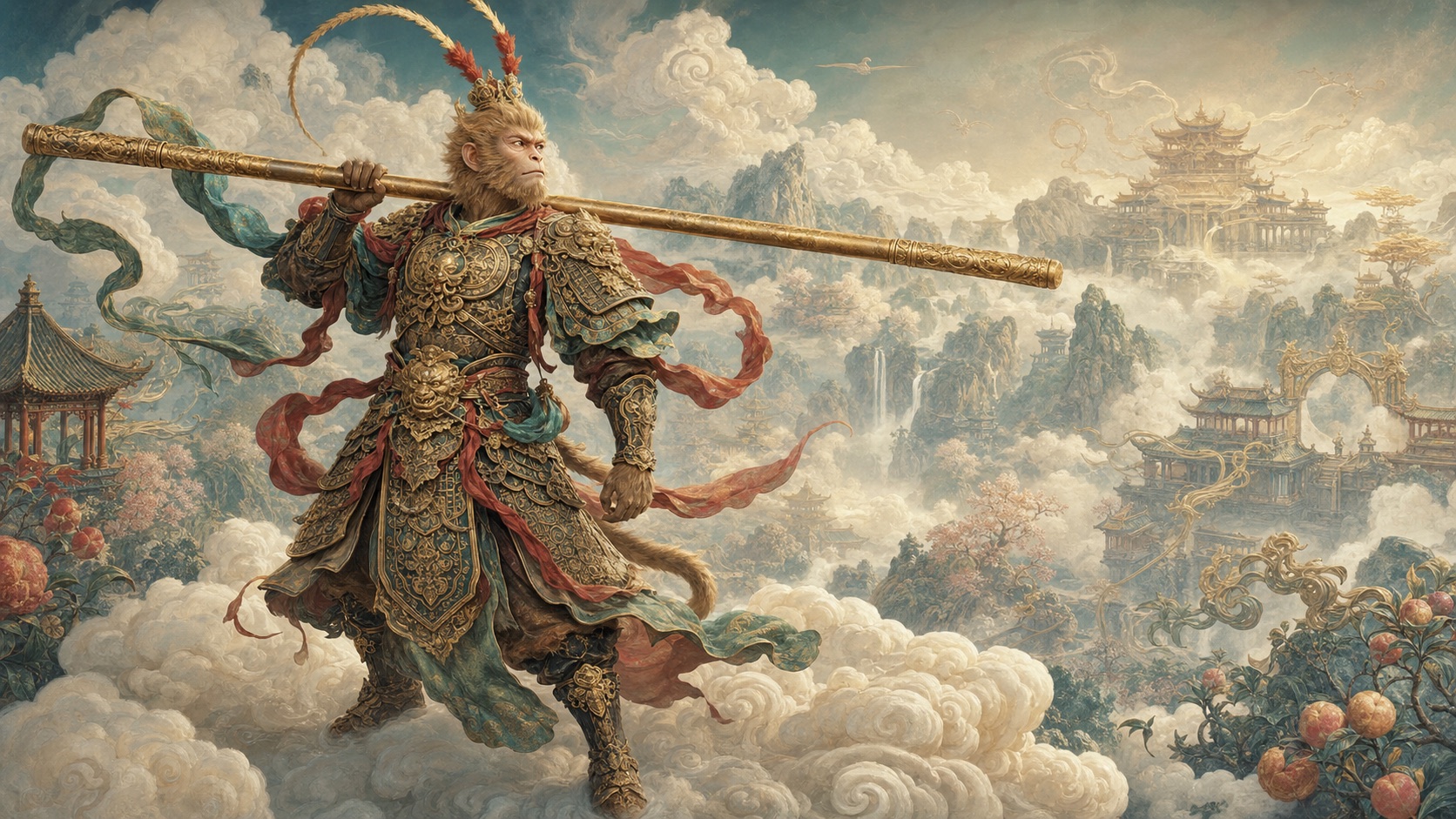
In Journey to the West, he is one of the few heavenly fighters able to match Sun Wukong directly.
Outside novels, he is also understood through temple worship, exorcistic imagery, and protective folk traditions.
These are literary and cultural traits used to read Erlang Shen / Yang Jian across source stories, visual traditions, and later adaptations.
The third eye is his clearest visual marker and is used to read through illusions and disguised spirits.
He is usually presented as a benchmark of divine martial strength.
His celestial hound is both companion and combat helper in many retellings.
He often follows justice and personal judgment rather than simple obedience.
Erlang Shen matters because he gives Chinese mythology a model of disciplined, intelligent martial power: not chaotic rebellion, but controlled strength.
His third eye, hound, weapon, and Guanjiangkou identity make him easy to recognize across novels, opera, temple images, games, and modern animation.
Three-pointed double-edged weapon (三尖两刃刀) - His most recognizable weapon in popular iconography.; Xiaotian Quan (哮天犬) - The celestial hound is a companion and fighting helper, not a handheld object.
Journey to the West, Investiture of the Gods, folk religion and opera
Version context: Erlang Shen has multiple regional and textual origin traditions, so no single fixed biography covers every version.
Chinese mythology figures often move between novels, opera, temple images, paintings, animation, games, and local traditions. Different media can preserve different details, names, and visual symbols.
Guides selected by shared source traditions, character groups, or visual symbols.