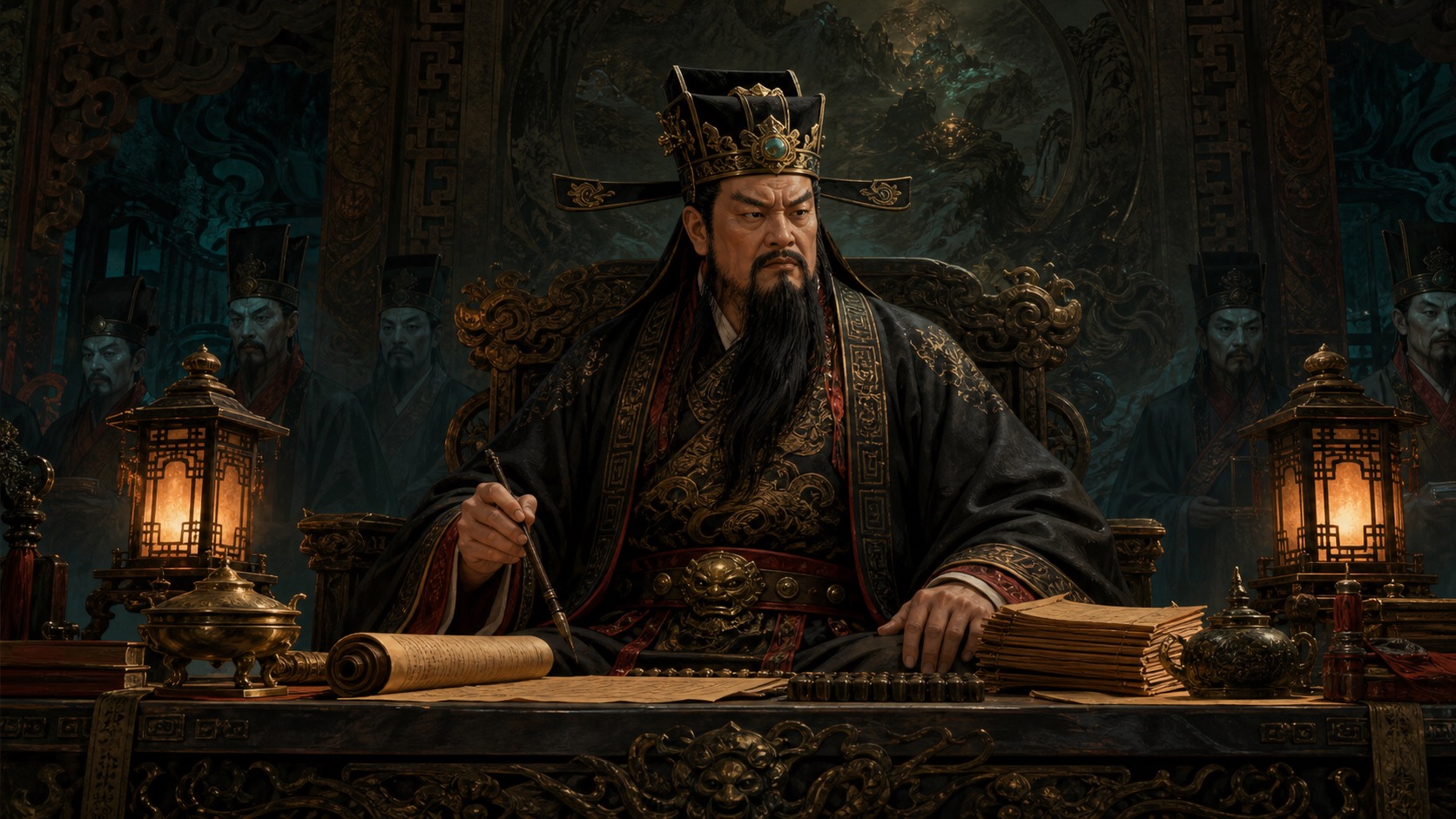
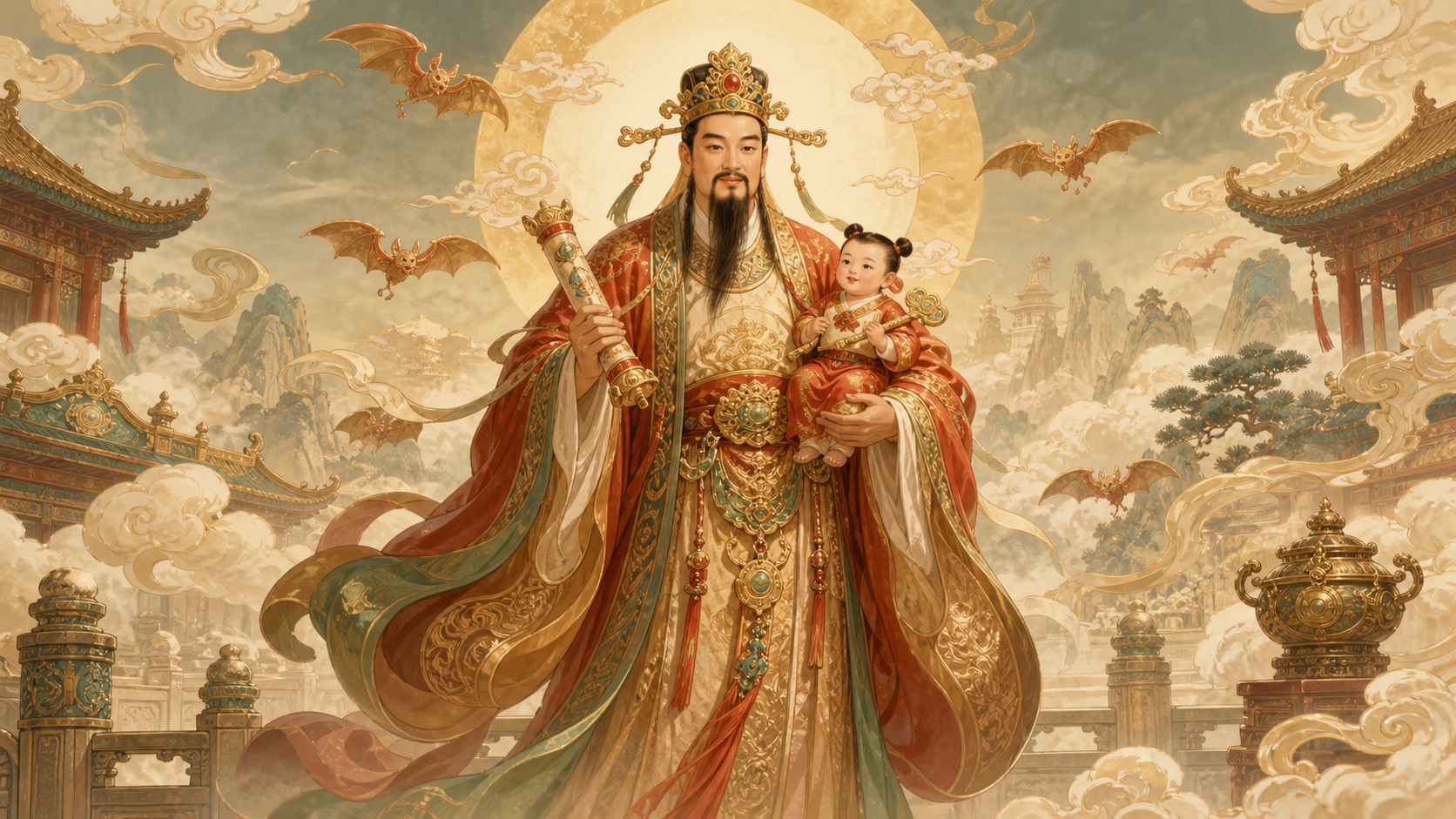
Taoist cultivation / 道家修行背景
Zhao Gongming is often described as a cultivator or martial deity with strong religious associations.
Understand Caishen as a Chinese wealth-deity tradition, including Zhao Gongming, civil and military wealth gods, New Year rituals, and common symbols.
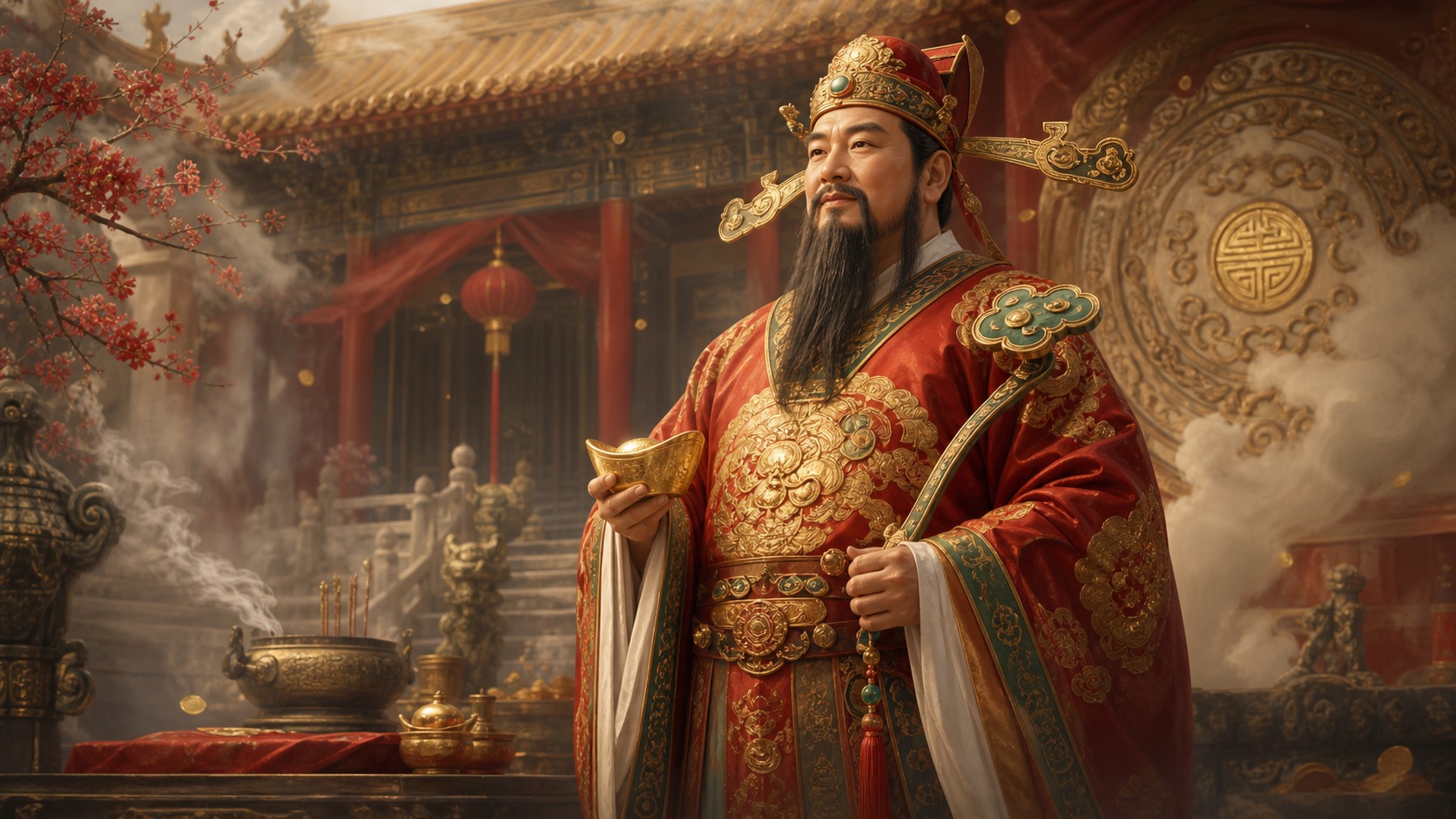
Chinese name: 财神 - Caishen
Aliases: God of Wealth
Main source: Chinese folk religion and wealth-deity traditions
Key symbols: Gold ingot and ruyi (元宝与如意) - These are auspicious wealth symbols often used in New Year prints, shop imagery, and household decoration.
Core IdentityA broad Chinese wealth-deity tradition rather than one single fixed god, especially visible in New Year rituals, shops, homes, and business openings.
Different regions and traditions identify Caishen with different figures, including civil and military wealth gods. The system is cultural rather than a promise of financial results.
The most useful reading is cultural: Caishen shows how prosperity, fair dealing, commerce, New Year wishes, and household blessing are connected in Chinese folk practice.
Major figures inside the Caishen tradition are summarized together rather than split into separate mythology pages.
| Title / 称呼 | Type / 类型 | Domain / 主旨 | Common emblem / 常见标志 |
|---|---|---|---|
| Zhao Gongming / 赵公明 Marshal Zhao | Military God of Wealth / 武财神 | Business protection and overall wealth / 商业护佑与总体财富祝愿 | Iron whip, black tiger, gold imagery / 铁鞭、黑虎、金色财富图像 |
| Bi Gan / 比干 | Civil God of Wealth / 文财神 | Honest wealth and fair commerce / 诚信财富与公平交易 | Official robes, ruyi, civil dignity / 官服、如意、文官气质 |
| Fan Li / 范蠡 | Civil God of Wealth / 文财神 | Trade, strategy, and business wisdom / 贸易、谋略与商业智慧 | Scholar robes, abacus, merchant symbols / 文士服、算盘、商贸符号 |
| Five Directions Wealth Gods / 五路财神 | Directional pantheon / 方位财神系统 | Wealth from different directions and channels / 来自不同方向和渠道的财富祝愿 | Five-direction grouping / 五方组合图像 |
Names and titles often mark a story stage, social position, divine office, religious role, or visual tradition. For Caishen / God of Wealth, the table separates the most common labels by meaning and context.
| Title | Meaning | Context |
|---|---|---|
| Caishen / 财神 | God of Wealth / 财富之神 | A general term for wealth deities in Chinese folk religion. / 中国民间信仰中财富神的总称。 |
| Zhao Gongming / 赵公明 / 赵公元帅 | Marshal Zhao / 赵公明元帅 | Often treated as a central or official God of Wealth in many traditions. / 许多传统中常被视为核心财神或较正式的财神形象。 |
| Mysterious Altar Heavenly Lord / 玄坛真君 | Heavenly Lord of the Mysterious Altar / 玄坛系统神号 | A formal Taoist-style title associated with Zhao Gongming. / 与赵公明相关的正式道教式神号。 |
| Five Directions Wealth Gods / 五路财神 | Five-path wealth gods / 五方 / 五路财神 | A folk grouping that spreads wealth symbolism across directions. / 把财富祝愿扩展到方位系统的民间组合。 |
Zhao Gongming is often described as a cultivator or martial deity with strong religious associations.
In Investiture of the Gods, Zhao Gongming appears in the larger war and deification system.
Later tradition assigns him a wealth-governing role and assistant spirits connected with attracting treasure and prosperity.
The New Year custom of welcoming the God of Wealth remains one of the most visible Caishen practices.
These are literary and cultural traits used to read Caishen / God of Wealth across source stories, visual traditions, and later adaptations.
Zhao Gongming is often linked with a black tiger in popular wealth-god imagery.
Some Caishen figures are protectors and commanders, not merely givers of money.
Caishen worship often carries an ethical ideal that wealth should come through honest work and fair exchange.
Caishen is one of the most visible auspicious figures during the Chinese New Year season.
Caishen matters because wealth in Chinese folk culture is not only personal money; it is linked with household hope, business credibility, fair trade, seasonal blessing, and social stability.
The many versions of Caishen show that Chinese tradition recognizes several paths to prosperity: civil office, military protection, trade skill, strategic intelligence, and directional blessing.
Gold ingot and ruyi (元宝与如意) - These are auspicious wealth symbols often used in New Year prints, shop imagery, and household decoration.
Chinese folk religion, New Year prints, temple imagery and popular culture
Version context: There are multiple Caishen traditions, so no single figure is the only correct Caishen.
Chinese mythology figures often move between novels, opera, temple images, paintings, animation, games, and local traditions. Different media can preserve different details, names, and visual symbols.
Guides selected by shared source traditions, character groups, or visual symbols.