Cosmic kingship / 宇宙帝王形象
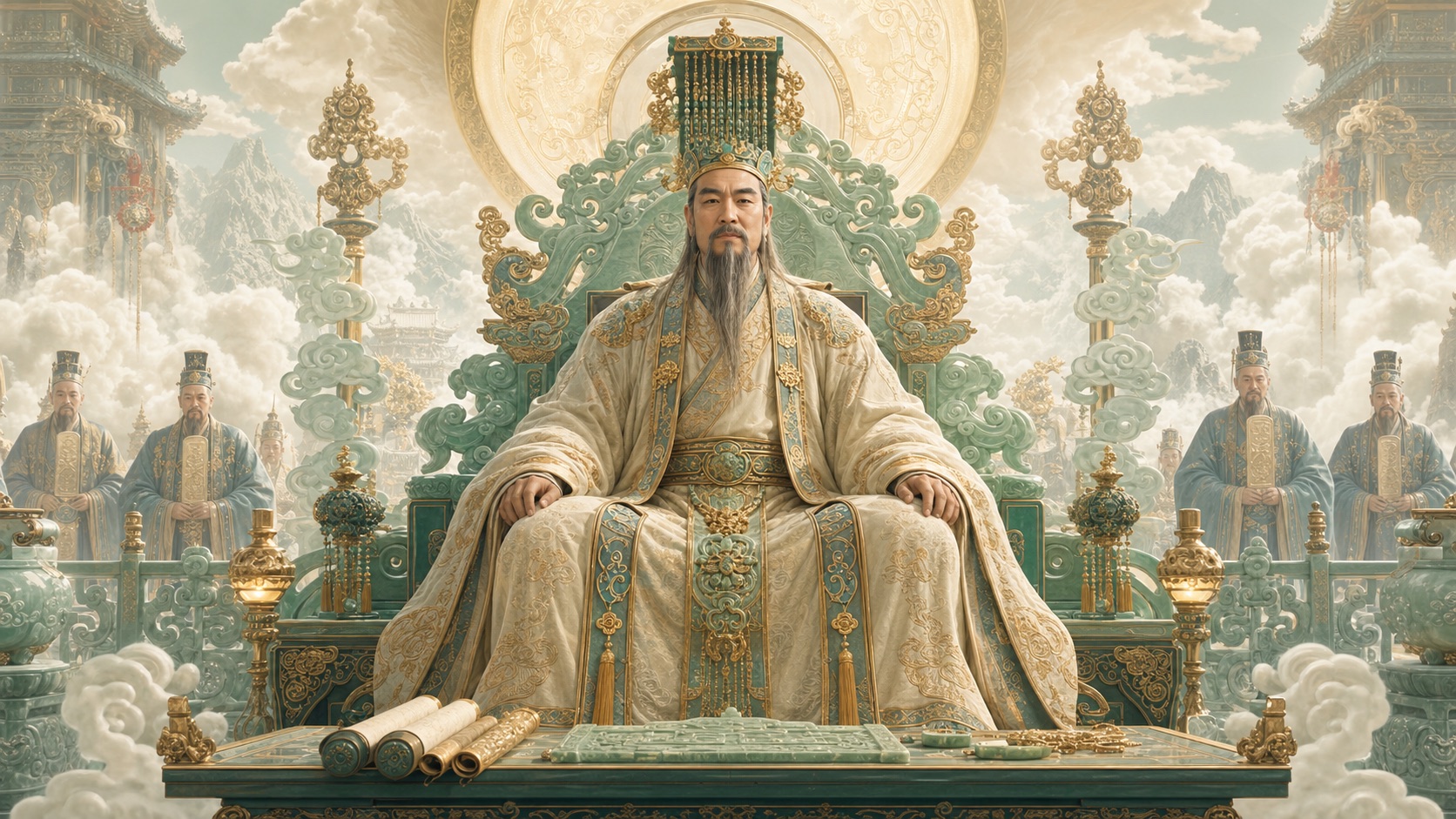
The Jade Emperor is imagined as the emperor of a cosmic court rather than as an ordinary human ruler.
Understand the Jade Emperor as a celestial ruler figure, his role in heavenly-court stories, common symbols, and differences across Daoist and folk systems.
Chinese name: 玉皇大帝 - Yu Huang Da Di
Aliases: Yu Huang, Heavenly Grandfather
Main source: Chinese folk religion, Daoist-related traditions, and Journey to the West
Key symbols: Imperial regalia and heavenly decrees (帝王礼服与天庭诏令) - These are symbols of office. He does not have one fixed combat magic weapon in the way Sun Wukong does.
Core IdentityThe celestial emperor of Chinese folk religion and Taoist-influenced mythology, ruling through a heavenly court modeled on imperial bureaucracy.
He is not usually a wandering hero. His importance lies in authority, ritual order, and the idea that the cosmos itself can be imagined as a court.
In stories such as Journey to the West, the Jade Emperor often functions as the ruler whose authority is challenged, defended, or administratively enforced.
Names and titles often mark a story stage, social position, divine office, religious role, or visual tradition. For The Jade Emperor, the table separates the most common labels by meaning and context.
| Title | Meaning | Context |
|---|---|---|
| Jade Emperor / 玉皇大帝 | Great Jade Emperor / 玉皇天界大帝 | The most familiar popular title in modern Chinese cultural contexts. / 现代中文文化语境中最常见、最容易识别的称号。 |
| Yuhuang Dadi / 玉皇大帝 / Yuhuang Dadi | Chinese pronunciation title / 中文称号读音 | Useful for learners who need the Chinese name and pinyin together. / 方便学习者同时理解中文名和拼音。 |
| Haotian Shangdi / 昊天上帝 | Supreme Heavenly Emperor / 至高天帝 | An older and more formal heavenly title found in ritual and classical contexts. / 更古老、更正式的天帝称号,常见于礼制和经典语境。 |
| Celestial Emperor / 天帝 | Heavenly emperor / 天界帝王 | A broad title for the ruler of Heaven, not always identical in every tradition. / 广义天界帝王称号,不同传统中细节未必完全相同。 |
| Lord of the Three Realms / 三界之主 | Ruler of Heaven, Earth, and the Underworld / 天地冥三界之主 | A descriptive title for his cosmic authority in popular explanations. / 用来概括其宇宙性统治权威的说明性称呼。 |
The Jade Emperor is imagined as the emperor of a cosmic court rather than as an ordinary human ruler.
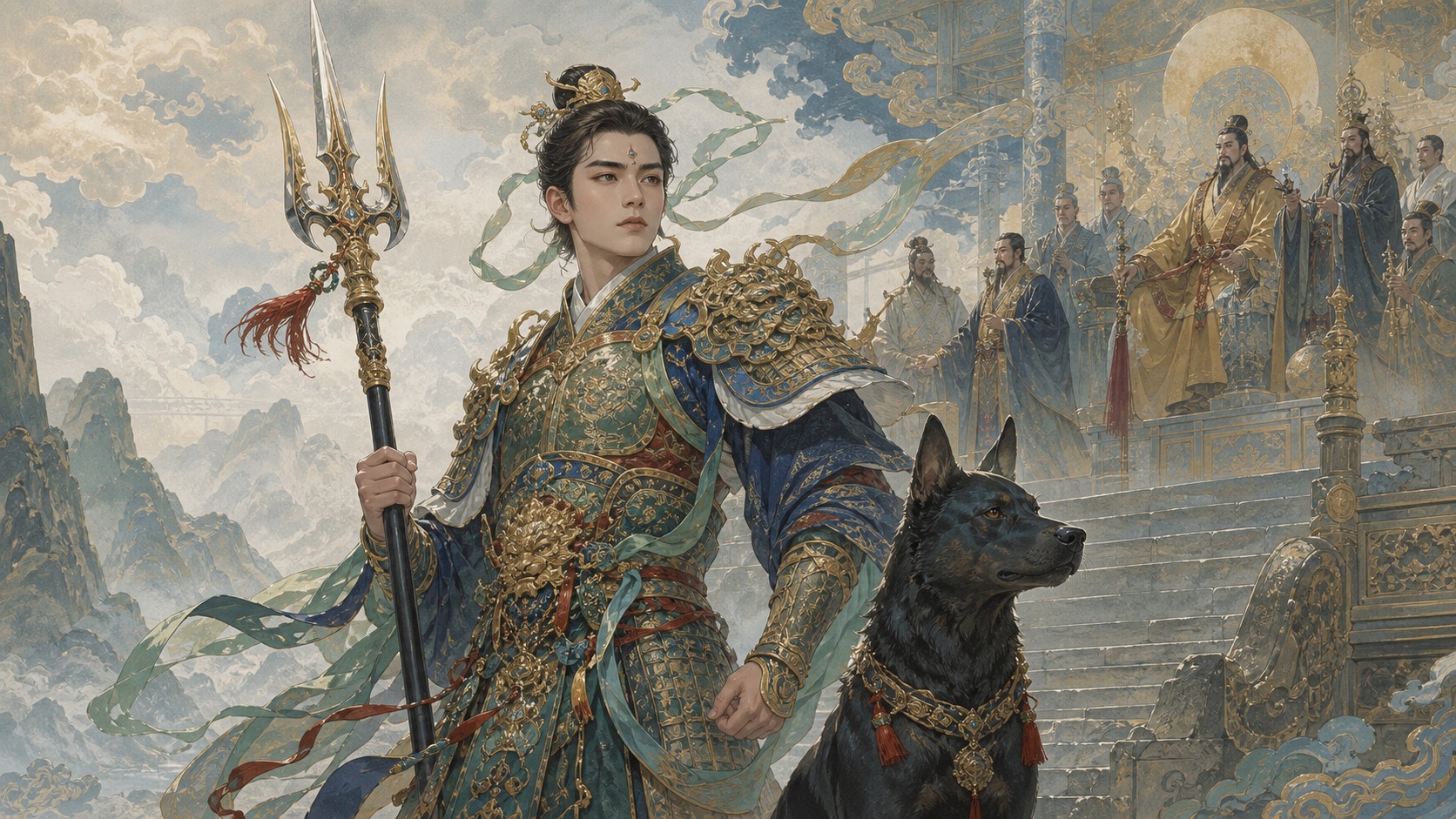
Gods, generals, officials, registers, banquets, punishments, and petitions often appear under his court structure.
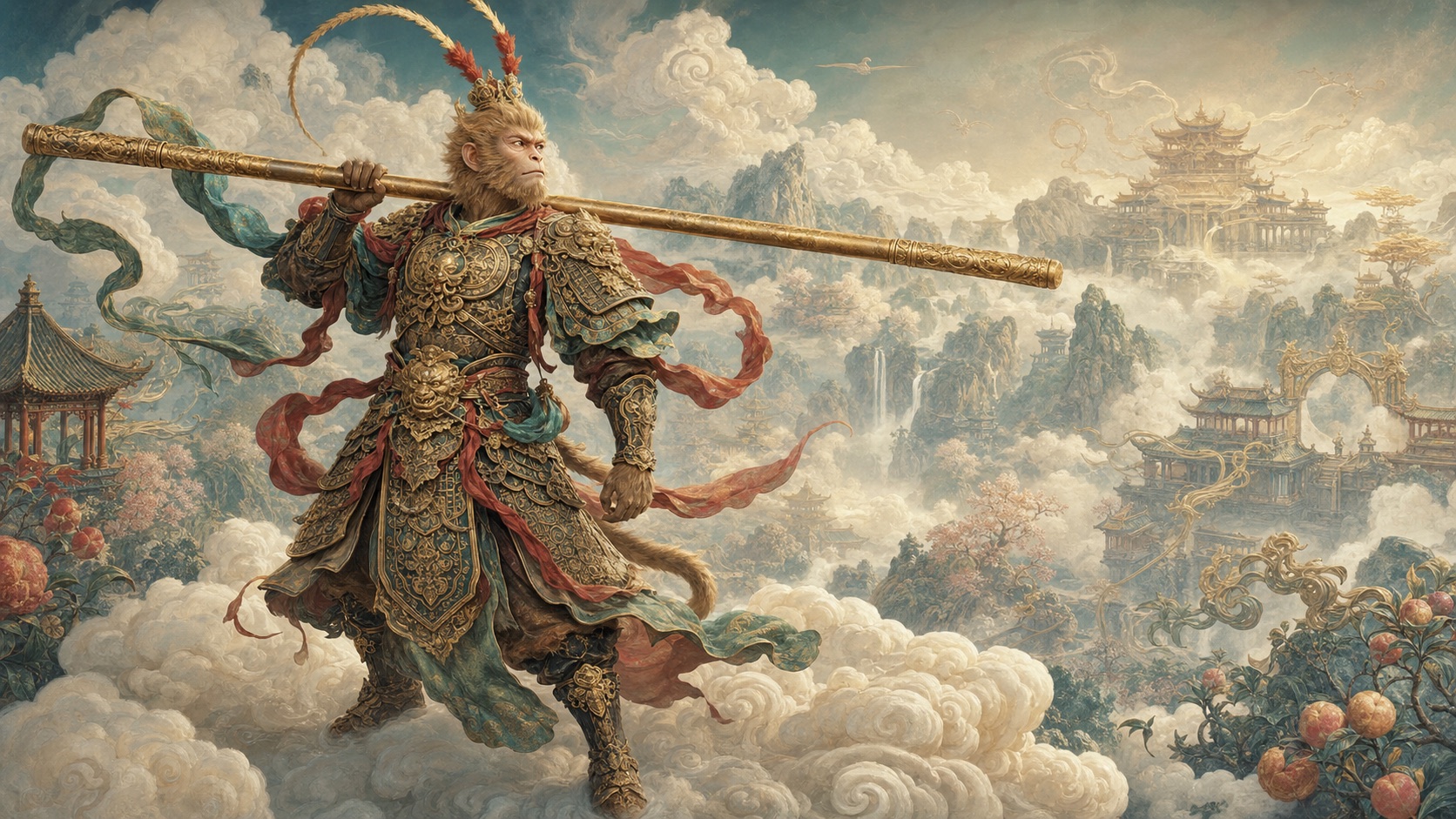
In Journey to the West, Sun Wukong's rebellion dramatizes the limits and authority of the heavenly order.
Outside fiction, his image also appears in temple and household religious practice in different regions.
These are literary and cultural traits used to read The Jade Emperor across source stories, visual traditions, and later adaptations.
He represents celestial kingship and the legitimacy of heavenly order.
Stories often place him at the center of heavenly rules and punishments.
His court mirrors the structure of imperial administration.
He usually acts through ministers and divine generals instead of direct adventure.
The Jade Emperor matters because he shows how Chinese culture could project imperial order onto the cosmos.
For readers, understanding him helps explain why heavenly courts, divine ranks, official registers, and ceremonial authority appear so often in Chinese mythological stories.
Imperial regalia and heavenly decrees (帝王礼服与天庭诏令) - These are symbols of office. He does not have one fixed combat magic weapon in the way Sun Wukong does.
Chinese folk religion, Daoist-related traditions, Journey to the West
Version context: Some sources call him a supreme deity, while Daoist theology can be layered across different systems.
Chinese mythology figures often move between novels, opera, temple images, paintings, animation, games, and local traditions. Different media can preserve different details, names, and visual symbols.
Guides selected by shared source traditions, character groups, or visual symbols.