Legend layers / 先有个人传说
Several immortal figures had individual stories before the group became fixed. Their backgrounds were later brought together into one recognizable set.
Learn who the Eight Immortals are, their eight names, common symbols, appearances in Chinese art, and how versions handle the group.
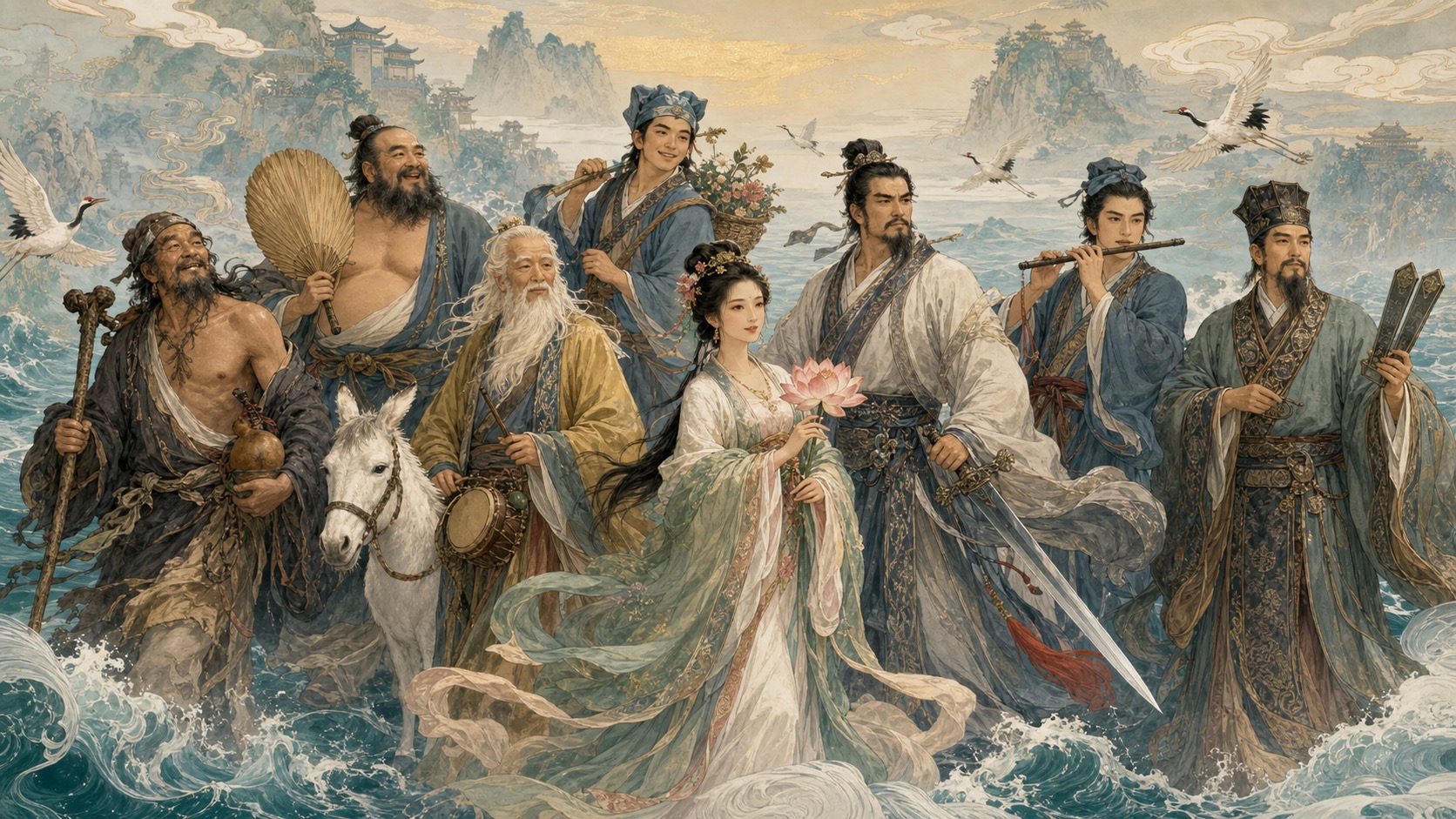
Chinese name: 八仙 - Ba Xian
Aliases: Ba Xian
Main source: Daoist and folk immortal traditions
Key symbols: Fan, sword, lotus, flute, flower basket, gourd, castanets, bamboo tube or drum-like instrument (扇、剑、莲花、笛、花篮、葫芦、拍板、竹筒或鼓类器物) - Museum records identify the immortals by carried attributes, but exact forms can vary by artwork.
Core IdentityA group of eight legendary Daoist immortals, each from a different walk of life and each reaching transcendence through a distinct path.
The Eight Immortals are among the most beloved deity groups in Chinese folk culture, especially because their stories feel more human than remote heavenly bureaucracy.
As a group, they suggest that age, gender, wealth, social rank, learning, poverty, eccentricity, and official status can all become different paths into the immortal world. This is why the group works so well in art, opera, New Year pictures, animation, and modern popular culture.
The standard group covers old and young, male and female, rich and poor, warrior and scholar, noble and beggar. This range is central to why the group is so memorable.
| Immortal / 仙人 | Background / 身份背景 | Emblem / 标志物 | Cultural idea / 文化意象 |
|---|---|---|---|
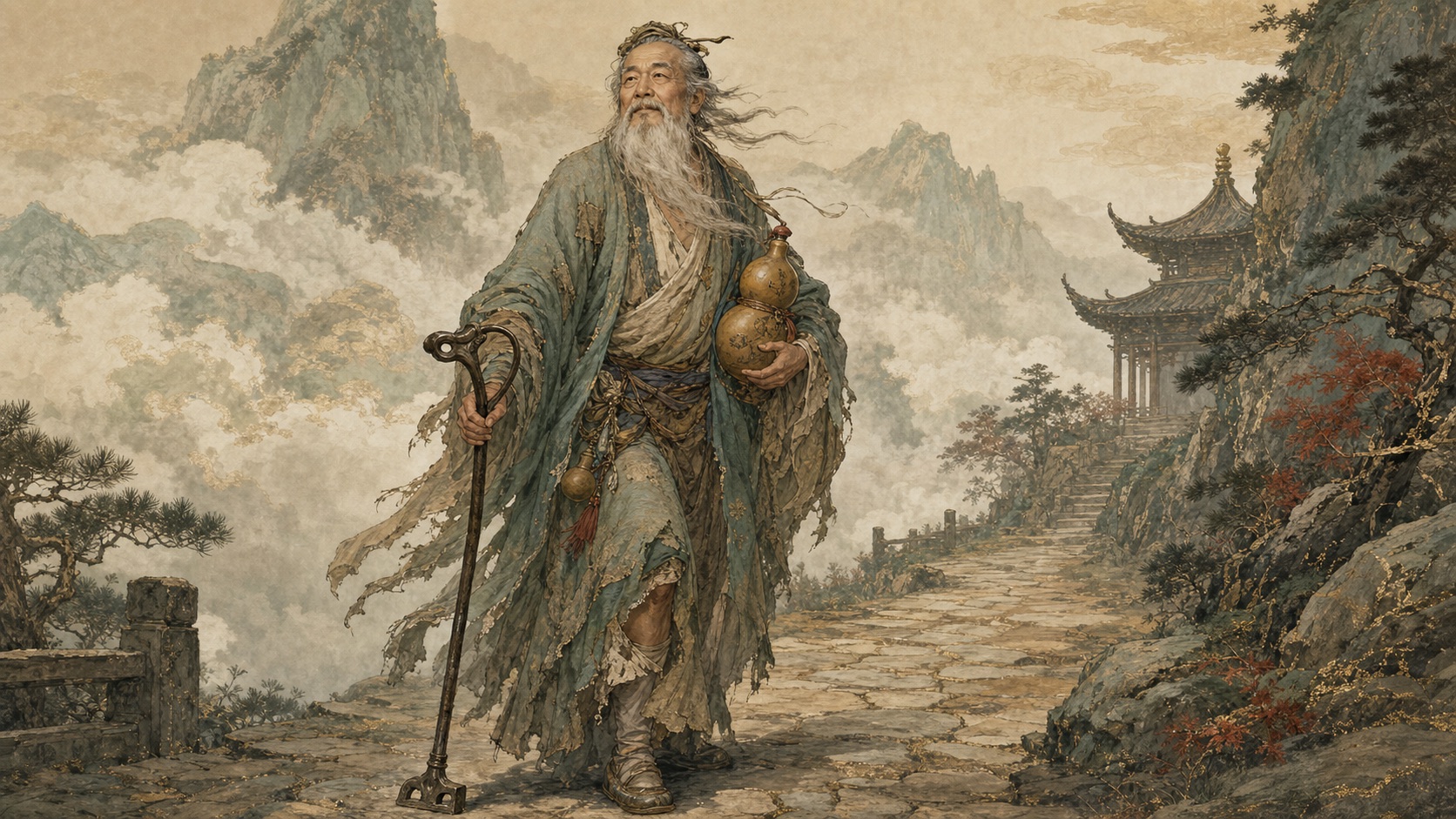
| Iron-Crutch Li / 铁拐李 Li Tieguai | A ragged beggar-scholar figure / 跛足、游方、乞者式学者形象 | Iron crutch and gourd / 铁拐与葫芦 | Suffering, healing, and hidden attainment / 苦难、疗愈与内在修行 |
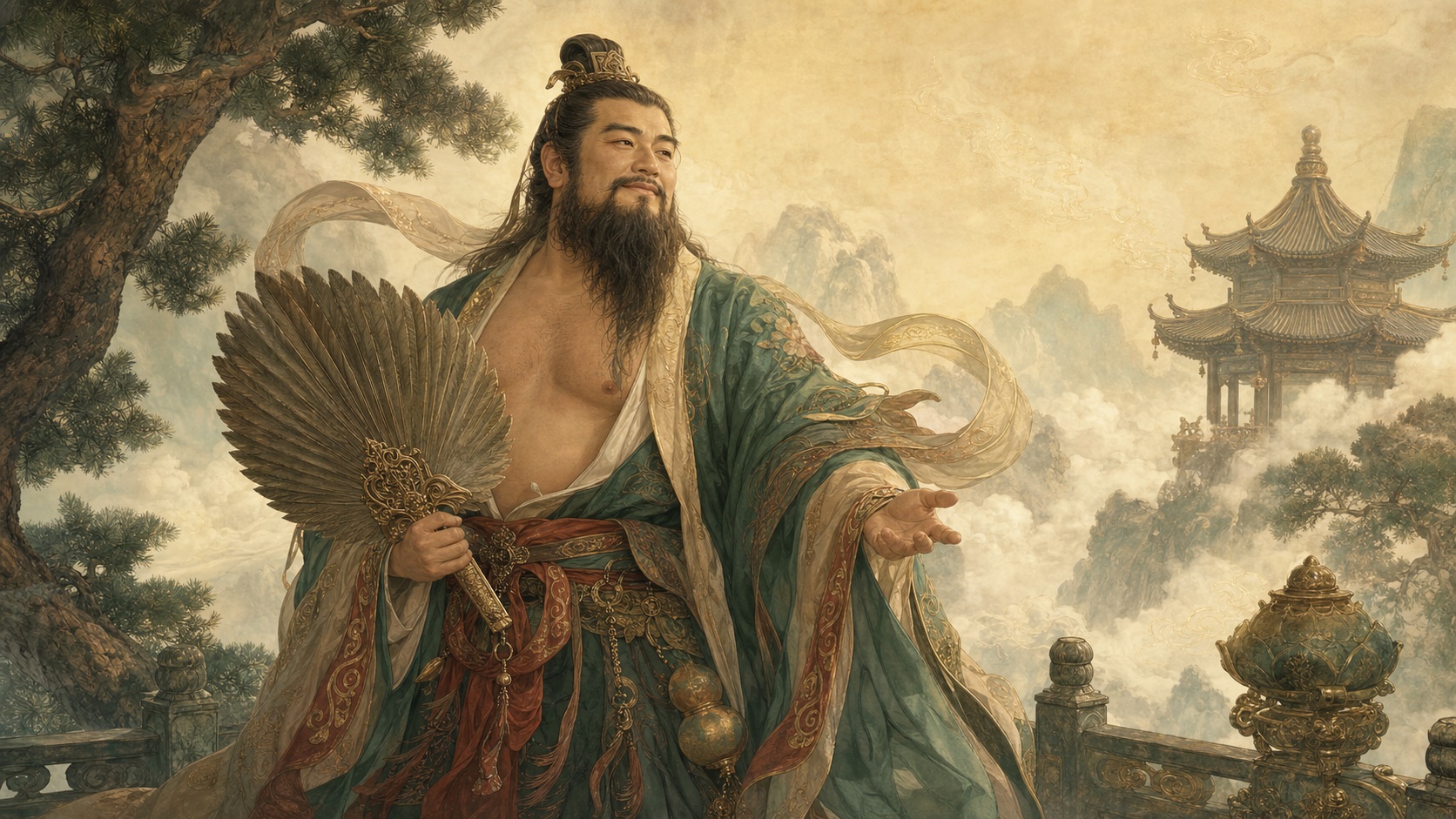
| Zhongli Quan / 汉钟离 / 钟离权 Han Zhongli | General-like elder in immortal tradition / 带有将领与长者气质的仙人 | Broad fan / 大扇 | Wisdom, revival, and senior guidance / 智慧、复苏与长者点化 |
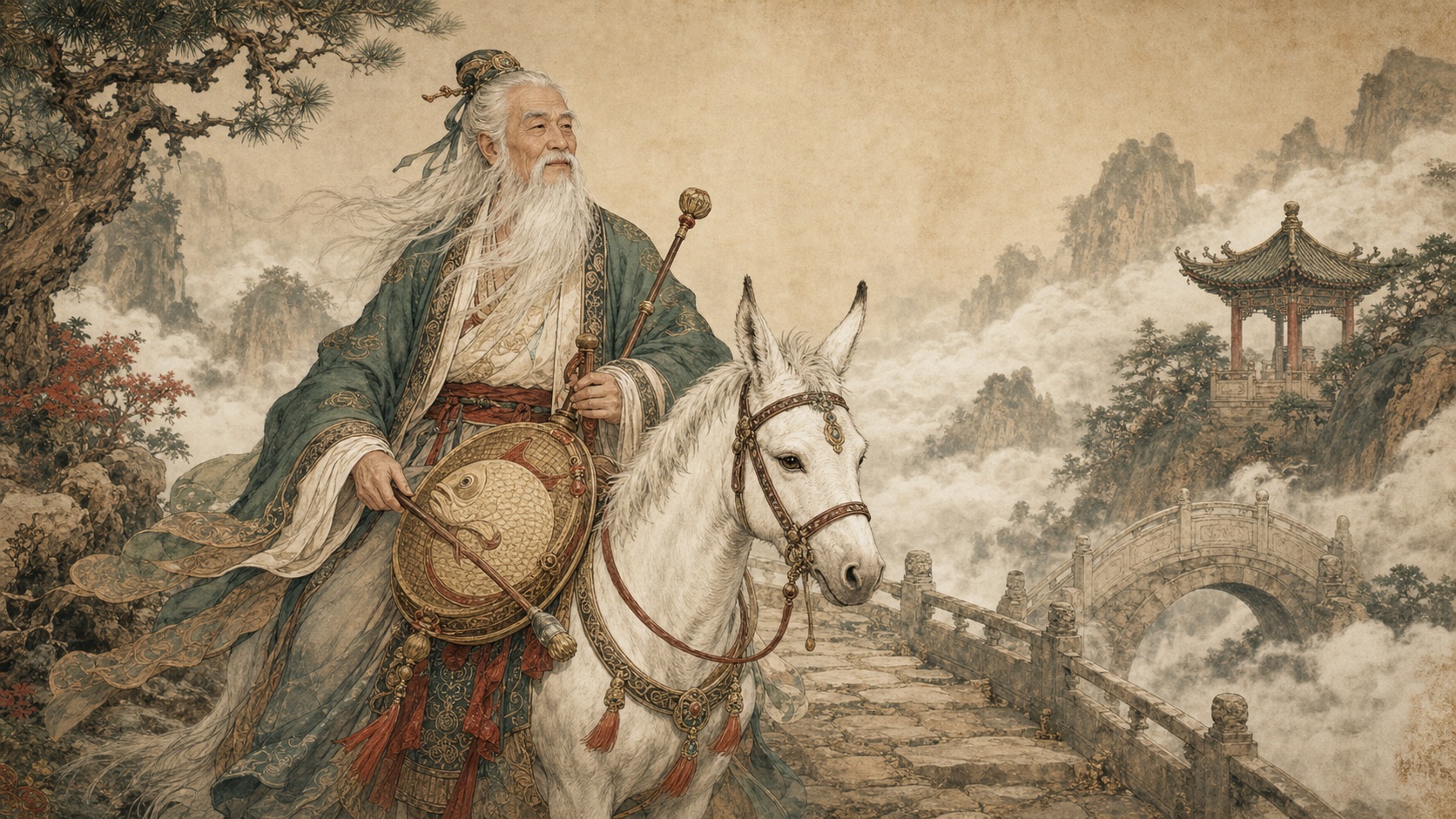
| Zhang Guolao / 张果老 | Ageless hermit and eccentric elder / 长寿隐士与怪诞长者 | Backwards donkey and fish drum / 倒骑驴与渔鼓 | Longevity and reversed worldly logic / 长寿与反向观看世界 |
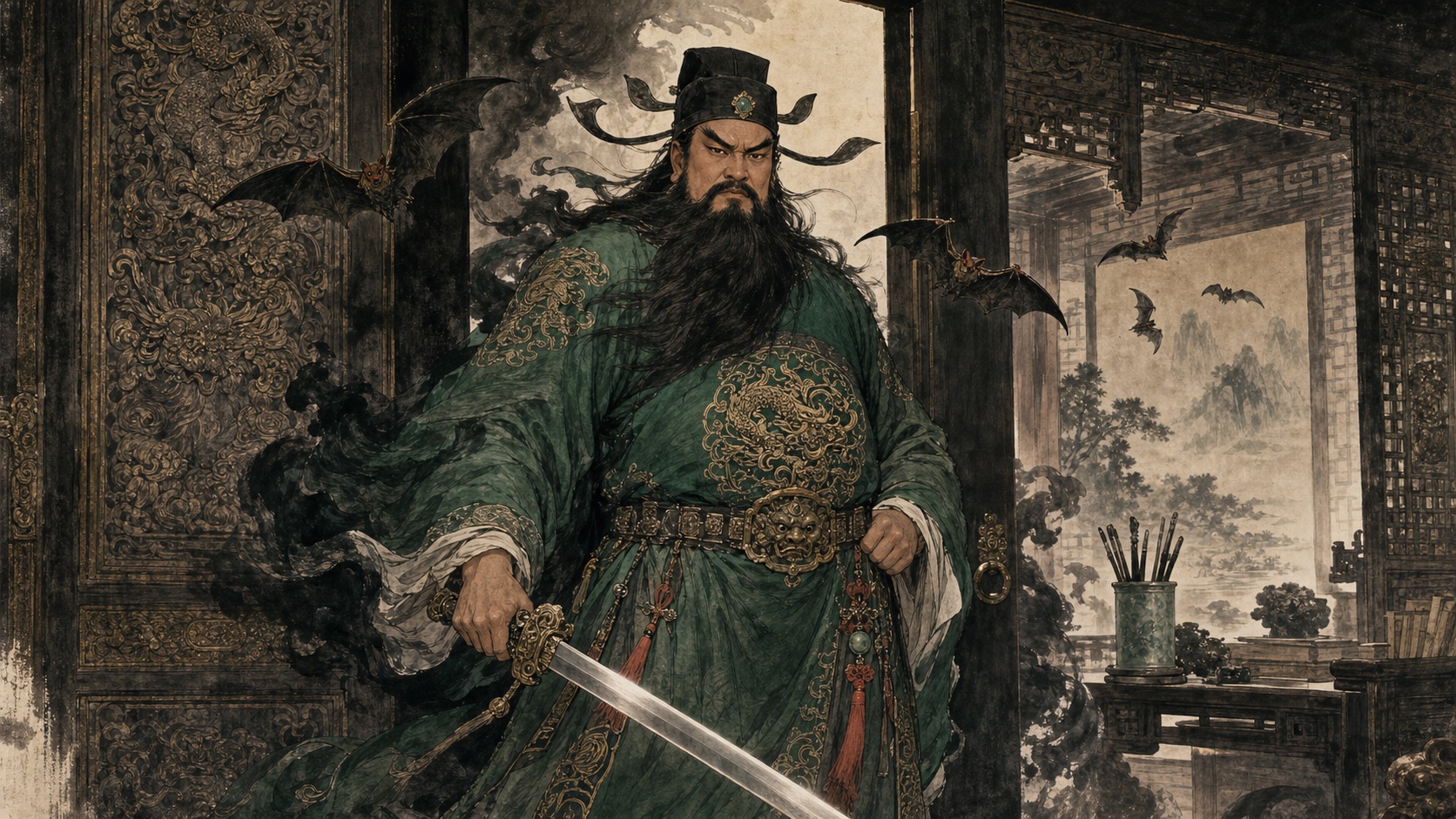
| Lu Dongbin / 吕洞宾 | Scholar, poet, and swordsman immortal / 文人、诗酒与剑仙形象 | Sword / 宝剑 | Scholarship, chivalry, and moral testing / 文人气、侠义与试炼 |
| He Xiangu / 何仙姑 | Young woman and usually the only female member / 年轻女性仙人,通常是八仙中唯一女性 | Lotus / 莲花 | Purity, cultivation, and feminine path / 清净、修行与女性成仙路径 |
| Lan Caihe / 蓝采和 | Wandering singer or minstrel figure / 游方歌者或艺人形象 | Flower basket / 花篮 | Spontaneity, freedom, and marginal identity / 自在、自由与边缘身份 |
| Han Xiangzi / 韩湘子 | Young musician linked with literati legend / 与文人传说相连的年轻音乐仙人 | Flute / 笛 | Music, inspiration, and family tension / 音乐、灵感与家族张力 |
| Cao Guojiu / 曹国舅 | Imperial-relative or courtly figure / 皇亲、贵族或宫廷人物形象 | Jade clappers or tablets / 玉板 / 拍板 | Integrity, reform, and official status transformed / 操守、悔改与官贵身份的转化 |
In Chinese decorative art, the immortals are sometimes represented only by their emblems. These symbols appear on porcelain, embroidery, architecture, prints, and temple decoration.
| Treasure / 标志物 | Immortal / 对应仙人 | Common symbolic meaning / 常见象征含义 |
|---|---|---|
| Fan / 扇 | Zhongli Quan / 汉钟离 / 钟离权 | Revival, ease, and immortal breath / 复苏、从容与仙气 |
| Fish drum / 渔鼓 | Zhang Guolao / 张果老 | Longevity, wandering, and hermit wisdom / 长寿、游方与隐逸智慧 |
| Sword / 宝剑 | Lu Dongbin / 吕洞宾 | Courage, discernment, and exorcistic power / 勇气、辨别与驱邪力量 |
| Lotus / 莲花 | He Xiangu / 何仙姑 | Purity and spiritual clarity / 清净与修行明净 |
| Flower basket / 花篮 | Lan Caihe / 蓝采和 | Abundance, spontaneity, and wandering joy / 丰盛、自在与游方之乐 |
| Flute / 笛 | Han Xiangzi / 韩湘子 | Harmony, music, and inspiration / 和谐、音乐与灵感 |
| Jade clappers / 玉板 / 拍板 | Cao Guojiu / 曹国舅 | Order, ritual rhythm, and purification / 秩序、礼乐节奏与净化 |
| Gourd / 葫芦 | Iron-Crutch Li / 铁拐李 | Healing, medicine, and immortality / 疗愈、药物与长生意象 |
Names and titles often mark a story stage, social position, divine office, religious role, or visual tradition. For The Eight Immortals, the table separates the most common labels by meaning and context.
| Title | Meaning | Context |
|---|---|---|
| Eight Immortals / 八仙 | Eight legendary immortals / 八位传奇仙人 | The standard English name for the group in Chinese mythology and folk art. / 中国神话和民间艺术中这一组合的标准名称。 |
| Ba Xian / Bā Xiān | Pinyin form / 拼音形式 | Useful for search, pronunciation, and bilingual captions. / 适合搜索、发音和中英文说明使用。 |
| Eight Immortals Cross the Sea / 八仙过海 | Famous group legend / 著名群体传说 | The best-known story pattern associated with the group. / 与八仙最紧密相关的著名故事母题。 |
| Hidden Eight Immortals / 暗八仙 | Emblems without figures / 不画人物而画持物 | A decorative-art term for representing the immortals through their objects. / 用八件器物代替八位仙人的装饰艺术说法。 |
| Journey to the East / 《东游记》 | Major later literary source / 重要后世文学来源 | A Ming-dynasty novel tradition that helped stabilize the canonical group and sea-crossing story. / 明代小说传统,对标准八仙组合和八仙过海故事的定型影响很大。 |
The Eight Immortals were not invented all at once. Individual legends circulated first, and the stable group formed through drama, fiction, religion, and visual art.
Several immortal figures had individual stories before the group became fixed. Their backgrounds were later brought together into one recognizable set.
The group becomes clearer in Yuan-period theater and popular storytelling, where shared stage identity matters.
Later Daoist traditions connect figures such as Zhongli Quan and Lu Dongbin with patriarchal lineages, and the details depend on source context.
The Ming novel tradition around Journey to the East helped fix the canonical eight and made the sea-crossing story especially influential.
The story is famous because it turns a group crossing into a showcase of different skills and different magical objects.
Many versions place the immortals on a journey toward the immortal realm or a sacred banquet, with Penglai and the Eastern Sea as key settings.
Instead of crossing in an ordinary way, each immortal uses a personal treasure or power. This makes difference itself the point of the story.
Some retellings include conflict with the Dragon King's realm, turning the crossing into a dramatic contest between immortal and sea powers.
The saying 'Eight Immortals cross the sea, each reveals their powers' now means that everyone contributes a different skill.
These are cultural themes, not fortune-telling claims. They explain why the group remains useful in art, storytelling, and modern adaptation.
There is no single route to transcendence: warriors, poets, beggars, nobles, women, elders, and wanderers all belong in the same group.
Unlike many born heavenly officials, the Eight Immortals are remembered as humans who became immortal through cultivation, trial, or transformation.
They drink, sing, joke, travel, and carry eccentric objects. Their divinity is playful and close to everyday life.
Eight often carries auspicious associations in Chinese culture, so a complete set of eight immortals feels balanced and memorable.
In 2026, the animated film All Wishes Come True! brought the Eight Immortals back into contemporary popular culture. Public reports describe it as a Pearl Studio and CMC Pictures production written and directed by Mu Zhengyang, inspired by the classic Eight Immortals Cross the Sea tradition.
Instead of only retelling the final sea-crossing episode, the film highlights the mortal lives and mismatched backgrounds of the eight characters before they become immortals. That approach makes the old legend easier for international viewers to enter.
The useful hook for readers is the pre-immortal human background of the eight characters.
As the film rolls out internationally, viewers may search individual names, emblems, and the sea-crossing idiom.
Modern film versions are adaptations. Older legend, opera, art, and novel traditions provide the wider context.
The Eight Immortals matter because they are among the most human deity groups in Chinese religion and folk imagination. They are not distant supreme rulers; they are people with bodies, flaws, talents, poverty, rank, jokes, music, medicine, and travel.
They appear across opera, theater, shadow puppetry, paintings, ceramics, temple fairs, New Year decoration, idioms, film, animation, and games. The Hidden Eight Immortals also let their objects circulate as symbols even when the figures are not shown.
In short, the Eight Immortals are a cultural archetype of human potential: people from very different backgrounds can cross the same sea, but each must reveal a different skill.
Fan, sword, lotus, flute, flower basket, gourd, castanets, bamboo tube or drum-like instrument (扇、剑、莲花、笛、花篮、葫芦、拍板、竹筒或鼓类器物) - Museum records identify the immortals by carried attributes, but exact forms can vary by artwork.
Daoist and folk traditions, paintings, ceramics, theater, decorative arts
Version context: The attributes are iconographic identifiers, not always fixed magic weapons in every source.
Chinese mythology figures often move between novels, opera, temple images, paintings, animation, games, and local traditions. Different media can preserve different details, names, and visual symbols.
Guides selected by shared source traditions, character groups, or visual symbols.