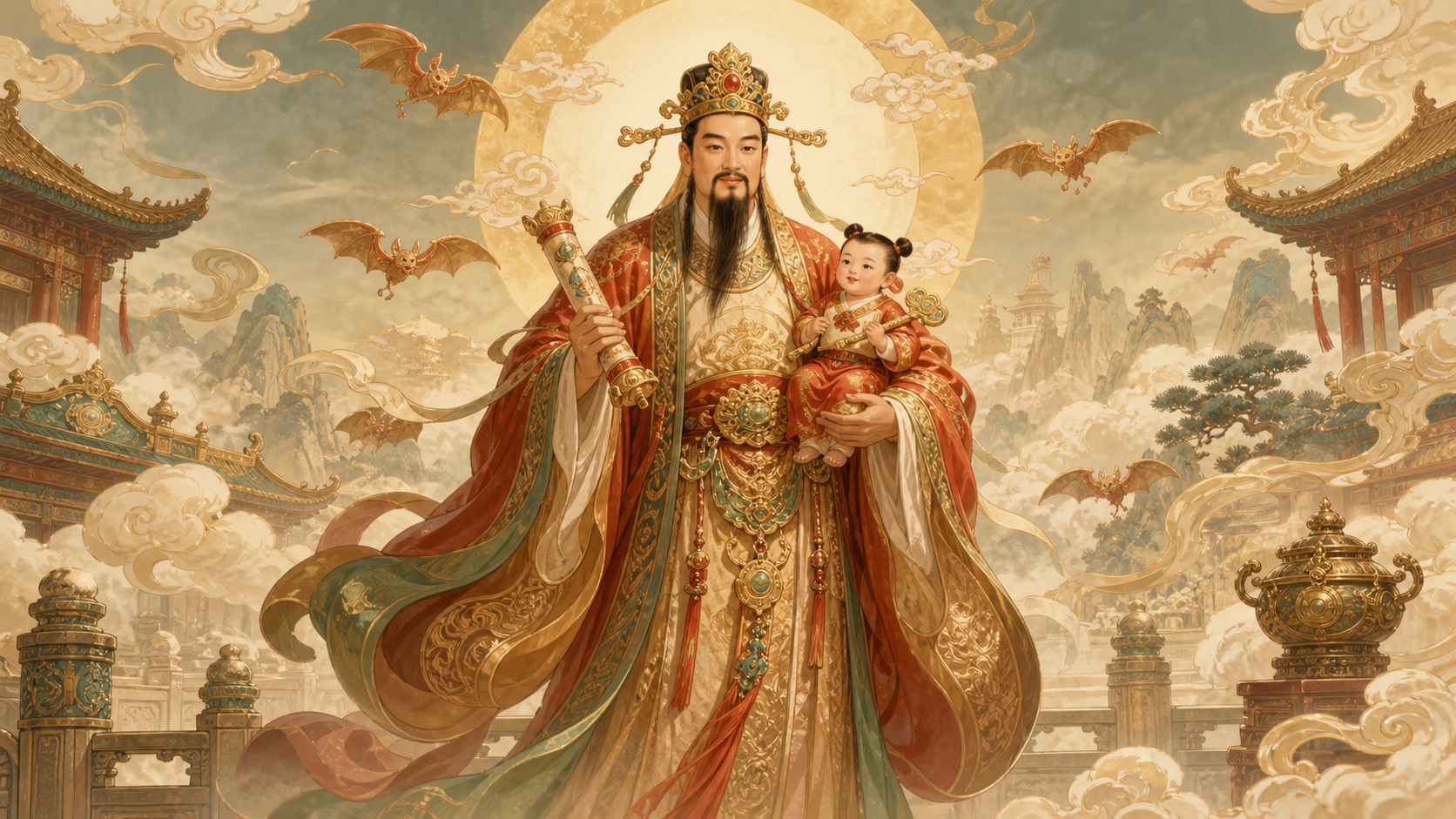
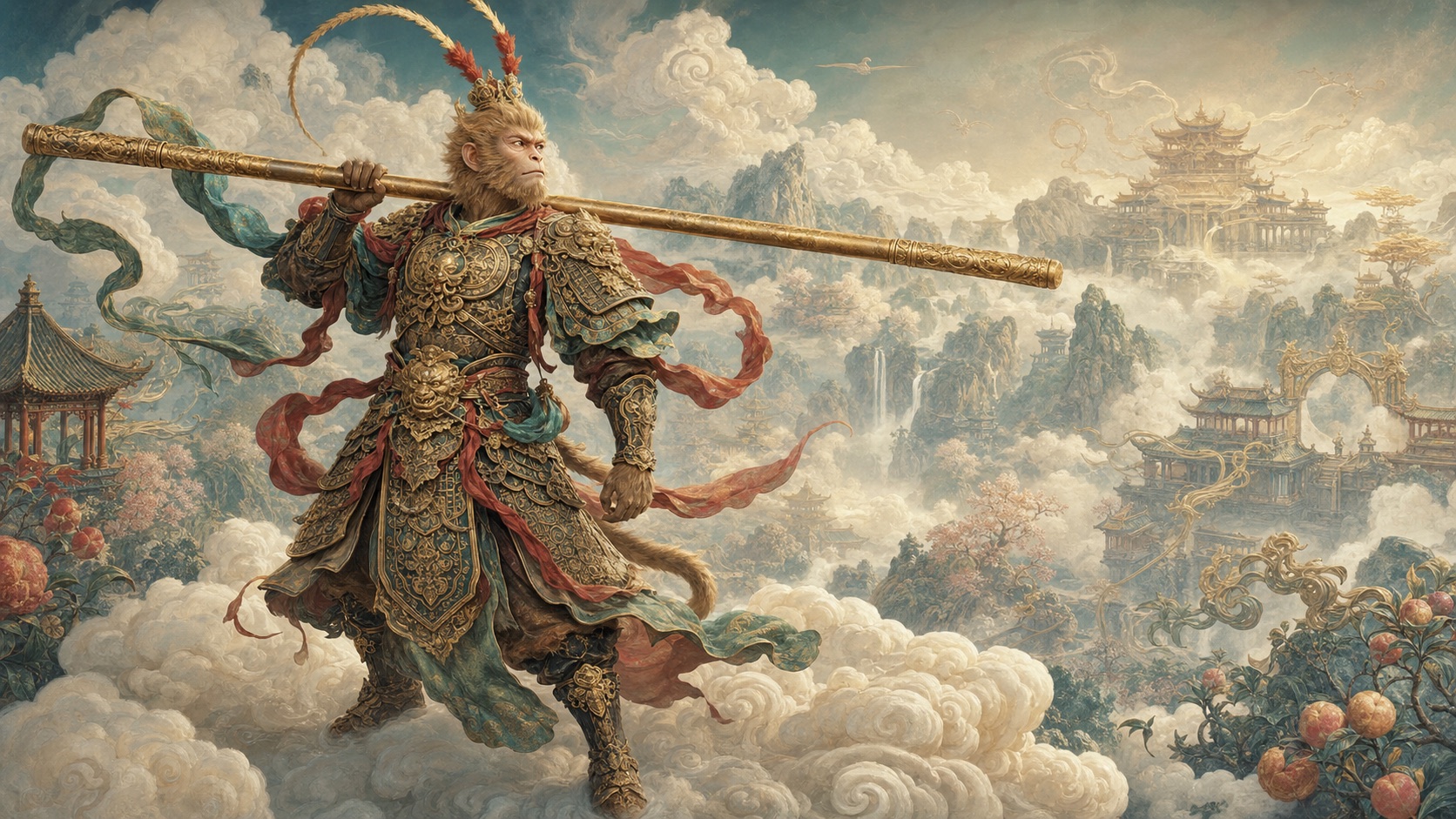
King Yama origin / 阎摩王来源
The Chinese Yanluo Wang tradition develops from Indian Buddhist Yama traditions and local underworld beliefs.
Understand Yanluo Wang / King Yama as an underworld judge figure, including the judgment ledger, court imagery, source traditions, and version differences.

Chinese name: 阎王爷 / 阎罗王 - Yanluo Wang
Aliases: King Yama, Yan Wang
Main source: Chinese Buddhist, Daoist-related, folk, and literary underworld traditions
Key symbols: Judgment ledger and court brush (生死簿与判笔) - These are symbols of judicial authority in underworld stories, not ordinary weapons.
Core IdentityThe best-known Chinese underworld judge figure, adapted from King Yama traditions and integrated into Buddhist, Taoist, and folk afterlife imagery.
He is a cultural and religious figure of judgment, record keeping, moral accountability, and reincarnation imagery.
Underworld court stories are part of mythology and belief history rather than claims about real afterlife outcomes.
Names and titles often mark a story stage, social position, divine office, religious role, or visual tradition. For Yanluo Wang / King Yama, the table separates the most common labels by meaning and context.
| Title | Meaning | Context |
|---|---|---|
| Yanluo Wang / 阎罗王 | King Yama / 阎摩罗王 | The most standard written title for the underworld judge. / 较正式、最常见的冥府审判者称号。 |
| Yan Wang / Yanwangye / 阎王 / 阎王爷 | Lord Yan / 阎王爷 | A colloquial folk title used in everyday sayings and popular stories. / 民间口语和俗语中常见的称呼。 |
| Fifth Yama King / 第五殿阎罗天子 | Yama of the fifth court / 第五殿阎罗天子 | In the Ten Yama Kings system, Yanluo Wang is often placed in the fifth court. / 在十殿阎罗体系中,阎罗王常被安排在第五殿。 |
| Lord of the Dark Realm / 幽冥教主 | Master of the underworld / 幽冥世界的主宰 | A broad title for underworld rulership in popular explanation. / 用于概括其冥界管理者身份的通俗说明性称呼。 |
| Underworld judge / 冥府审判者 | Judge of the dead / 亡者审判官 | A descriptive title that explains his main cultural function. / 说明其主要文化功能的描述性称呼。 |
The Chinese Yanluo Wang tradition develops from Indian Buddhist Yama traditions and local underworld beliefs.
Later Chinese afterlife imagery often divides judgment among ten Yama courts.
The registry or ledger is a key symbol of recorded lifespan and moral accountability in popular stories.
In Journey to the West, Sun Wukong enters the underworld and alters the death register, dramatizing his resistance to mortality.
These are literary and cultural traits used to read Yanluo Wang / King Yama across source stories, visual traditions, and later adaptations.
He represents impartial judgment rather than personal emotion.
The ledger motif shows that deeds and lifespans are recorded.
He is a face of the underworld court in Chinese popular imagination.
His court is often connected with karmic judgment and rebirth cycles in religious storytelling.
Underworld stories often place him above judges, clerks, messengers, and ghost soldiers.
Yanluo Wang matters because he gives Chinese culture a vivid language for death, judgment, records, and moral consequence.
He appears in novels, temple imagery, ghost stories, opera, film, games, and everyday sayings, making him one of the most recognizable underworld figures for global readers.
Popular sayings about Yan Wang work as cultural shorthand for the inevitability of death and the hope that wrongdoing will eventually be judged.
Judgment ledger and court brush (生死簿与判笔) - These are symbols of judicial authority in underworld stories, not ordinary weapons.
Chinese Buddhist and folk underworld traditions, Journey to the West, temple imagery and popular prints
Version context: Underworld hierarchies vary across traditions; no single layout is universal.
Chinese mythology figures often move between novels, opera, temple images, paintings, animation, games, and local traditions. Different media can preserve different details, names, and visual symbols.
Guides selected by shared source traditions, character groups, or visual symbols.