Han Yu family legend / 韩愈家族传说
Tradition often presents him as Han Yu's nephew, creating a contrast between Daoist pursuit and Confucian duty.
Understand Han Xiangzi as the flute-playing Eight Immortals figure, including the Han Yu legend, peony miracle, music symbolism, and source background.
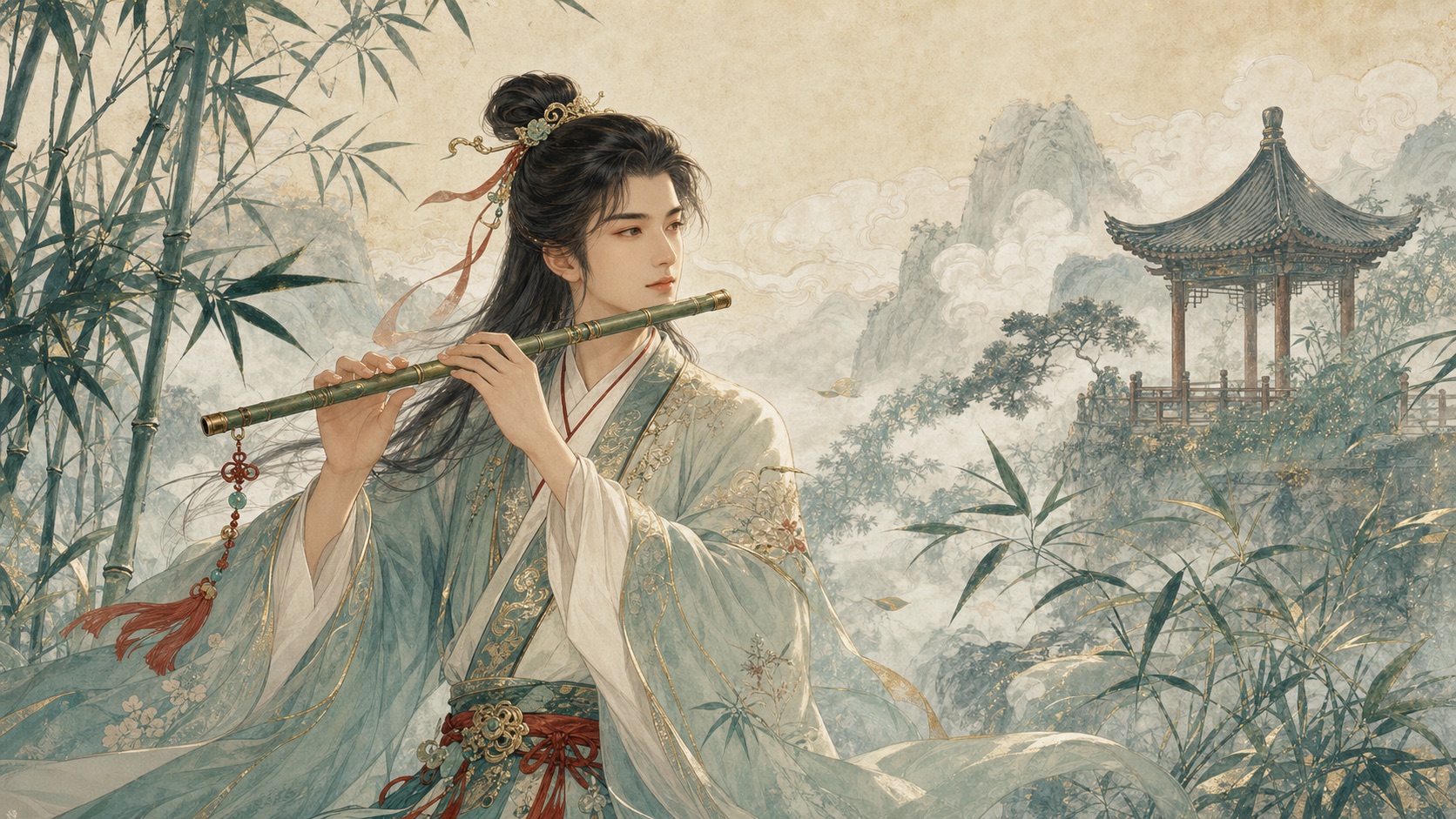
Chinese name: 韩湘子 - Han Xiangzi
Aliases: Flute-playing immortal
Main source: Eight Immortals tradition
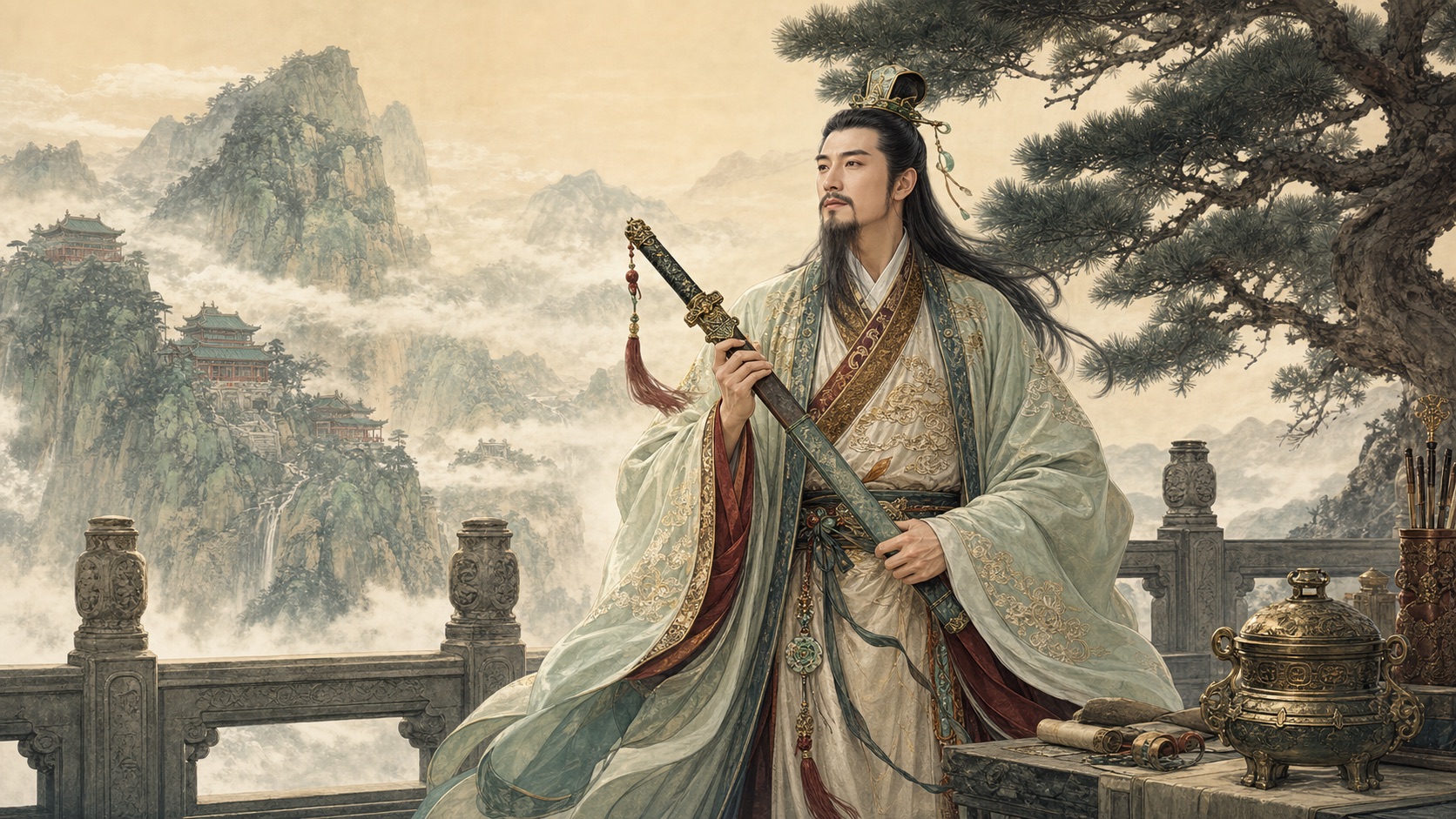
Key symbols: Flute (笛) - The flute is his most common visual attribute in Eight Immortals iconography.
Core IdentityOne of the Eight Immortals, known as a young scholar-immortal with a flute and legends connecting him to the Tang writer Han Yu.
His image combines music, literature, flowers, and family tension. Stories often contrast Daoist transcendence with Confucian public duty through his relationship with Han Yu.
The Han Yu connection belongs to legendary source tradition rather than verified biography.
Names and titles often mark a story stage, social position, divine office, religious role, or visual tradition. For Han Xiangzi, the table separates the most common labels by meaning and context.
| Title | Meaning | Context |
|---|---|---|
| Han Xiangzi / 韩湘子 | Master Han Xiang / 韩湘先生 / 韩湘子 | His common Eight Immortals name; Zi works as an honorific in this context. / 八仙中最常见称呼,其中“子”带有尊称意味。 |
| Han Xiang / 韩湘 | Personal name / 人物本名 | The shorter personal name used in some accounts. / 部分材料中使用的较短姓名。 |
| Flute Immortal / 笛仙 | Flute-playing immortal / 吹笛仙人 | A descriptive title based on his most recognizable attribute. / 基于最明显标志物“笛”形成的说明性称呼。 |
| Qingxu title / 清虚相关尊号 | Clear Void title / 清虚类神号 | Some religious and literary materials attach formal titles to him; wording varies by source. / 部分宗教和文学材料会附加正式尊号,具体文字会因来源而异。 |
Tradition often presents him as Han Yu's nephew, creating a contrast between Daoist pursuit and Confucian duty.
A famous story says he makes peonies bloom out of season, with verses that foreshadow Han Yu's later exile.
Many retellings connect him to Lu Dongbin as a disciple or younger immortal.
Later legends describe him descending to help Han Yu during hardship, preserving family feeling within immortal storytelling.
These are literary and cultural traits used to read Han Xiangzi across source stories, visual traditions, and later adaptations.
The flute is his clearest attribute and links him to music, refined emotion, and spiritual influence.
The peony story connects him with seasonal reversal and poetic signs.
His image is cultured, poetic, and less martial than many popular mythic figures.
The Han Yu stories keep family obligation visible inside an immortal narrative.
Han Xiangzi matters because he connects the Eight Immortals with music, scholar culture, and the tension between family duty and spiritual freedom.
His flute and peony miracle make him easy to recognize, while the Han Yu legends give international readers a useful bridge into Tang literary culture.
Flute (笛) - The flute is his most common visual attribute in Eight Immortals iconography.
Eight Immortals legends, opera and paintings, folk retellings
Version context: The connection with the Tang writer Han Yu belongs to legendary tradition rather than verified biography.
Chinese mythology figures often move between novels, opera, temple images, paintings, animation, games, and local traditions. Different media can preserve different details, names, and visual symbols.
Guides selected by shared source traditions, character groups, or visual symbols.