Taoist cultivation / 道家修行
He is often described as a cultivator who practices meditation and spiritual discipline.
Learn about Li Tieguai, also called Iron-Crutch Li, including his iron crutch, gourd, Eight Immortals role, and iconographic context.
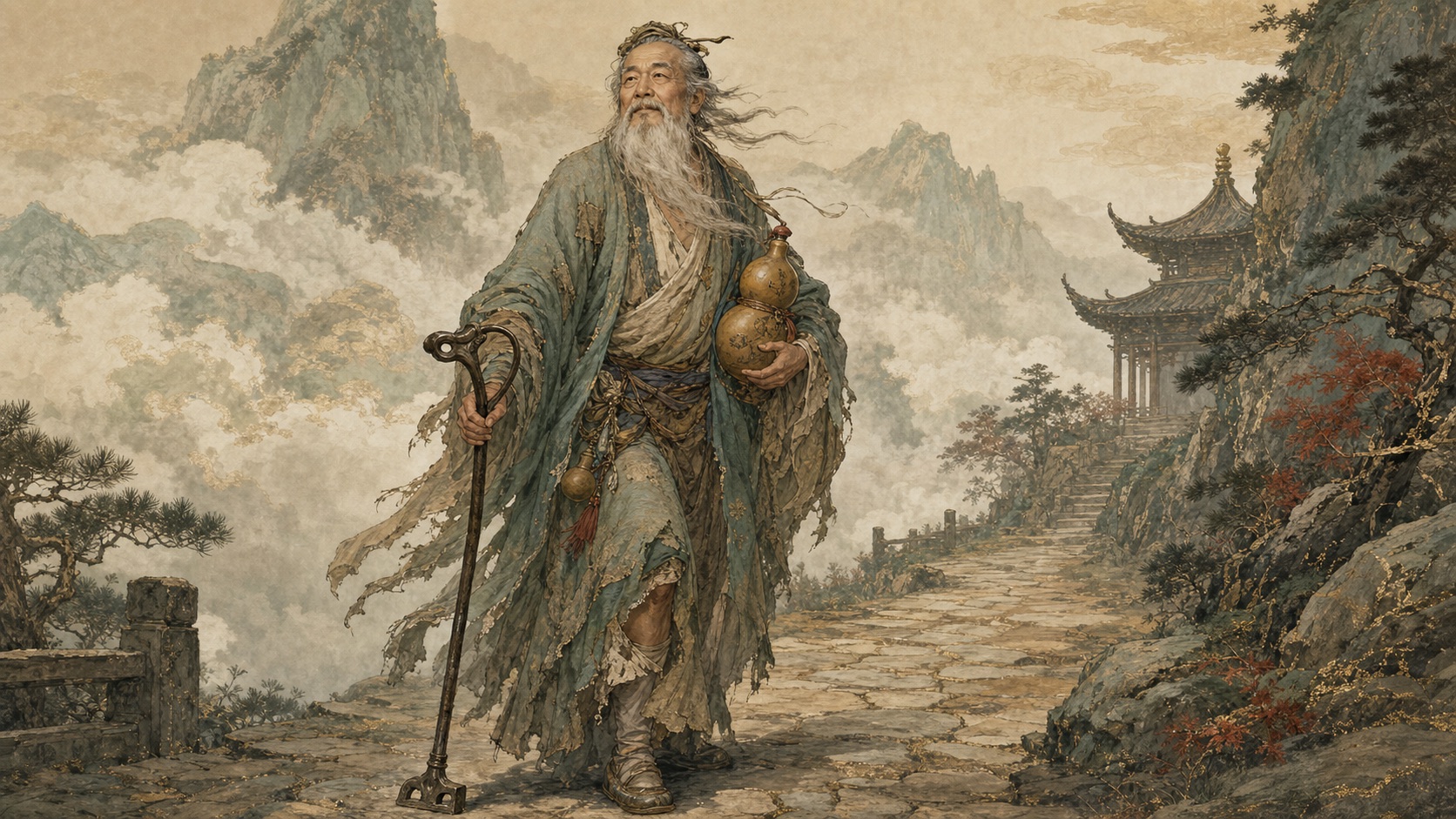
Chinese name: 铁拐李 - Tieguai Li
Aliases: Iron-Crutch Li
Main source: Eight Immortals tradition
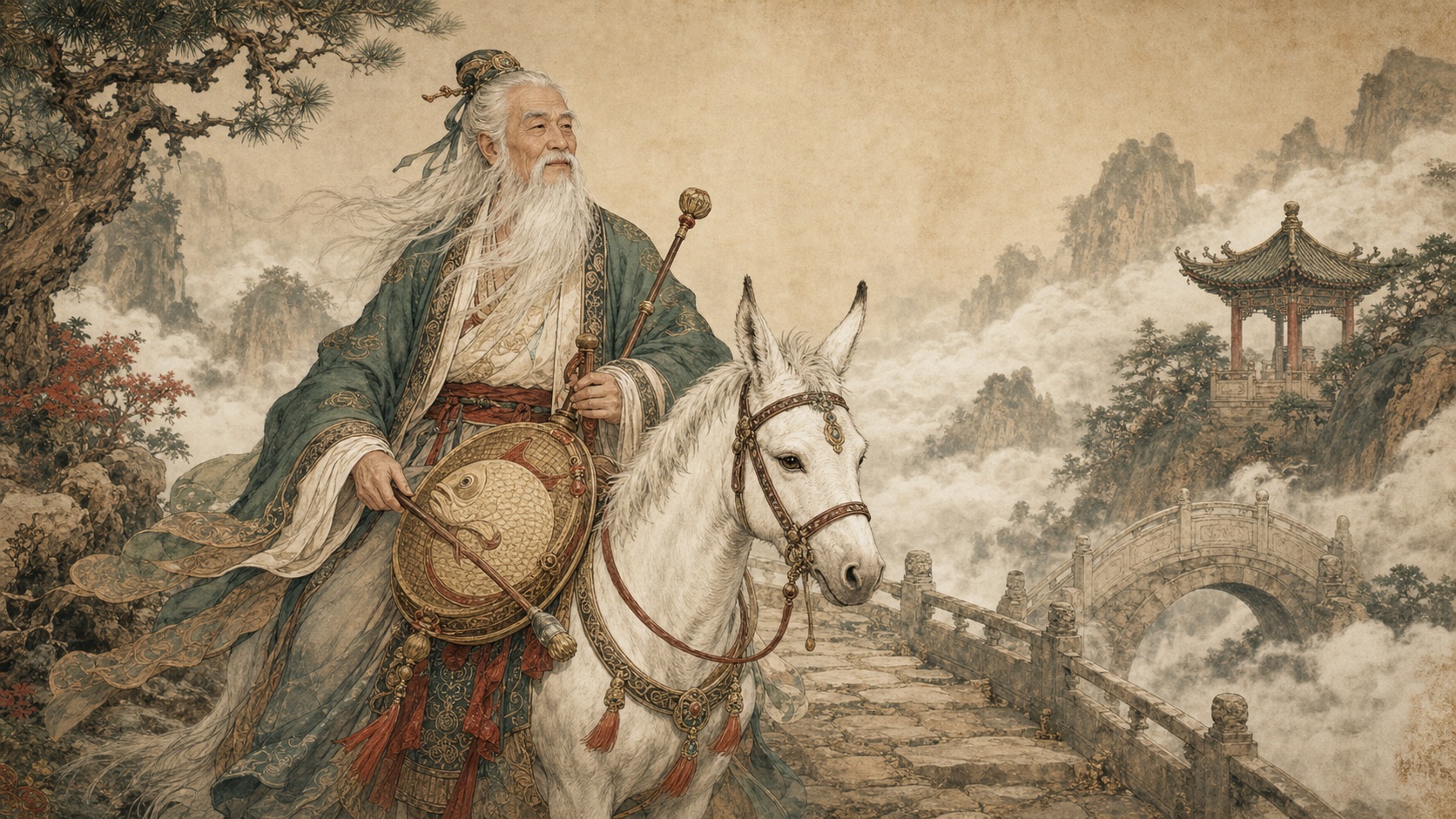
Key symbols: Iron crutch (铁拐) - His most direct visual identifier and the source of the name Iron-Crutch Li.; Gourd (葫芦) - Often linked with medicine, elixirs, or spiritual power in immortal iconography.
Core IdentityOne of the Eight Immortals, often placed first in the group and recognized by his iron crutch, rough appearance, and medicine gourd.
His appearance is intentionally paradoxical: a ragged, impaired body can conceal great divine power and spiritual attainment.
For readers, Tieguai Li is useful because he teaches a common Taoist lesson in visual form: outward form is not the same as inner cultivation.
Names and titles often mark a story stage, social position, divine office, religious role, or visual tradition. For Li Tieguai / Iron-Crutch Li, the table separates the most common labels by meaning and context.
| Title | Meaning | Context |
|---|---|---|
| Tieguai Li / 铁拐李 | Iron-Crutch Li / 持铁拐的李姓仙人 | His most common name, based on his iron crutch. / 最常见称呼,来自其标志性铁拐。 |
| Li Xuan / 李玄 | Personal name / 本名 | Often given as his mortal name before becoming an immortal. / 常被作为成仙前的凡人姓名。 |
| First of the Eight Immortals / 八仙之首 | Senior immortal in the group / 八仙中的资深者 | A common way to place him first among the Eight Immortals. / 常用于说明他在八仙中的资深位置。 |
He is often described as a cultivator who practices meditation and spiritual discipline.
In a famous story, his spirit leaves the body; when the old body is lost, he must enter another body.
The iron crutch and gourd become his lasting visual signs.
He is one of the clearest examples of the Eight Immortals' theme of eccentric human paths to immortality.
These are literary and cultural traits used to read Li Tieguai / Iron-Crutch Li across source stories, visual traditions, and later adaptations.
His damaged appearance contrasts with his divine power.
The gourd often signals healing, medicine, and spirit power.
The body-leaving story is central to his legend.
He often appears rough but helps the sick and vulnerable.
Iron-Crutch Li matters because he turns a spiritual idea into an instantly readable image: wisdom and power are not dependent on beauty or social polish.
That makes him especially useful for understanding the Eight Immortals, a group where each figure shows a different social identity and path toward transcendence.
Iron crutch (铁拐) - His most direct visual identifier and the source of the name Iron-Crutch Li.; Gourd (葫芦) - Often linked with medicine, elixirs, or spiritual power in immortal iconography.
Eight Immortals legends, Daoist and folk art, opera and decorative arts
Version context: His rough appearance is an iconographic feature, not a joke or a moral flaw.
Chinese mythology figures often move between novels, opera, temple images, paintings, animation, games, and local traditions. Different media can preserve different details, names, and visual symbols.
Guides selected by shared source traditions, character groups, or visual symbols.