Primordial Taoist deity / 道教尊神
In religious tradition, he belongs to the highest levels of the Taoist divine order.
Learn how Taishang Laojun relates to Daoist tradition, Laozi, Journey to the West, Investiture of the Gods, alchemy, and key artifacts.
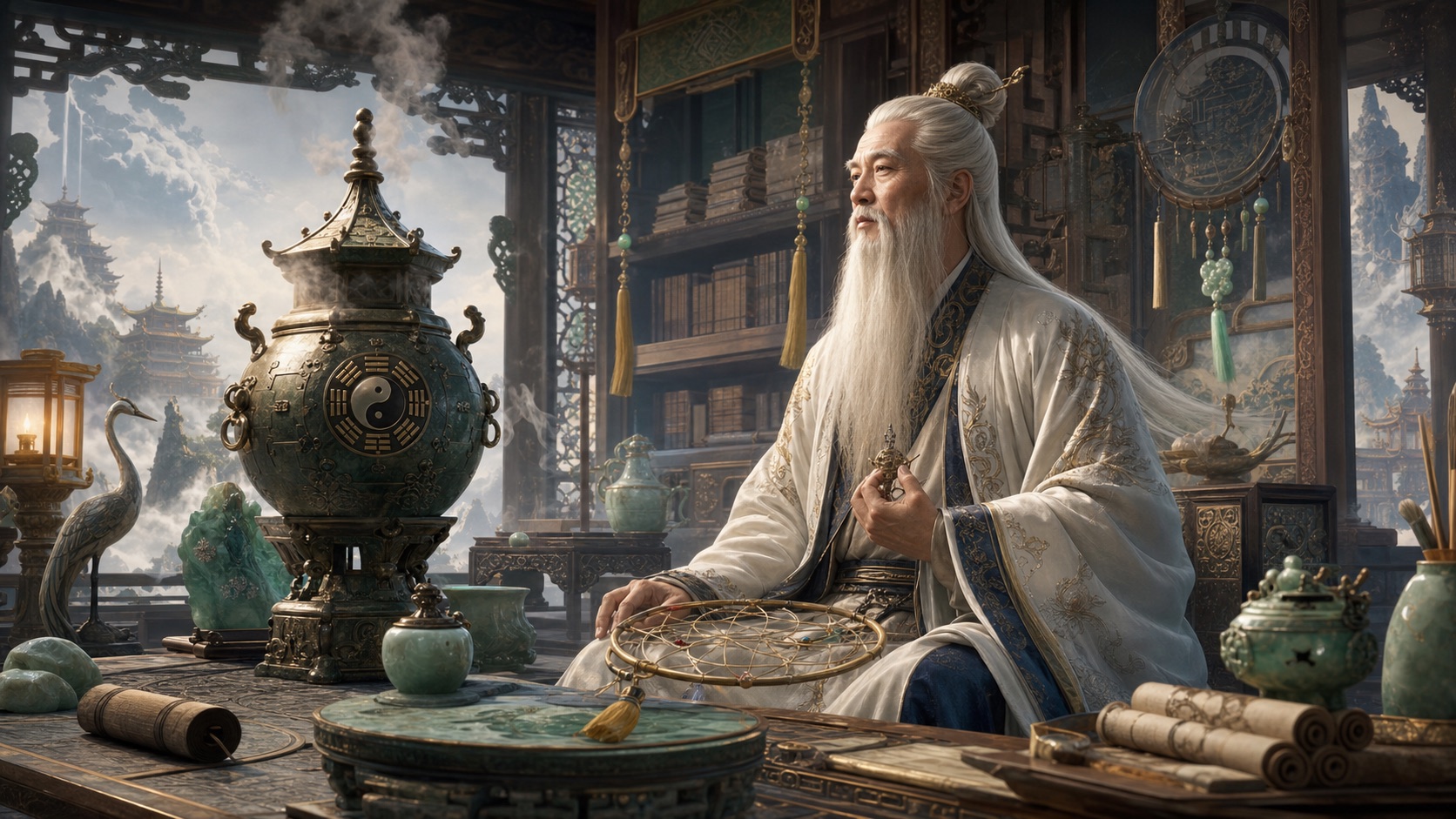
Chinese name: 太上老君 - Tai Shang Lao Jun
Aliases: Daode Tianzun, Deified Laozi
Main source: Daoist tradition, Journey to the West, and Investiture of the Gods
Key symbols: Eight Trigrams Furnace (八卦炉) - A major alchemical setting in Journey to the West episodes involving Sun Wukong.; Diamond snare / diamond cutter (金刚琢) - English renderings vary, and the Chinese name remains the clearest source-specific label.
Core IdentityA supreme Taoist deity associated with Laozi, the Daodejing, alchemy, immortality, and the Eight Trigrams Furnace.
In mythological storytelling, he often functions as the ancient master whose furnace, elixirs, and artifacts shape events involving gods and immortals.
For readers, the key is to separate historical Laozi, the philosophical Daodejing, and the deified religious figure Taishang Laojun, while understanding why later culture connects them.
Names and titles often mark a story stage, social position, divine office, religious role, or visual tradition. For Taishang Laojun, the table separates the most common labels by meaning and context.
| Title | Meaning | Context |
|---|---|---|
| Taishang Laojun / 太上老君 | Supreme Lord Lao / 至高的老君 | The most common divine title in mythology and Taoist culture. / 神话和道教文化中最常见的神号。 |
| Daode Tianzun / 道德天尊 | Heavenly Lord of Dao and Virtue / 道与德之天尊 | A formal title connected with the Three Pure Ones system. / 与三清体系相关的正式尊号。 |
| Laozi / 老子 | Old Master / 老先生 / 老大师 | The historical and philosophical figure later connected with his deified form. / 历史与哲学人物,后世与神格形态相连。 |
| Ancestor of the Golden Elixir / 金丹老祖 | Founder figure of elixir tradition / 金丹传统祖师 | A title used to explain his association with alchemy and immortality. / 用于说明他与炼丹、长生传统的关联。 |
In religious tradition, he belongs to the highest levels of the Taoist divine order.
Later culture links him with Laozi, the philosophical figure associated with the Daodejing.
In Journey to the West, his furnace becomes central to Sun Wukong's fiery golden eyes episode.
He is often associated with elixirs, furnaces, rings, and other divine implements.
These are literary and cultural traits used to read Taishang Laojun across source stories, visual traditions, and later adaptations.
Elixirs and furnaces are central to his mythological role.
He represents the religious and philosophical authority of the Tao.
The Eight Trigrams Furnace is his most famous mythological object.
He is usually portrayed as an elder whose power is calm rather than dramatic.
Taishang Laojun matters because he connects philosophy, religion, alchemy, and myth into one recognizable figure.
Understanding him helps readers see why Chinese mythology often treats pills, furnaces, registers, talismans, and cosmic principles as part of the same cultural world.
Eight Trigrams Furnace (八卦炉) - A major alchemical setting in Journey to the West episodes involving Sun Wukong.; Diamond snare / diamond cutter (金刚琢) - English renderings vary, and the Chinese name remains the clearest source-specific label.
Daoist tradition, Journey to the West, Investiture of the Gods
Version context: Laozi the philosophical figure and Taishang Laojun as a later religious and literary deity are related but distinct.
Chinese mythology figures often move between novels, opera, temple images, paintings, animation, games, and local traditions. Different media can preserve different details, names, and visual symbols.
Guides selected by shared source traditions, character groups, or visual symbols.