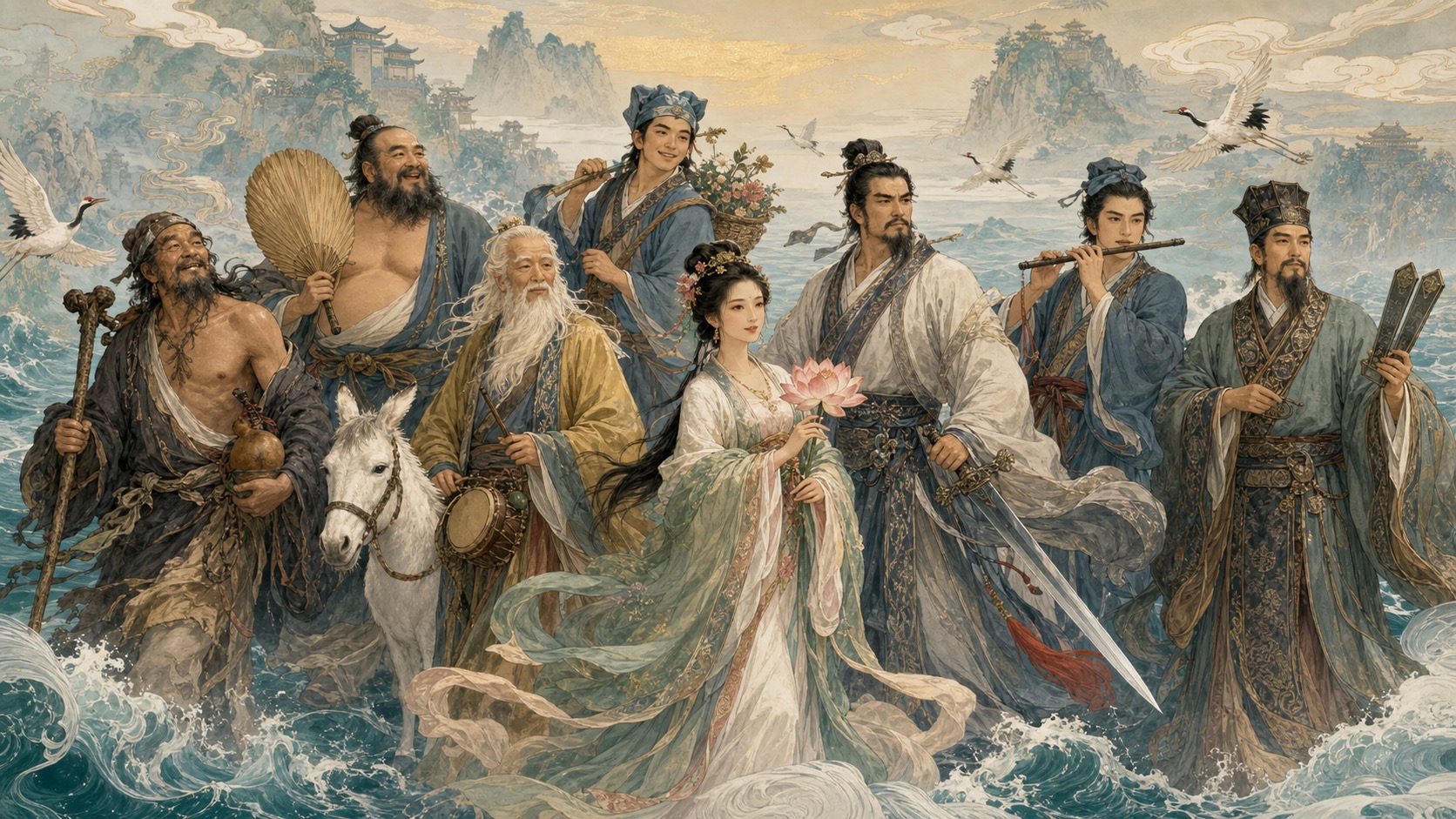
Unjust death / 含冤而死
In the best-known legend, Zhong Kui excels in the imperial examination but is rejected because of his frightening appearance.
Learn who Zhong Kui is, why his sword and fierce official image matter, and how he appears in door-guardian art, New Year prints, opera, film, and games.
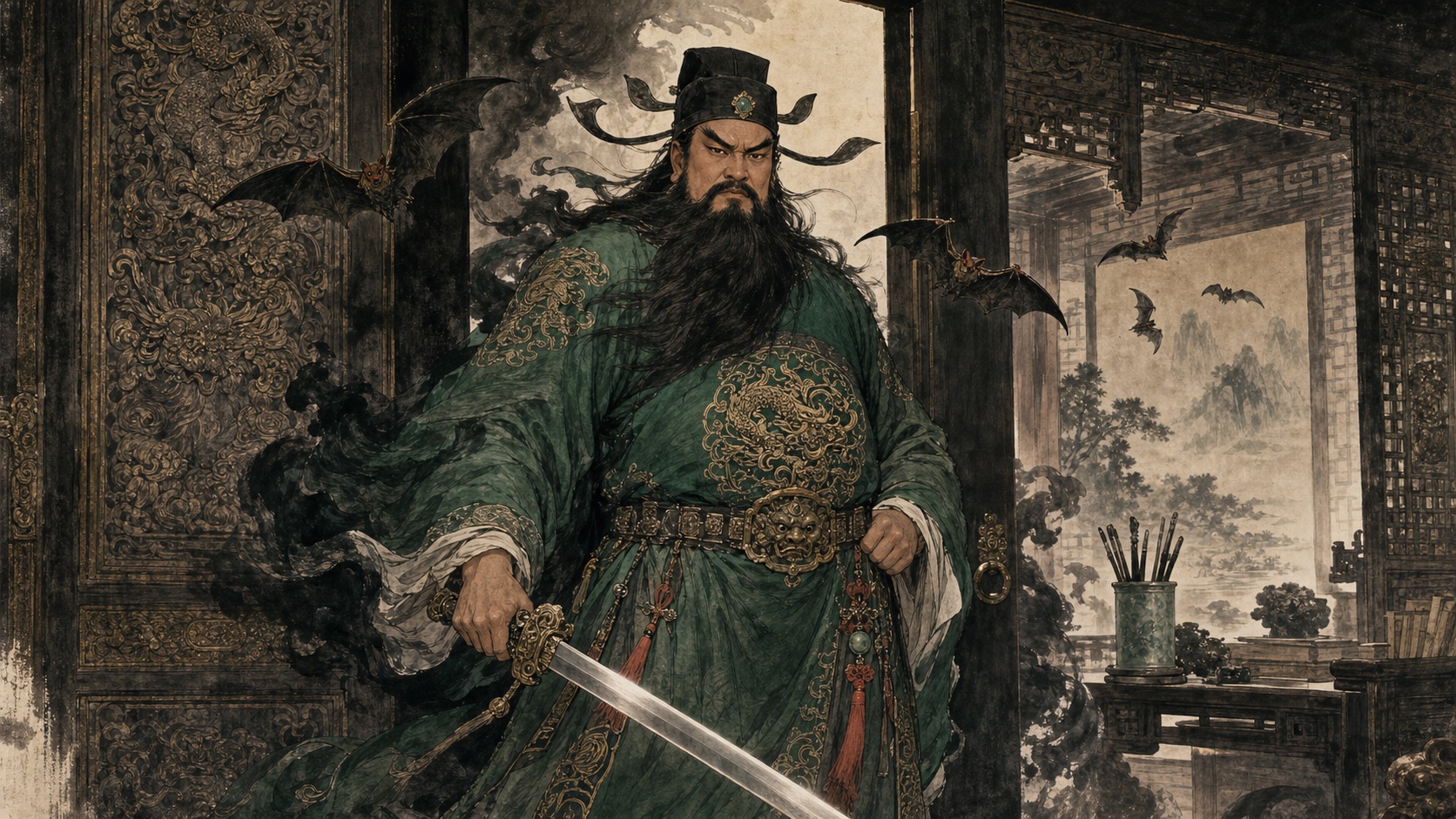
Chinese name: 钟馗 - Zhong Kui
Aliases: Demon Queller
Main source: Folk guardian tradition and later textual legends
Key symbols: Sword (宝剑) - A common iconographic attribute in Zhong Kui paintings and guardian images.
Core IdentityThe most famous ghost-catching deity in Chinese folklore, known as a fierce demon-queller and protective door-guardian image.
A common legend presents him as a brilliant scholar who died unjustly after being rejected for his appearance, then returned as a ghost-hunter in the underworld.
His portrait is widely used in New Year pictures, door imagery, opera, painting, film, games, and protective folk art. The important point is not horror, but protection and moral justice.
Names and titles often mark a story stage, social position, divine office, religious role, or visual tradition. For Zhong Kui, the table separates the most common labels by meaning and context.
| Title | Meaning | Context |
|---|---|---|
| Zhong Kui / 钟馗 | Personal name / 人物本名 | His standard name in folklore, art, drama, and popular culture. / 民间传说、图像、戏曲和大众文化中最标准的称呼。 |
| Demon-Quelling Zhong Kui / 赐福镇宅圣君 | Holy Lord of blessing and home protection / 赐福与镇宅的神圣称号 | A formal title connected with blessing, home protection, and exorcistic use. / 与赐福、镇宅和驱邪功能相关的正式称号。 |
| Number One Scholar of Hell / 阴间状元 | Top scholar of the underworld / 冥府中的状元 | A folk title that points to his scholarly talent and posthumous recognition. / 民间称呼,强调其才学和死后的认可。 |
| Marshal of Ghosts / 捉鬼元帅 | Ghost-catching marshal / 捉鬼的元帅 | A descriptive title for his role as a hunter and judge of harmful spirits. / 说明其捉鬼、镇邪和惩恶功能的称呼。 |
In the best-known legend, Zhong Kui excels in the imperial examination but is rejected because of his frightening appearance.
A Tang emperor dreams that Zhong Kui defeats a small ghost and explains his vow to rid the world of demons.
The emperor commissions a portrait, and Zhong Kui becomes a recognized exorcistic image in later tradition.
His image is hung on doors, shown in New Year prints, and used to scare away ghosts and harmful beings.
These are literary and cultural traits used to read Zhong Kui across source stories, visual traditions, and later adaptations.
Paintings often show a fierce face, heavy beard, official robe, and powerful stance.
His sword is the clearest weapon-like attribute in Zhong Kui imagery.
He does not only catch spirits; he also represents judgment and punishment of harmful beings.
The frightening exterior is paired with protection of ordinary households and innocent people.
Zhong Kui matters because he turns an outsider's face into a protective image. The story separates outward appearance from inner merit, justice, and courage.
He appears across painting, opera, New Year prints, film, games, and folk protective practice. For global readers, he is one of the clearest Chinese figures for understanding exorcism, door guardians, and justice against harmful spirits.
Sword (宝剑) - A common iconographic attribute in Zhong Kui paintings and guardian images.
Tang Xuanzong dream legend, Song and later texts, paintings and New Year prints
Version context: The dream-origin story belongs to legend rather than verified history.
Chinese mythology figures often move between novels, opera, temple images, paintings, animation, games, and local traditions. Different media can preserve different details, names, and visual symbols.
Guides selected by shared source traditions, character groups, or visual symbols.