Imperial-relative background / 皇亲背景
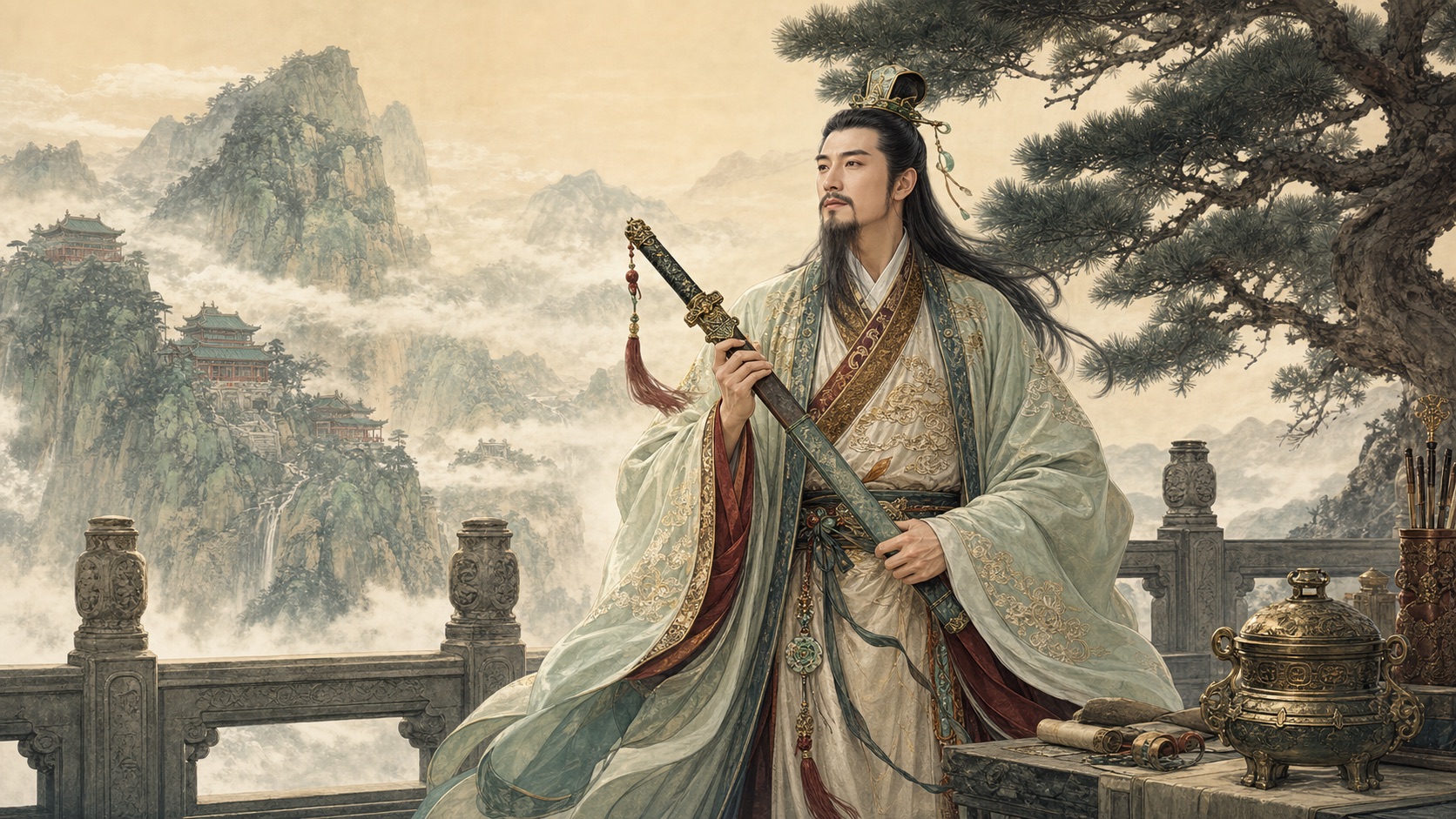
Stories begin with Cao Guojiu as a privileged court figure tied to imperial family status.
Learn about Cao Guojiu, the courtly Eight Immortals figure, including his jade tablet, imperial-relative title, renunciation story, and version differences.
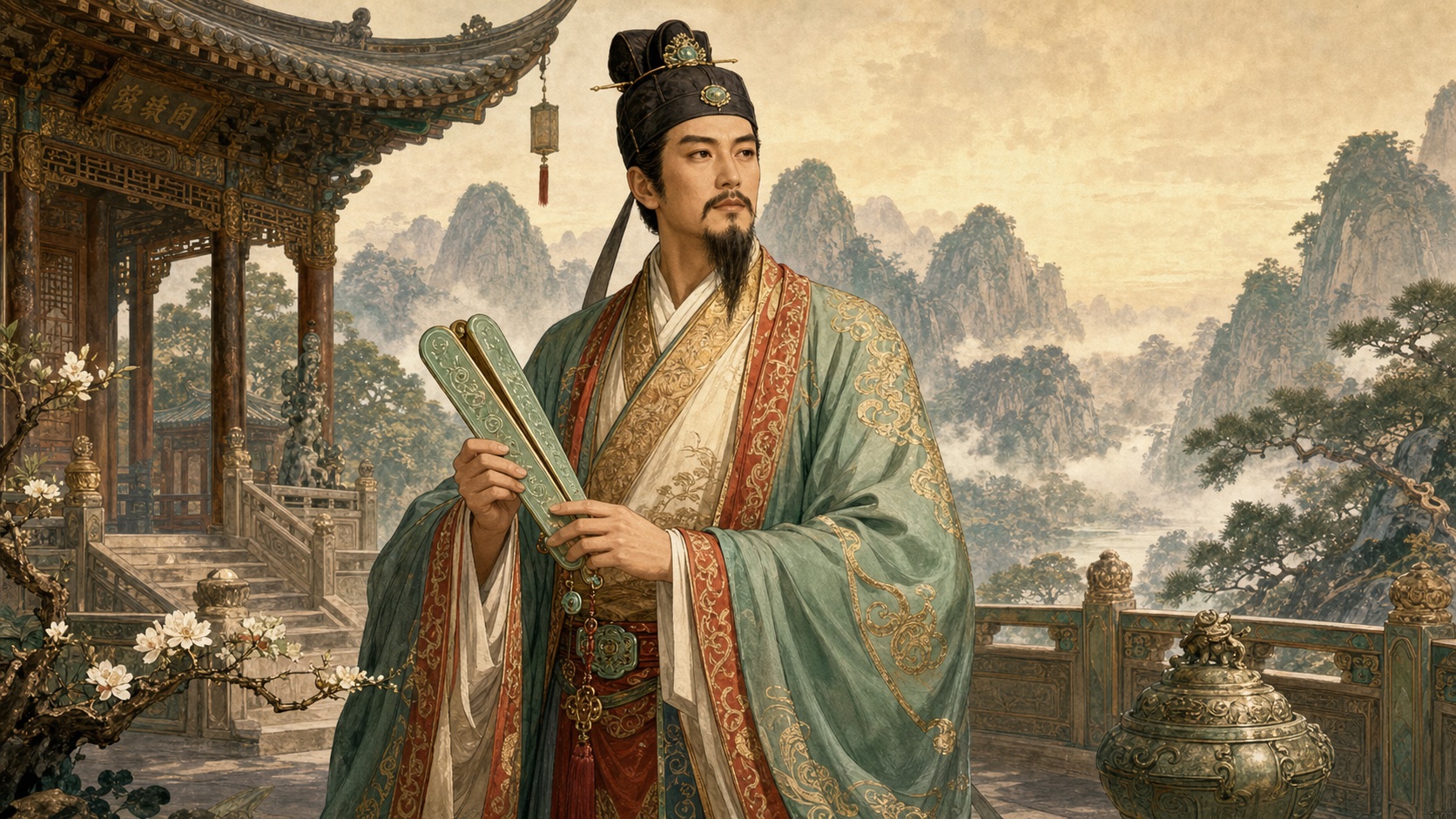
Chinese name: 曹国舅 - Cao Guojiu
Aliases: Royal Uncle Cao
Main source: Eight Immortals tradition
Key symbols: Jade tablet / court clappers (玉板 / 拍板) - A ceremonial identifier linked to official status; exact object forms vary in art.
Core IdentityOne of the Eight Immortals, usually portrayed as a courtly or imperial-relative figure who turns away from status and seeks Daoist cultivation.
He is often treated as the last of the Eight Immortals to join the group. His story gives the set a noble or official path to immortality, balancing beggars, scholars, elders, and wanderers.
Because the title Guojiu refers to an imperial-relative role, it works as a title-like identity; the immortal legend remains separate from verified biography.
Names and titles often mark a story stage, social position, divine office, religious role, or visual tradition. For Cao Guojiu, the table separates the most common labels by meaning and context.
| Title | Meaning | Context |
|---|---|---|
| Cao Guojiu / 曹国舅 | Imperial Uncle Cao / 曹姓国舅 | His standard name; Guojiu means a male relative connected to an empress or imperial family. / 最标准称呼;“国舅”指与皇后或皇室相关的男性亲属称谓。 |
| Cao Yi / 曹佾 | Personal name / 人物本名 | Often connected with historical Song-dynasty noble memory, though the immortal story is legendary. / 常与宋代贵族记忆相连,但成仙故事属于传说传统。 |
| Jade Tablet Immortal / 玉板仙 | Immortal with jade tablets / 持玉板的仙人 | A descriptive title based on his most common attribute. / 基于其常见标志物“玉板”形成的说明性称呼。 |
| Prince of Jiyang / 济阳郡王 | Noble title / 贵族封号 | A historical noble-style title associated with Cao Yi, separate from magic titles. / 与曹佾相关的贵族封号,与法术称号不同。 |
Stories begin with Cao Guojiu as a privileged court figure tied to imperial family status.
A common legend says family corruption or disgrace leads him to leave wealth and status behind.
Zhongli Quan and Lu Dongbin often appear as the immortals who test or guide him.
As the final member in many lists, he completes the social diversity of the Eight Immortals.
These are literary and cultural traits used to read Cao Guojiu across source stories, visual traditions, and later adaptations.
The jade tablet or court clappers mark official dignity, ritual order, and courtly identity.
He is the clearest imperial-relative figure within the Eight Immortals set.
His story emphasizes leaving power behind rather than using privilege as proof of superiority.
Compared with more flamboyant immortals, he is usually calm, formal, and dignified.
Cao Guojiu matters because he gives the Eight Immortals a story of renunciation from the top of society. Privilege is not treated as the final goal, but as something that can be left behind.
As the courtly member of the group, he helps show why the Eight Immortals are a social cross-section: poor, noble, old, young, male, female, scholarly, eccentric, and official figures can all become part of the same mythic set.
Jade tablet / court clappers (玉板 / 拍板) - A ceremonial identifier linked to official status; exact object forms vary in art.
Eight Immortals legends, paintings, theater and decorative arts
Version context: 'Guojiu' is a title-like term meaning an imperial relative; the stories still belong to legendary tradition.
Chinese mythology figures often move between novels, opera, temple images, paintings, animation, games, and local traditions. Different media can preserve different details, names, and visual symbols.
Guides selected by shared source traditions, character groups, or visual symbols.