Ruyi Jingu Bang / 如意金箍棒
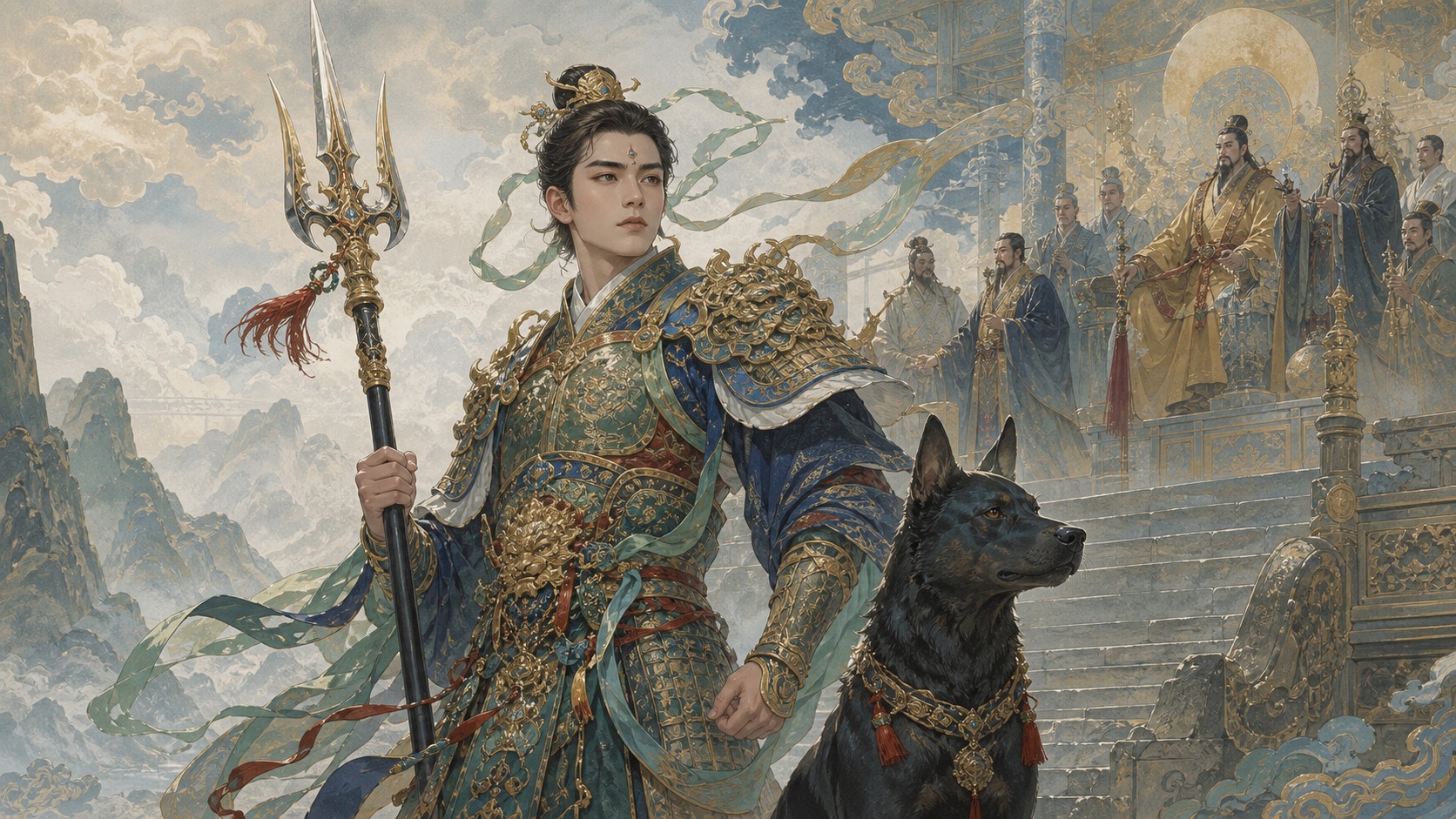
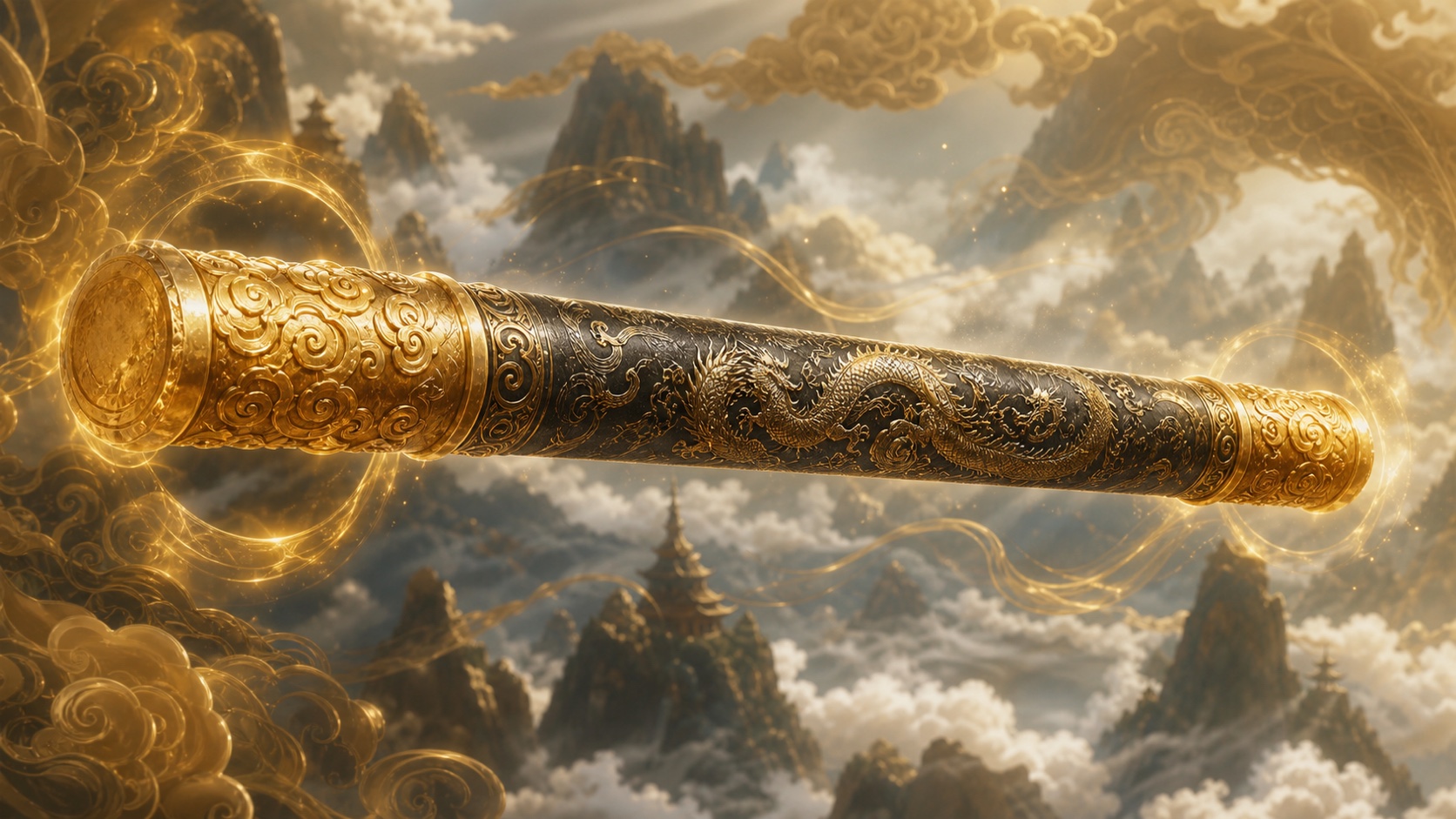
His best-known weapon: a golden-hooped iron staff linked with the Dragon King's treasury and the Dinghai Shenzhen tradition.
Learn who Sun Wukong is, what the Monkey King does in Journey to the West, the meaning of Ruyi Jingu Bang, major aliases, sources, and version notes.
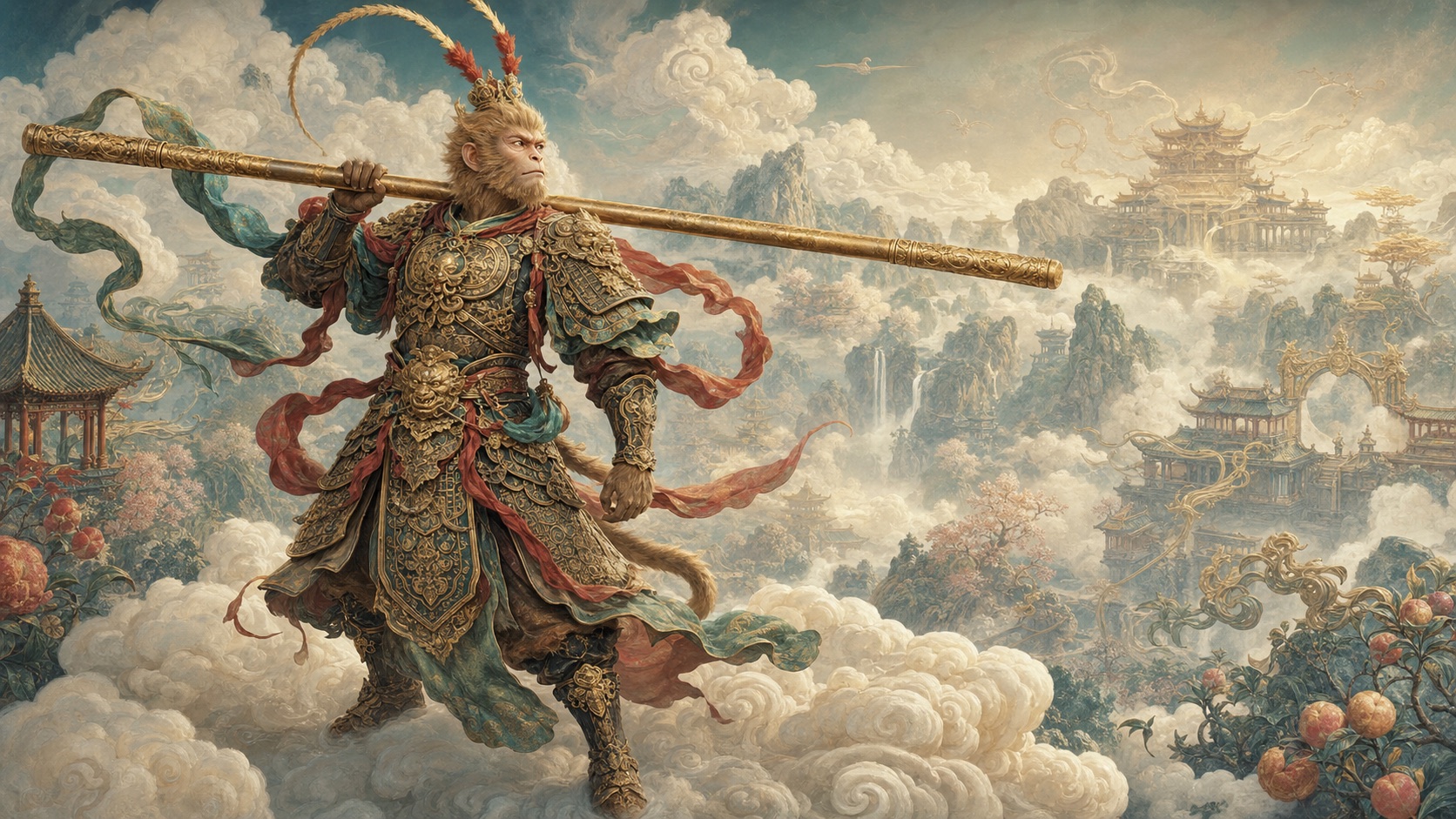
Chinese name: 孙悟空 - Sun Wukong
Aliases: Monkey King, Great Sage Equal to Heaven
Main source: Journey to the West
Key symbols: Ruyi Jingu Bang (如意金箍棒) - A size-changing golden-hooped staff associated with the Dragon King's treasury in the novel.
Core IdentityA stone-born mythical monkey who gains supernatural powers through cultivation and becomes one of the most recognizable figures in East Asian popular culture.
He is at once a trickster, a rebel, a comic fighter, and ultimately a redeemed protector. That layered identity is why readers may meet him under several different names and titles.
In Journey to the West, his story moves from wild freedom on Flower-Fruit Mountain to conflict with Heaven, imprisonment beneath the Five Elements Mountain, and finally the disciplined role of Tang Sanzang's main protector on the pilgrimage.
Names and titles often mark a story stage, social position, divine office, religious role, or visual tradition. For Sun Wukong / The Monkey King, the table separates the most common labels by meaning and context.
| Title | Meaning | Context |
|---|---|---|
| Stone Monkey / 石猴 | The stone-born monkey / 石中孕育而生的猴 | His original form before receiving the name Sun Wukong. / 孙悟空得名之前的原初形态。 |
| Sun Wukong / 孙悟空 | Awakened to emptiness / 悟空,可理解为“悟到空性” | Given by Patriarch Subodhi after the monkey becomes his disciple. / 石猴拜菩提祖师为师后获得的姓名。 |
| Handsome Monkey King / 美猴王 | King of the monkeys / 群猴之王 | A title from Flower-Fruit Mountain after he proves himself at Water Curtain Cave. / 他在水帘洞中证明自己后,被花果山群猴推为王。 |
| Bimawen / 弼马温 | Protector of the heavenly horses / 天庭马监小官 | A low heavenly post given to keep him inside the heavenly bureaucracy; he leaves angrily after learning its status. / 天庭给他的低级官职;他得知地位低微后愤然离开。 |
| Great Sage Equal to Heaven / 齐天大圣 | Self-declared rebellion title / 自封的反叛称号 | His most famous title, proclaimed during conflict with Heaven. / 大闹天宫相关的最著名称号,带有强烈反叛意味。 |
| Sun Xingzhe / 孙行者 | The Monkey pilgrim / 取经路上的修行者称呼 | A name used after he joins Tang Sanzang's pilgrimage as a disciple and protector. / 加入唐僧取经队伍后常用的称呼,突出修行和护法身份。 |
| Victorious Fighting Buddha / 斗战胜佛 | Final Buddhist title / 取经完成后的佛教封号 | Awarded at the end of the pilgrimage narrative after the scripture mission is completed. / 取经完成后获得的最终封号。 |
The stone-born monkey becomes leader of the monkeys after proving himself at the Water Curtain Cave.
A low heavenly office connected with the imperial stables. After he learns its rank is minor, it becomes a mocking title.
A defiant title he adopts during the conflict with Heaven. It is not the same as a stable official deity rank from the beginning.
Tang Sanzang calls him a pilgrim-disciple after accepting him into the scripture-seeking group.
At the end of the pilgrimage narrative, he receives the Buddhist title Victorious Fighting Buddha.
His best-known weapon: a golden-hooped iron staff linked with the Dragon King's treasury and the Dinghai Shenzhen tradition.
A headband controlled by the tightening spell, visually marking the tension between wild power and pilgrimage discipline.
A famous true-sight ability used in many retellings to expose demons, disguises, and false appearances.
A core magical skill learned from Patriarch Subodhi, allowing transformations into different forms.
A movement ability associated with vast distance in a single somersault, often shown as cloud-riding flight.
A common stage, illustration, and screen visual cue; it is an iconographic marker, not a separate magic weapon.
First master: Gives him the name Sun Wukong and teaches key magical skills.
Pilgrimage master: Accepts him as a disciple and becomes the person he protects on the pilgrimage.
Fellow disciple: A fellow pilgrim whose comic temperament often contrasts with Wukong's sharpness.
Fellow disciple: A steadier member of the scripture-seeking group.
Sworn brother / opponent: Connected with Wukong's early demon-world ties and later conflict in the fan episodes.
Famous antagonist: The White Bone Demon episode is one of the clearest examples of Wukong recognizing disguised danger.
Double / false Monkey King: A look-alike counterpart in the false Monkey King episode, not simply another name for Sun Wukong.
Born from stone on Flower-Fruit Mountain, he becomes king of the monkeys, studies with Patriarch Subodhi, and learns 72 transformations and somersault-cloud magic.
He obtains the Ruyi Jingu Bang, crosses out his name from registers of death, challenges heavenly authority, and is finally imprisoned beneath the Five Elements Mountain.
Released by Tang Sanzang, he becomes the group's main protector and faces many trials with Zhu Bajie, Sha Wujing, and the White Dragon Horse.
After the scripture mission is completed, he receives the Buddhist title Victorious Fighting Buddha.
These are literary and cultural traits used to read Sun Wukong / The Monkey King across source stories, visual traditions, and later adaptations.
He challenges gods, emperors, heavenly order, and rules that seem unfair or humiliating.
He often defeats enemies through transformation, speed, observation, and verbal wit rather than strength alone.
His confidence makes him powerful, but it also causes many of his early troubles in the heavenly episodes.
After joining the pilgrimage, he repeatedly protects Tang Sanzang and the group through dangerous trials.
Sun Wukong is primarily a literary and mythological figure, even though some motifs may have earlier cultural prototypes.
The title begins as a defiant self-positioning and is later handled by Heaven as a political compromise in the story.
The Six-Eared Macaque belongs to the false Monkey King episode as a counterpart or double.
Animation, games, and films often emphasize combat, comedy, or rebellion, while the novel also stresses discipline and pilgrimage duty.
Sun Wukong is popular because he combines several powerful ideas in one figure: rebellion against rigid authority, quick intelligence, physical courage, comic energy, and eventual discipline.
That combination makes him useful across literature, opera, animation, games, and global retellings. He is not only a fighter with a magical staff, but also a figure whose identity changes as the story moves from wild freedom to protective responsibility.
Ruyi Jingu Bang (如意金箍棒) - A size-changing golden-hooped staff associated with the Dragon King's treasury in the novel.
Journey to the West, Chinese opera, animation, television, film, games, and global retellings
Version context: Sun Wukong is primarily a literary and mythological figure rather than a verified historical person.
Chinese mythology figures often move between novels, opera, temple images, paintings, animation, games, and local traditions. Different media can preserve different details, names, and visual symbols.
Guides selected by shared source traditions, character groups, or visual symbols.