Military background / 武将背景
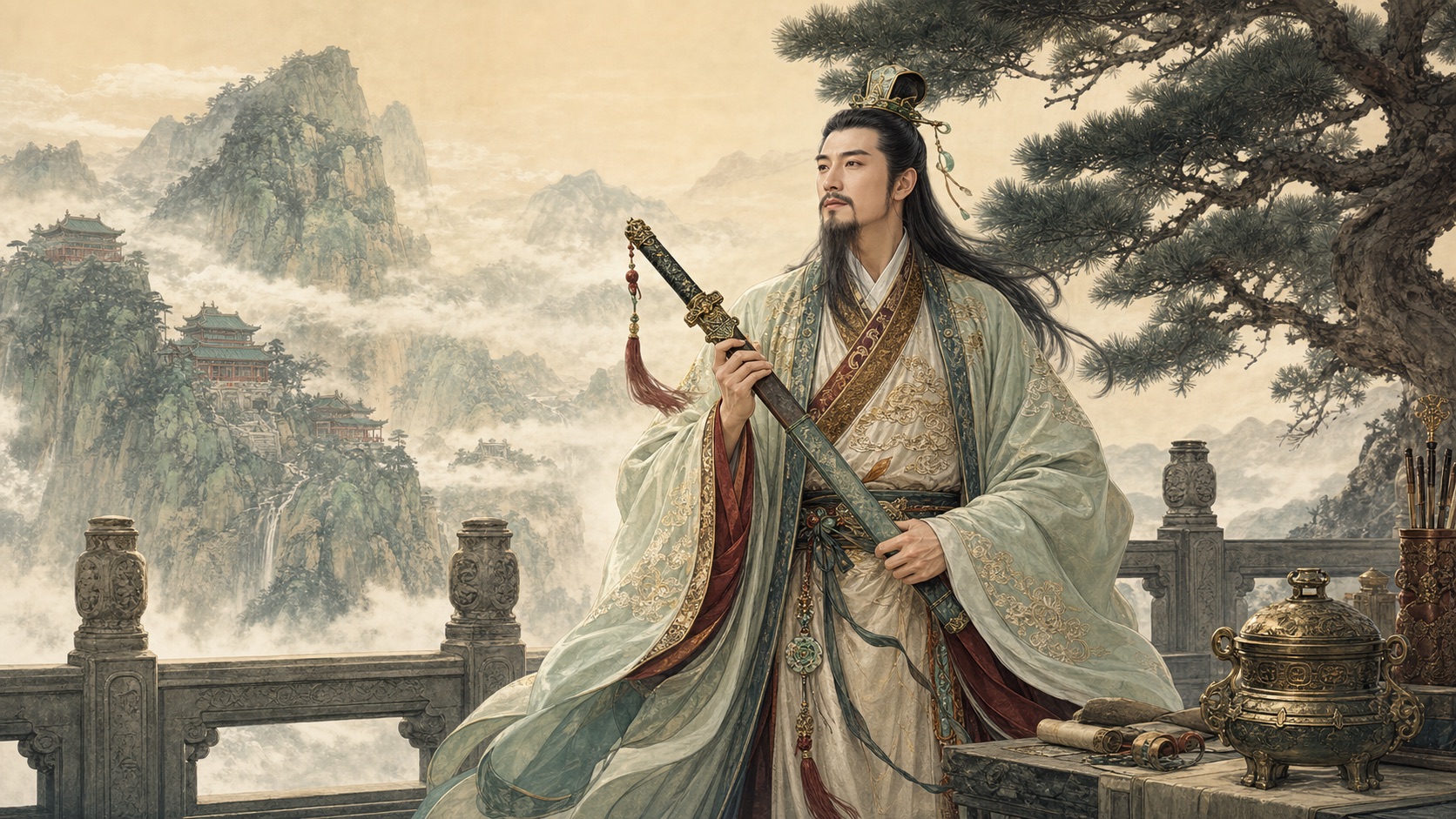
Legends often begin with Zhongli Quan as a Han-era military commander before he leaves worldly life.
Learn who Zhongli Quan, also called Han Zhongli, is, including his fan, Eight Immortals role, connection with Lu Dongbin, Daoist titles, and source traditions.
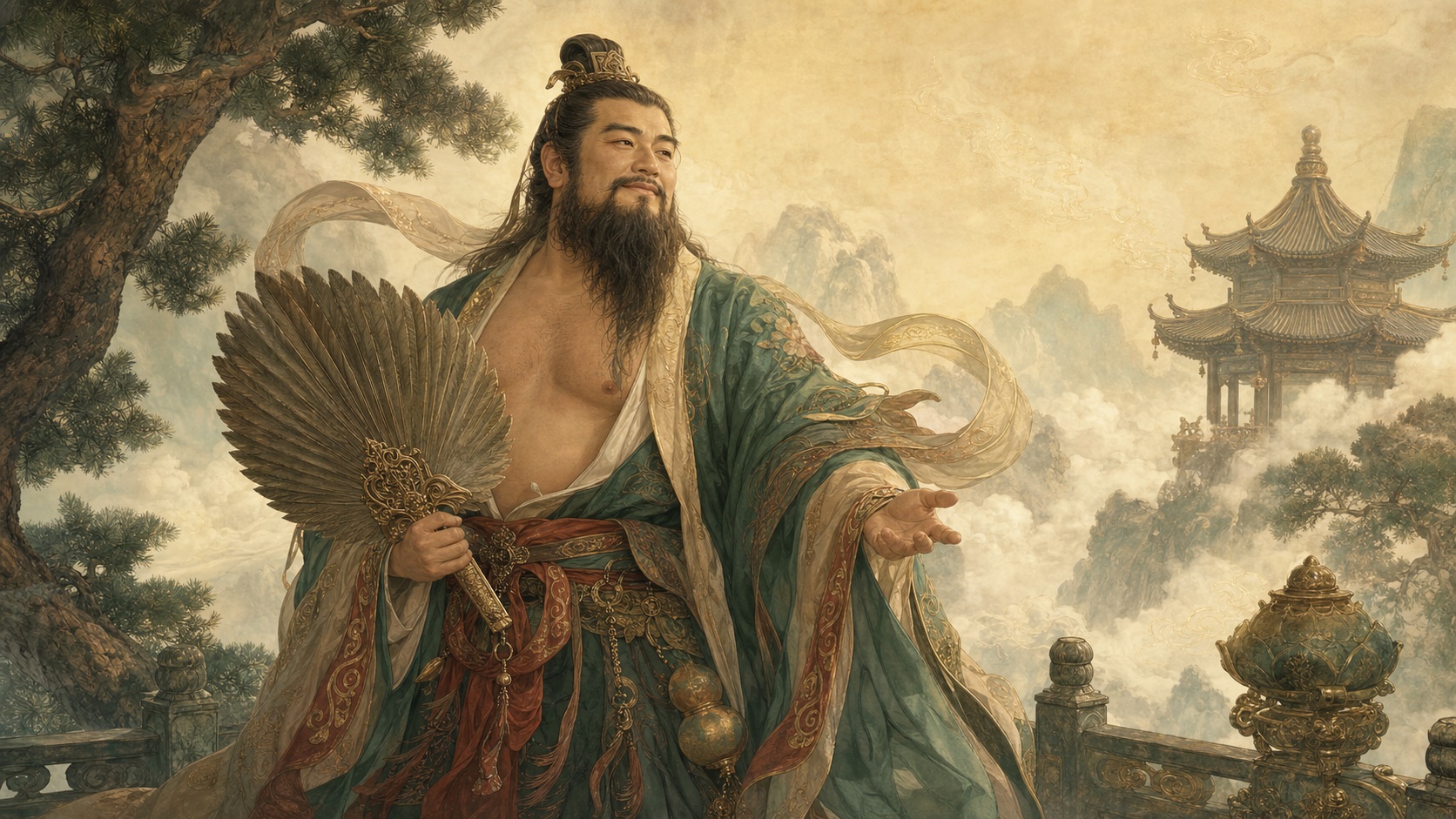
Chinese name: 汉钟离 / 钟离权 - Han Zhongli / Zhongli Quan
Aliases: Han Zhongli
Main source: Eight Immortals tradition
Key symbols: Fan (扇) - A major iconographic attribute; specific powers vary by story and artwork.
Core IdentityOne of the Eight Immortals, often known as Han Zhongli, remembered as a senior immortal, teacher figure, and fan-bearing Daoist adept.
Many legends present him as a former military figure who turns away from worldly rank and enters Daoist cultivation. Later tradition also links him closely with Lu Dongbin as teacher and initiator.
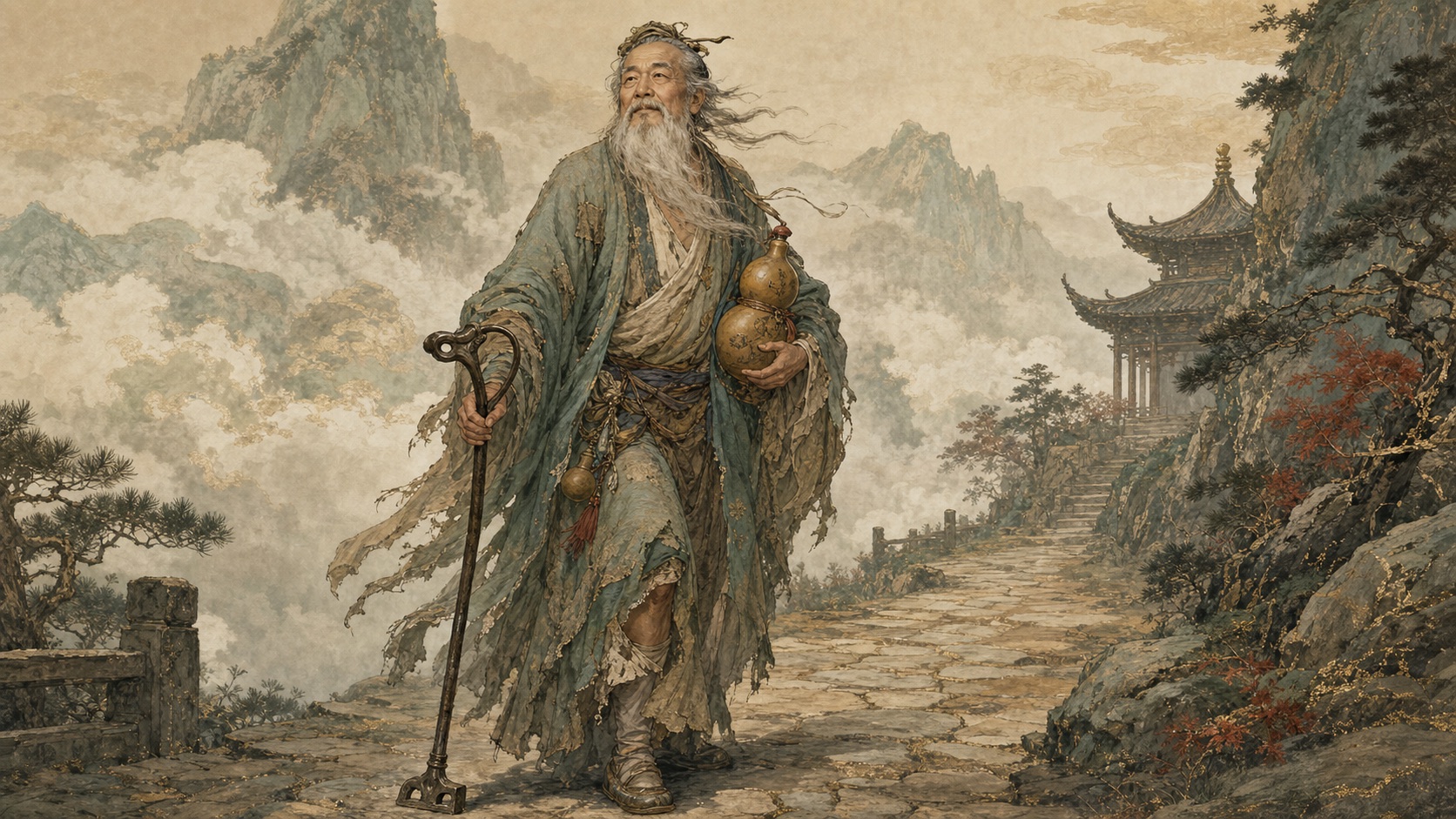
For readers, the safest way to read Zhongli Quan is through stable visual and narrative markers: the exposed belly, broad fan, elder status, and his role in transmitting immortal teachings.
Names and titles often mark a story stage, social position, divine office, religious role, or visual tradition. For Zhongli Quan / Han Zhongli, the table separates the most common labels by meaning and context.
| Title | Meaning | Context |
|---|---|---|
| Zhongli Quan / 钟离权 | Personal name / 人物本名 | Zhongli is a rare two-character surname, so the name is often misunderstood by new readers. / 钟离是较少见的复姓,因此这个名字容易被初读者误解。 |
| Han Zhongli / 汉钟离 | Zhongli of Han / 汉代的钟离 | A common folk name linking him with the Han dynasty setting in later legends. / 民间常见称呼,把人物与汉代背景联系起来。 |
| Zhengyang Zhenren / 正阳真人 | Perfected One of Correct Yang / 正阳真人 | A Daoist-style title used in later religious and literary traditions. / 后世道教和文学传统中使用的尊号。 |
| Second Patriarch / 二祖 | Second ancestor / 第二位祖师 | A title connected with later Quanzhen Daoist memory; details depend on source context. / 与后世全真道记忆相关的称谓,具体说法与来源语境相关。 |
Legends often begin with Zhongli Quan as a Han-era military commander before he leaves worldly life.
After military failure, he retreats into the mountains and receives instruction from an immortal teacher in several versions.
He is widely remembered as the teacher who tests and guides Lu Dongbin, including dream-and-trial motifs.
Later narratives describe him attaining immortality through Daoist cultivation and alchemical teaching.
These are literary and cultural traits used to read Zhongli Quan / Han Zhongli across source stories, visual traditions, and later adaptations.
His broad fan is the main visual attribute; legends attach wind, revival, and transformation motifs to it in different ways.
The exposed belly and relaxed expression make him visually distinct among the Eight Immortals.
His role as Lu Dongbin's teacher makes him a bridge between elder authority and later immortal lineages.
Stories often connect him with elixir teachings and Daoist cultivation rather than court politics.
Zhongli Quan matters because he turns worldly authority into spiritual authority: a military figure becomes a teacher of immortals.
Within the Eight Immortals, he gives the group an elder-patriarch role and helps explain why Lu Dongbin later becomes so central in Daoist and popular imagination.
Fan (扇) - A major iconographic attribute; specific powers vary by story and artwork.
Eight Immortals legends, Daoist hagiography, paintings and theater
Version context: Zhongli Quan is the personal name; Han Zhongli is a common title-style name in popular tradition.
Chinese mythology figures often move between novels, opera, temple images, paintings, animation, games, and local traditions. Different media can preserve different details, names, and visual symbols.
Guides selected by shared source traditions, character groups, or visual symbols.