Heavenly Court in Chinese Mythology
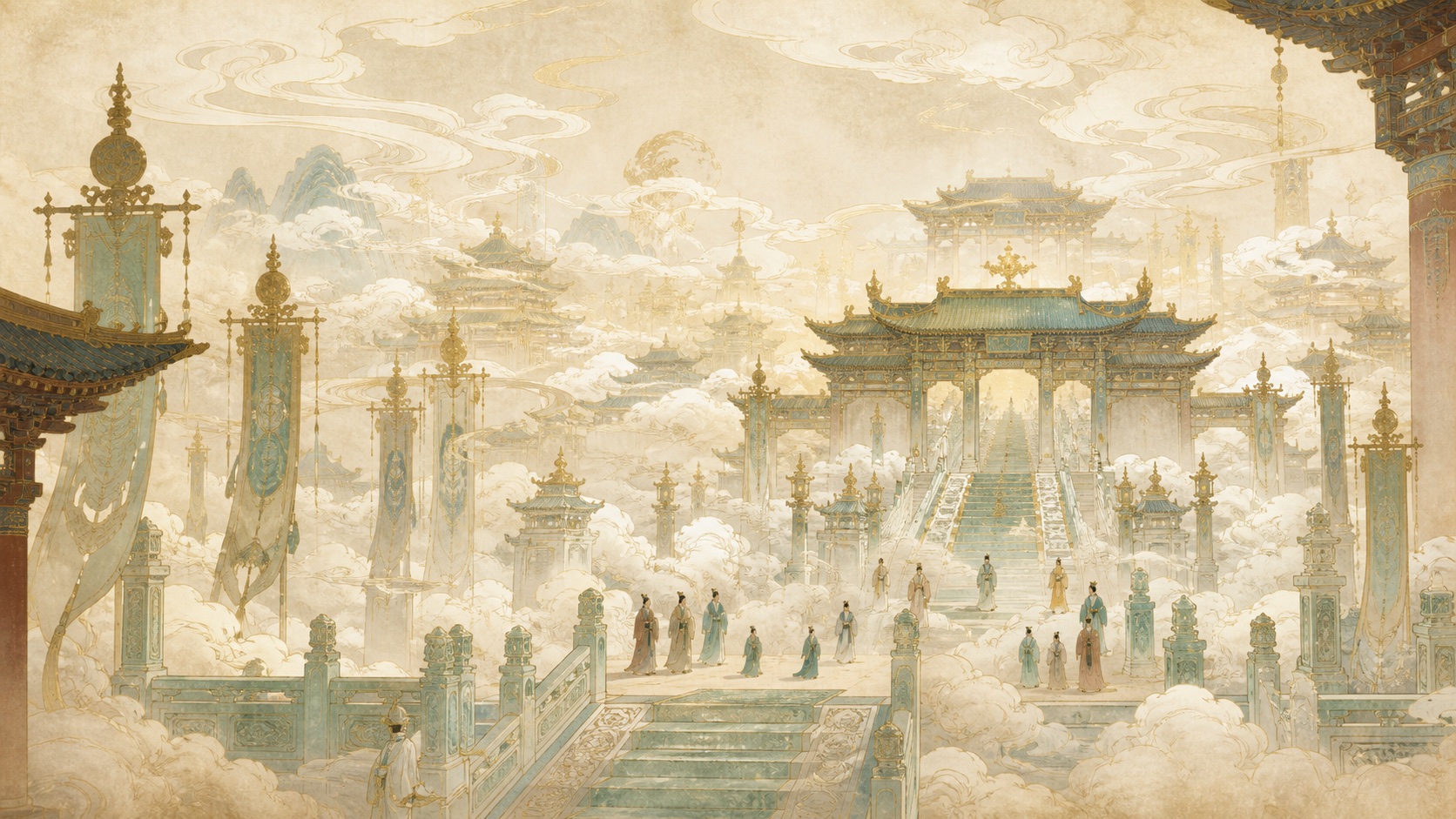
The celestial court where the Jade Emperor, heavenly officials, generals, and divine messengers appear in many novels, operas, and folk stories.
What this place means
The Heavenly Court is best understood as a mythological version of a court bureaucracy. It gives stories a visible order: rulers, officials, generals, messengers, punishments, rewards, appointments, and petitions.
For readers, the Heavenly Court explains why many Chinese mythological figures have titles, ranks, posts, registers, weapons, and official duties. It also shows how political order, ritual order, and storytelling imagination overlap.
Key facts
- Main ruler
- Jade Emperor
- Narrative function
- Appointments, rank, punishment, cosmic order
- Often confused with
- A single palace; it is better read as a whole court system
Historical formation and source context
Its image was shaped gradually through Daoist religious imagination, imperial court language, folk storytelling, theater, and novels. In Journey to the West, the Heavenly Court becomes the stage for Sun Wukong's official appointments and rebellion. In Investiture of the Gods, it connects divine ranks with a broader cosmic order.
Appears in: Journey to the West, Investiture of the Gods, Daoist and folk visual culture
Image gallery