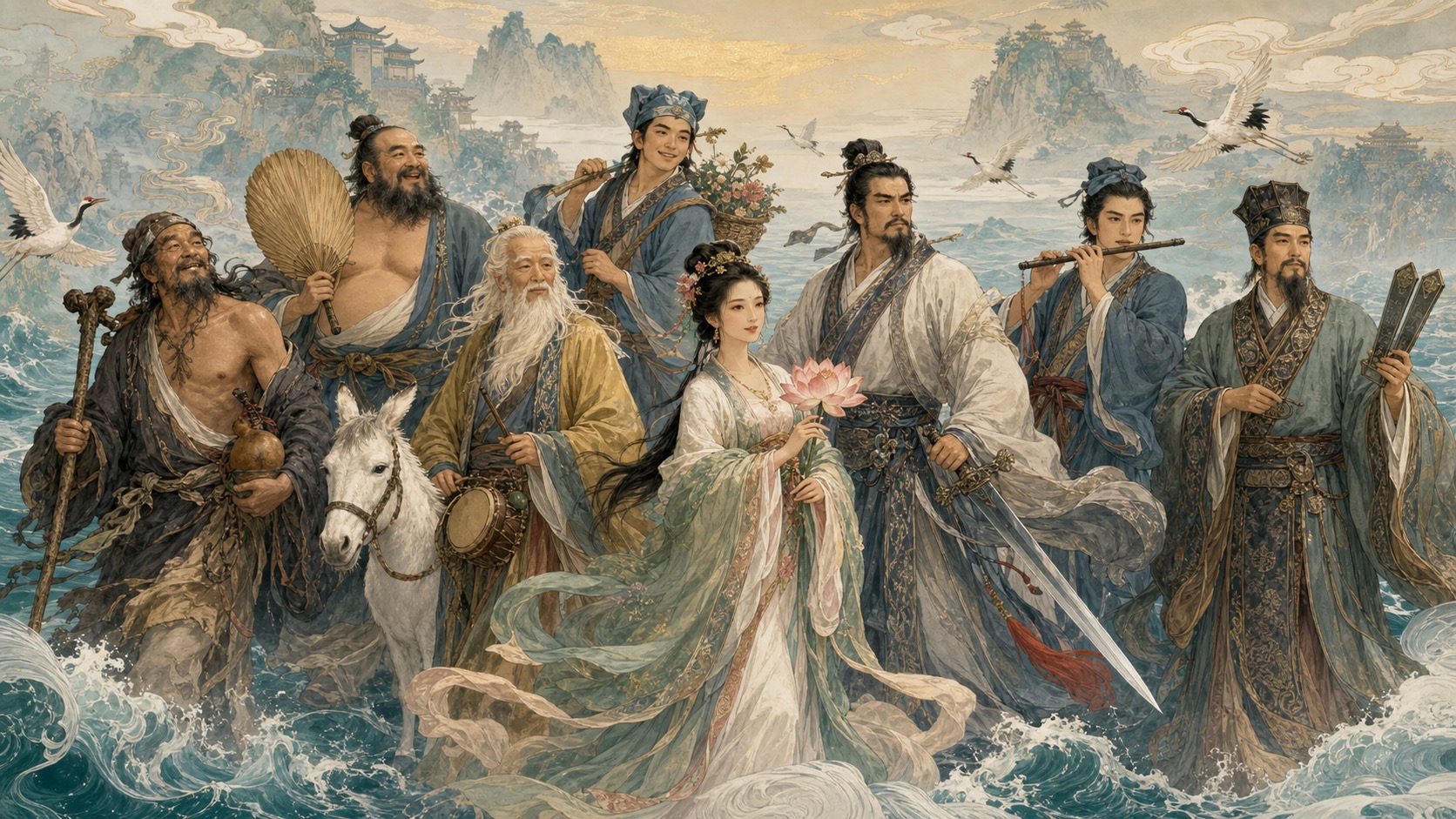
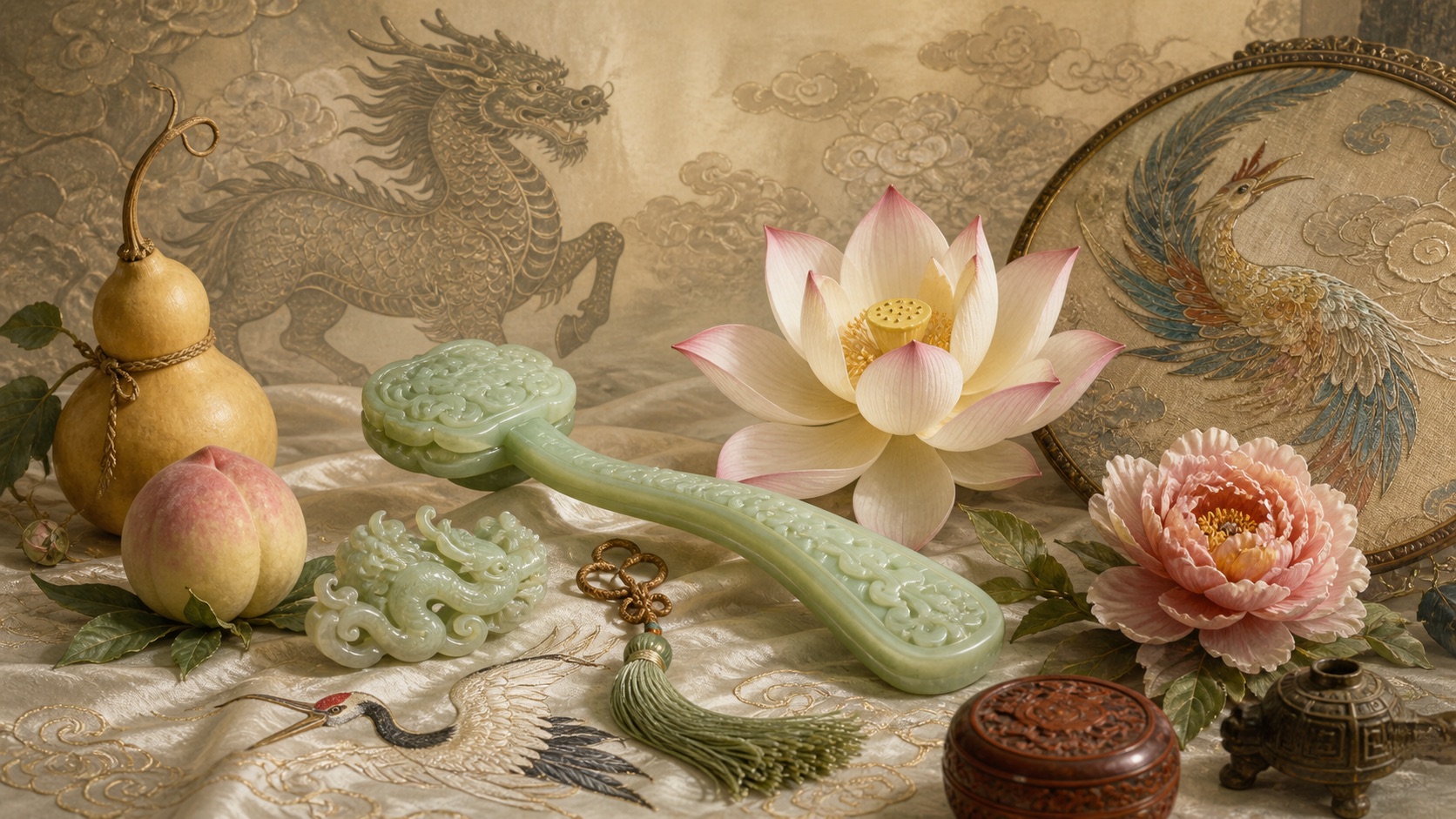
Mount Penglai and the Immortal Islands
A legendary island or mountain of immortals, often used in art and literature to express distant sacred landscapes.
What this place means
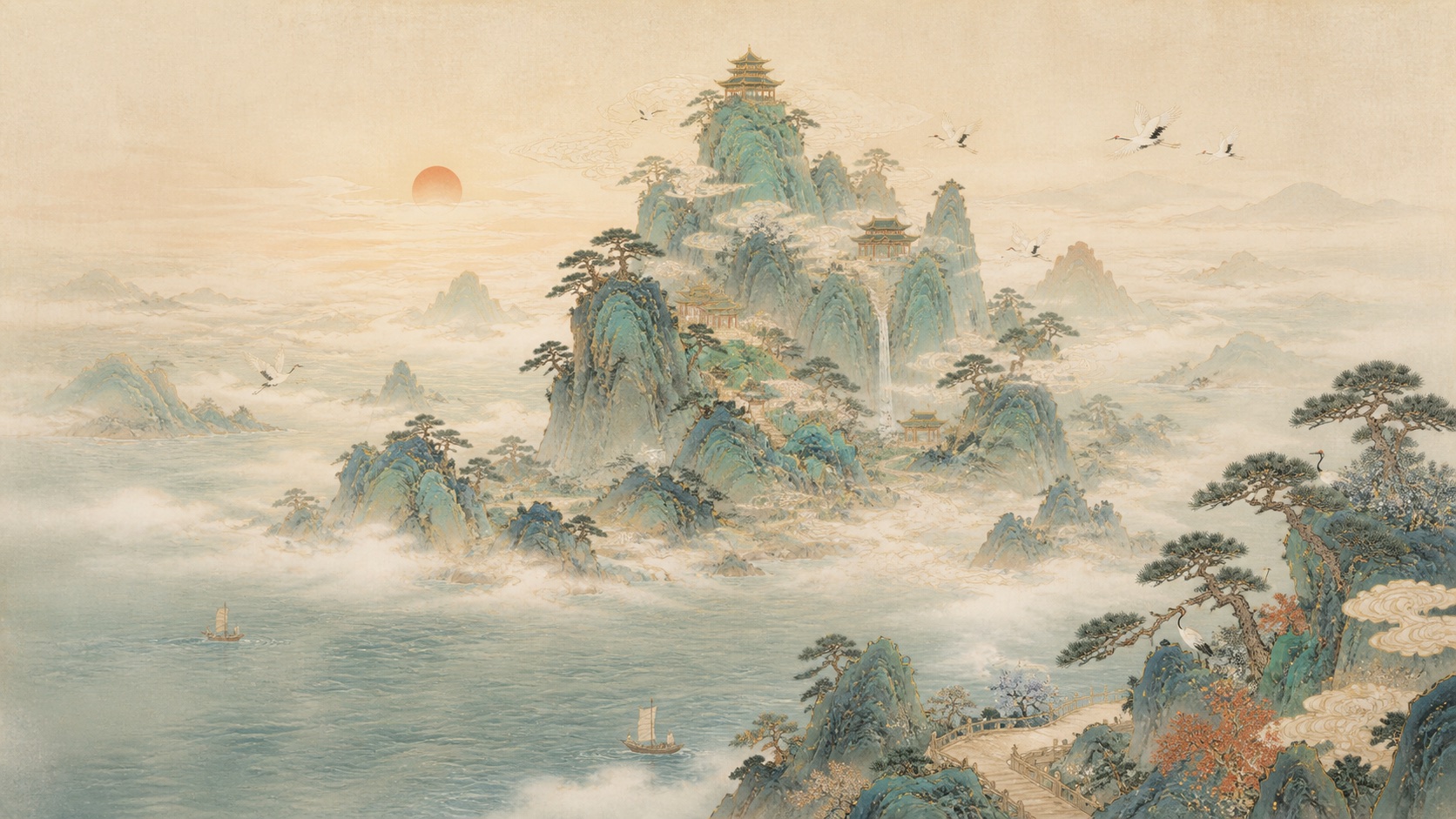
Penglai is one of the most important images of the immortal island. It is less a single plot location than a cultural shorthand for distant sacredness, immortality, and unreachable beauty.
Penglai helps readers understand why Chinese art often uses misty islands, cranes, pavilions, pine trees, and sea mountains to suggest transcendence rather than ordinary scenery.
Key facts
- Spatial type
- Immortal island mountain
- Common symbols
- Mist, cranes, pavilions, pine trees, distant sea
- Cultural function
- A visual sign of immortal distance
Historical formation and source context
The idea of immortal islands appears in early Chinese mythic geography and later Daoist imagination. Poetry, painting, garden design, decorative arts, and fiction kept turning Penglai into a visual language for paradise-like distance.
Appears in: Daoist imagination, painting, poetry, decorative art
Image gallery